Posts

Free event – Tyneside and Northumberland Mind

Free event – Tyneside and Northumberland Mind

Join us on Friday 12 December for our next free online event where we will hear from Steph Golder from Tyneside and Northumberland Mind. Learn about the range of mental health and wellbeing support services in Northumberland and how to access them.

We will find out more about the general support services available to all and their specialist support services for victims of crime, and those who have been affected by a traumatic bereavement.

There will be a chance to ask questions after the presentation.

This event has now passed

Sign up to our newsletter to hear about future events or catch up with previous events on our online events page.

World Mental Health Day

World Mental Health Day

To celebrate World Mental Health Day, we were joined by Tyneside and Northumberland Mind, Northumberland Talking Therapies and Northumberland Recovery College to talk about mental health in the workplace.

First of all, Emmalene Charlton from Tyneside and Northumberland Mind gave us an overview of what stress is and some ways we can help manage it.

Then we heard from Sarah Coles from Northumberland Talking Therapies for some tips and techniques to help manage stress.

Finally, we enjoyed a guided imagery meditation from Northumberland Recovery College.

Catch up on the recordings from the event on our online events page.

Find support

Tyneside and Northumberland Mind – call 0330 174 3174 or email admin@tynesidemind.org.uk

Northumberland Talking Therapies – call 0300 3030 700

Northumberland Recovery College – call 07866 053717 or email: nrc@everyturn.org

Free event – World Mental Health Day

Free event – World Mental Health Day

Join us for a free online event on World Mental Health Day (Friday 10 October, 1pm-2.30pm) to talk about mental health with a focus on wellbeing in the workplace.

We will hear from Tyneside and Northumberland Mind, NHS Northumberland Talking Therapies and Northumberland Recovery College about common sources of stress in the workplace and tips and techniques to promote better mental health.

We will also have the chance to take part in a guided imagery exercise to help manage stress and anxiety. There will be time to ask questions.

The theme of this year’s mental health day is access to services. We will also share some details of mental health services, information and resources where people can get support.

Please note this session is not intended to give individual clinical advice. To improve comfort and confidentiality all attendees will have their cameras off and microphones muted, and active participation is not required.

This event has now passed.

Sign up to our newsletter to hear about future events or catch up with previous events on our online events page.

Young people and mental health

Young people and mental health

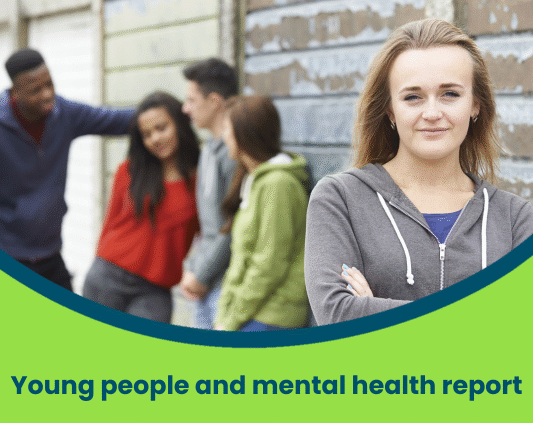
A group of sixth-form students from the Queen Elizabeth High School in Hexham have been leading a research project alongside Healthwatch Northumberland, investigating the provision of mental health support information for young people in Northumberland.

The students led the project themselves, designing surveys, analysing the responses and writing a final report.

They have also supported Healthwatch Northumberland in creating a new young people’s support webpage, researching information to include on the page and helping to promote it.

Read the students’ final report

Visit the new young people’s support webpage

NHS Talking Therapies

NHS Talking Therapies

The NHS is encouraging anyone struggling with feelings of depression, or anxiety such as excessive worry, panic attacks, social anxiety, post-traumatic stress, or obsessions and compulsions, to seek help through NHS Talking Therapies services. These are effective, confidential and free treatments delivered by trained clinicians, online, on the phone, or in person.
If you’re struggling with feelings of depression or anxiety, seeking help through an NHS Talking Therapies service can be one of the best steps you can take to overcome mental health issues and get back on track.
NHS Talking Therapies can help provide support and treatment for common mental health problems, such as

  • feeling anxious
  • feeling low and hopeless
  • having panic attacks
  • finding it hard to cope with work, life or relationships
  • struggling with flashbacks or nightmares about upsetting events from your past
  • feeling stressed
  • worrying a lot
  • obsessive thoughts or behaviours
  • fear of social situations
  • being afraid of things, such as spiders, flying or heights (phobias)


You do not need to have a diagnosed mental health problem to refer yourself to an NHS Talking Therapies service. Getting support as soon as you start having difficulties can help to reduce their impact.
For those whose first language is not English, talking therapies can be delivered through multi-lingual therapists or through confidential interpreters, and in British Sign Language (BSL) through SignHealth’s NHS Therapies for Deaf People service.
Your GP can refer you for NHS Talking Therapies, or you can refer yourself online

Please share with us your experiences of NHS Talking Therapies, or any other NHS mental health service that you or your family have used.

Self-harm support online event

Self-harm support online event

Self-harm support online event

Join us on Friday 13 October, 1pm-2pm, for our next free online lunchtime event to hear from Jenny Groves, Founder and CEO of Battle Scars.

Battle Scars is a survivor-run charity providing support to those affected by self-harm.

Jenny will talk to us about the myths and realities of self-harm and the services and support available. This session is suitable for people who self-harm and family, friends or professionals supporting those who self-harm.

There will also be a chance to ask questions.

Sign up to our newsletter to be the first to hear about upcoming events.

This event has now passed

Tell us about maternal mental health care

Tell us about maternal mental health care

Pregnancy is a major life event for any family. It can be joyful and fulfilling but also challenging. Healthwatch England is launching a national survey to understand if care works for new mothers and birthing parents and what needs improving for people who develop mental health difficulties relating to their maternity experience.

With one in four women experiencing mental health problems during pregnancy and in the first year following the birth of a child, support from maternity services can significantly impact their mental health and wellbeing.

Who do we want to hear from?

  • We want to hear from you if you have been pregnant in the last two years and have experienced mental health difficulties before, during or after giving birth.
  • We are interested in the experiences of women from ethnic minority communities and LGBTQ+ birthing parents.

Everything you share is confidential and will help us and the NHS understand what they need to put in place to better support people using maternity services.

Share your story

Find out more about Healthwatch England’s research

This piece of work has now finished.

Online event – Qwell

Online event – Qwell

Join us on Friday 11 November to hear from Andrew Poinen, Engagement Lead for Kooth and Qwell.

In this free, online public event Andrew will provide an overview of Qwell, the online service available for adults aged 18 and over in Northumberland which provides free, safe and anonymous mental health and wellbeing support.

We will hear what it involves, how to access it and there will be a chance to ask questions.

Register now and we will send you a link to join closer to the event: 

This event has now passed

Mental health services and autistic children

Mental health services and autistic children

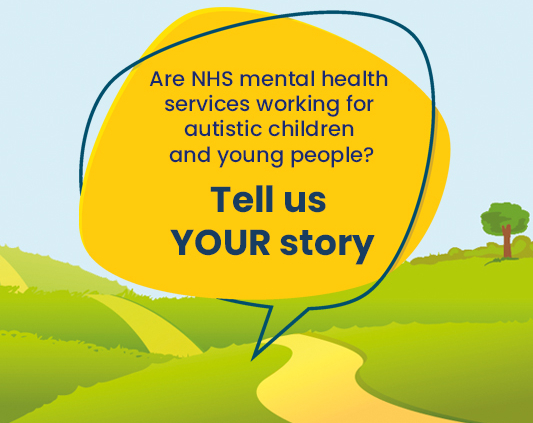
Are NHS mental health services working for autistic children and young people?

We have been hearing from local families that some NHS mental health services aren’t working for them. To understand what is happening, we would like to hear about the experiences of as many autistic children and young people as we can. This includes children with a formal autism diagnosis, currently being assessed, or where there is an indication of autism. We want to know what is working well and what could be better.

Please tell us about your family’s experiences online, or by getting in touch in a way that suits you.

What you tell us will be included in a report to those who pay for and provide these services, along with recommendations of how services could be improved for children and young people. It will be anonymous and we will ensure you cannot be identified.

Read what Sarah, Ellie and Jennifer have to say and then tell us your story…

Parent Sarah says “For both of my children it took several years to get a diagnosis of ADHD and autism. Both have had issues with their mental health alongside their ADHD and autism. The delay in diagnosis impacted negatively on their mental health and both also experienced additional deterioration after Covid-19.

“Many different health and care services have been involved with my children, but these services are unfortunately not all joined up. Often referrals would be accepted for support but then discharged on the basis that other services were already involved or were better suited to provide support, care or treatment. When support has been received this is time-limited or specific to concerns at any one time leading to the process of needing to fight to seek help again later down the line.

“My children’s mental health difficulties have been seen as being ‘part of their autism’ rather than a separate condition that required treatment and help. This has led to difficulties and challenges getting the right support and most appropriate services involved for their mental health. Many people on the autistic spectrum have anxiety and mental health issues. This is not autism but the effect of having to adjust to the world around them and the many challenging situations they face.

“What has been most difficult is that every step of the way I have had to fight to get the right support my children need, challenging what we have previously been told and doing a lot of research ourselves. At times we felt we were not being listened to. It feels like we have had to become specialists in our own right, whilst also caring for children with additional needs that can be very challenging.”

Young person Ellie told us “The mental health professional I saw at the NHS didn’t seem to know very much about autism, so they didn’t realise that the appointments themselves were very stressful for me. I don’t think they always believed me when I said how bad I was feeling because on the surface I appeared to be okay.

“My mental distress at the time was extremely high and I was experiencing some very dark thoughts, but I didn’t feel listened to or understood. I would have liked to have had someone like my dad with me at the appointments but that wasn’t an option because they were held at school.

“My mental health has slowly improved since then but that’s because I started seeing someone privately who has experience of working with autistic people. I feel very lucky about this because I know not everyone would be able to afford it.”

Jennifer, whose child is autistic, says “The initial relief of my child being provided mental health support was quickly replaced by concern, as instead of getting better they got worse. A lack of knowledge and understanding about autistic presentation meant the therapist didn’t connect authentically with my child, who in turn felt invalidated by the whole experience.

“The number of sessions offered was limited and at the end of the programme I was shocked to find my child didn’t reach the threshold for further support. Instead, we were provided with a list of community-based support organisations and left to fend for ourselves. As a parent I now have a complete lack of confidence and trust in the NHS mental health system.”

Tell us YOUR story

Whether your child may be autistic, is currently being assessed or has a formal autism diagnosis, we’d like to hear their experiences of mental health services. We’d like to know what went well and what could have been better. Tell us your story online, or if you’d prefer to speak to one of our friendly team in confidence, please get in touch.

This piece of work has now closed.

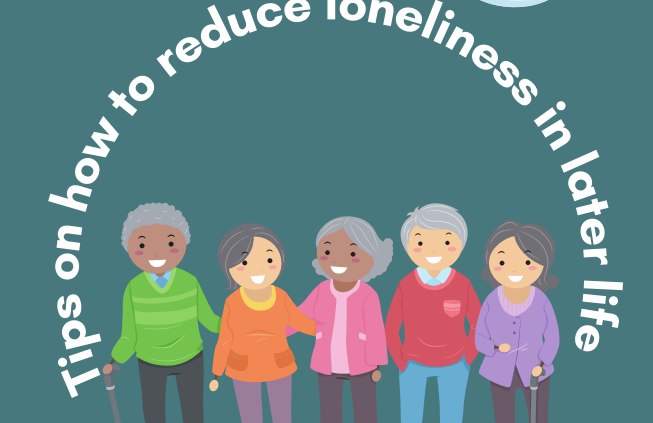
Tips on how to reduce loneliness in later life

Tips on how to reduce loneliness in later life

Loneliness can affect people of all ages. As we get older, we can be presented with many challenges in our lives that can lead to loneliness. A loss of a partner, family, or friends, retirement, illness or moving into different accommodation.

Whatever the challenge, it can be difficult to find a solution, make new meaningful connections and cope with the loneliness you are experiencing.

Mental Health Foundation has created the following tips to help reduce loneliness in later life.

Read Tips on how to reduce loneliness in later life

Events

Nothing Found

Sorry, no posts matched your criteria

Portfolio Items