Posts

Spotlight on…Anxious Minds

Spotlight on…Anxious Minds

As part of our information and signposting service, we’re shining a spotlight on organisations offering all kinds of support to people in Northumberland.

Anxious Minds is a charity which provides mental health support to people across the North East. Services on offer include support for children and adults, support for veterans and their families, women-only support, addiction support, help into employment or training, outdoor therapy and suicide prevention.

Their Blyth Women’s Centre (The Liberty Centre) is there to support local women and girls and empower them to achieve their full potential. The Centre provides a wide range of services to help women to overcome the challenges they are facing. This could be domestic abuse, the need to develop new skills, lack of self-esteem or self-confidence and isolation.

There are free support groups on offer for anxiety, grief and loss, drop-in friendship groups, SMART Recovery (for addiction) and arts & crafts.

Watch this short video about Blyth Women’s Centre.

To find out more email: blythwomen@anxiousminds.co.uk or call: 01670 946 188.

More information about all Anxious Minds services can be found at their website.

Young people and mental health

Young people and mental health

Healthwatch Northumberland is the independent champion for people who use health and social care services. We are a listening organisation working across Northumberland, interested in what people like about services and what can be improved. We act on what people are saying, sharing their views with those who have the power to make change happen. We also help people find the information they need about services in their area and record this as ‘signposting’.

Between January and March 2021 we ran an online survey to gauge the access and support received by young people (aged between 13 – 25 years) from mental health services in Northumberland.

We promoted the survey through our own social media channels and website as well as contacting all secondary and high schools in Northumberland. We also contacted all the local youth groups across the county and other relevant partners such as Northumberland CVA, the Aging Well Network and town and parish councils. The survey had 51 responses. Read our findings at the link below:

Young People and Mental Health: Experiences of access and support in Northumberland

Find mental health services and support

What should I expect after being referred for mental health support?

What should I expect after being referred for mental health support?

Your mental wellness is as important as your physical health but seeking help can be daunting. Healthwatch England has put together a guide about what to expect when you seek support for your mental health.

Mental health matters. One in four of us can experience poor mental health each year. However, only one in eight adults with ill-mental health is getting treatment.

If you have been struggling with your mental health and are referred for support or are thinking about seeking help, here’s what you should expect from your care.

What should I expect when being referred to a mental health service?

If your GP thinks mental health services can help you, they will write to them to ask for an appointment. Your GP should discuss with you the different types of mental health support available – both within the NHS and provided within the community. You should be involved in deciding what kind of service you think would best suit your needs.

NICE guidance recommends that the mental health services should do their best to offer you an appointment within three weeks of your GP writing to them. New NHS standards set to be implemented later this year state that you should be offered an appointment within four weeks after being referred for community-based mental health services.

Your appointment letter should include information about getting there and a number to call if you have problems. It should also clearly state who you will see and what will happen during an assessment.

The letter should also ask if you need any additional support to help communicate or if you would like to bring a family member, carer or advocate with you.

Questions to ask during your assessment

After being referred to a mental health service, you’ll need to attend an assessment. You might feel nervous about this, but it’s important to think about some of the questions you can ask to make sure you get the most out of your appointment. Here are some examples:

  • Why am I being offered an assessment?
  • Will you tell anyone about my mental health problem?
  • Who can provide my treatment and care?
  • Are there any support organisations in my local area?
  • Have you got any information for my family or carer?
  • How can I manage my own condition?
  • Who can I contact if I need help quickly between appointments (in a crisis)?

What should I expect from mental health professionals?

The first mental health professionals you might speak to at your GP surgery might be a Mental Health Practitioner, who can advise you on access to services, or your GP who can refer you to a mental health service.

When referred to a mental health service, you might speak to a qualified Psychological Wellbeing Practitioner (PWP), a qualified high-intensity therapist, another healthcare professional or your consultant (this could be a nurse, a psychiatrist or another clinician).

The health and social care professionals supporting you should be easy to identify, friendly and welcoming. They should understand that you may feel nervous and do their best to make your feel comfortable.

How should I be involved in my treatment?

Doctors, nurses and other health and social care professionals should support you to make decisions about your treatment and care.

They should encourage you to manage your condition, including recognising warning sides of your situation worsening.

Professionals should provide you with resources to support you in a format you can understand and information of where you can go to get further support. Your mental health team should explain your treatment and also work with you to develop a care plan, including:

  • Activities, such as education, work, volunteering, caring for family members or leisure activities
  • What you can do to keep well
  • How to cope with and reduce any risks to yourself or others
  • Who to contact in a crisis

If there’s a risk you may have a crisis, there should also be a crisis plan.

What should I do in a crisis?

There should be a local 24-hour helpline you can call in a crisis. Your GP or mental health team should be able to give you this number.

If the crisis team thinks you need an assessment or treatment from mental health services, you should:

  • be seen within four hours and be given clear information about what’s involved
  • asked whether you would prefer a male or female professional to assess you
  • be asked where you’d like the assessment to take place

The crisis team should be available 24 hours a day, seven days a week, and should support you to stay at home rather than going into hospital if possible.

Can my family, carer or advocate be involved in my treatment?

Professionals should make sure you can make decisions about your treatment – this is called ‘capacity’. This can change over time if your mental health condition is severe, and your doctor might ask you if you want to make an advance statement or advance decision about your future care.

Mental health professionals should also ask you if you would like a family member, carer or trained advocate involved in your care and, if you agree, what information you’d like to share with them.

Find out more about what you should expect from mental health care in the National Institute for Health and Care Excellence guidelines.

Read the guidelines

Find mental health services and support

Have your say – let us know what you think of mental health services you or a family member have used.

 

£2million investment in Northumberland’s mental health services

£2million investment in Northumberland’s mental health services

Community mental health services for people with serious mental illness in Northumberland are to receive £2million of additional funding over the next three years.

The national funding from NHS England/Improvement is to support more ‘joined up’ mental health care across a variety of organisations, including hospitals, community organisations, GP practices and charity and voluntary organisations, improving access to care closer to home.

As a result, people with serious mental illness, accessing mental health services and support across Northumberland will receive more holistic and tailored care depending on their need – just telling their story once.

Watch the launch video for the programme

Over the next three years, funding will be invested in transforming care for specific mental health conditions.

For example, this year the Cumbria, Northumberland, Tyne and Wear NHS Foundation Trust is employing mental health practitioners to work in primary care in a joint initiative with six Primary Care Networks (groups of GP practices that work together) to ensure that mental health support and interventions are more accessible.

The community adult eating disorder service will be developed across Northumberland to respond to a range of eating disorders at a much earlier stage. This will enable opportunities for early detection and care being given at an earlier stage, improving the outcome for patients.

Patients who have complex emotional needs, and who may have suffered trauma, will receive support from staff who work closely with their GPs and other healthcare partners to provide greater emotional support.

More will be done to help prevent hospital admission, to seek alternative care and to prevent escalation of symptoms by enhancing the crisis pathways with staff who understand the social aspects of poor mental health, like fuel poverty, loneliness, and lack of employment.

Kate O’Brien, Senior Head of Commissioning, Child Health, Learning Disabilities and Mental Health, for NHS Northumberland Clinical Commissioning Group, said: “This is such a welcome and needed programme of work and I am extremely proud to be involved in it. We know it is going to improve the support and care for those that need mental health care across Northumberland. And after the last year and a half, this has never been more important. People have been through a very difficult period and I’m sure many are dealing with some very tough personal challenges and circumstances.

“Working in partnership across the wide range of organisations that provide mental health care and support is absolutely crucial to improve access and for this transformation to be a success and I know all involved are committed to improving the mental wellbeing of those that live in Northumberland. The integrated working across organisations will ensure that there is ‘no wrong door’ to access services and individuals should only need to tell their story once.”

GP practices, hospital mental health services and the voluntary sector across Northumberland will also work together to encourage the uptake of physical health checks for those with serious mental illness. These health checks will be available in GP practices and other community settings.

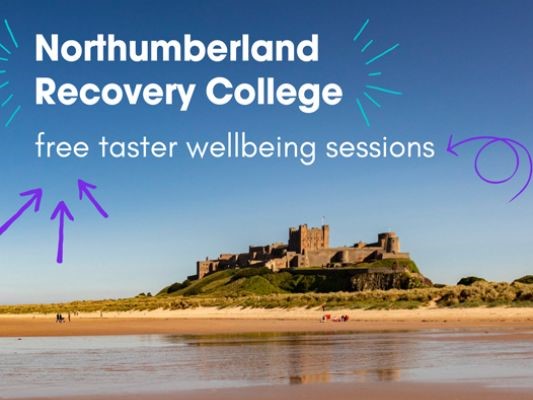
Northumberland Recovery College, which was launched in May 2021, is also part of this transformation work. The college is open to any adult living in Northumberland who would like to improve their mental health and wellbeing. It is not a physical building, but instead provides learning experiences, mutual support, and activities in local communities to improve wellbeing. The activities are often led by people with lived experience of mental ill-health. To find out more visit the website.

Partners working together on this transformation programme include Northumberland County Council, Northumberland NHS Commissioning Group, Cumbria, Northumberland, Tyne and Wear NHS Trust, Northumbria Healthcare NHS Foundation Trust, Primary Care Networks across Northumberland, Healthwatch Northumberland, Mental Health Matters, Mental Health Concern, Carers Northumberland, the voluntary sector and service users themselves.

Find mental health services and support

Dementia diagnosis: what next?

Dementia diagnosis: what next?

Getting a dementia diagnosis can be a big shock, and it can be hard to know what to do next. Take a look at this guide to find out what support you should receive.
The essential information you should get after a dementia diagnosis
  • Your type of dementia and how it will affect you.
  • Any further tests, treatment, activities or therapies that might help you.
  • Who will provide your care and how to contact them, including the professional who will coordinate your care.
  • Support groups and charities that can help you.
  • How dementia can affect your driving and what you need to do.
  • How your employer should support you if you work (or are looking for work).
  • Any research studies you could take part in.

This information should be explained to you and given to you in writing. You can also ask for it in a format you understand. If you don’t need this information straight away, you can ask for it later on.

What else should you talk about with your GP?

  • Consent – Do you agree to services sharing information about you? Who can they share information with, and what are you willing for them to share?
  • Information – Do you know who to contact for more advice if your needs change?
  • Future contact – You may not need any help or further appointments now. If that is the case, would you like to be contacted again and if so, when?

Next step checklist

It’s not just health and care support you need to think about when diagnosed with dementia. To help you, Dementia UK has created a checklist to follow, which includes information on benefits and discussing plans and wishes with your family.

Dementia UK checklist

What support have you received? 

Have you or loved one had a dementia diagnosis? We want to hear your experience of dementia care and support – good and bad. We have the power to make sure NHS leaders and other decision makers listen to and act on your feedback. So, if you’ve got a story to share, tell us!

Planning your care

Now

After your dementia diagnosis, your GP should direct you to services that can give you more information and support. You should also be given the name of a professional who will coordinate any care and support you might need.

The future

Thinking ahead can feel overwhelming, but planning care can help make sure people know your wishes for the future. When you’re ready for this, you should be offered support and information to discuss your options.

Support for carers

Anyone with caring responsibilities for a person with dementia is entitled to a Carers’ Assessment. Their local Authority will carry this out. The Assessment will look at the impact of caring for a person with dementia and what support is needed. Take a look at Dementia UK’s guidance on Carers’ Assessments for more information.

As a carer, it is essential to think about your health and wellbeing. It is a significant adjustment, so you should take a look at the options available to you. These can include:

  • Training
  • Support
  • Advice

More information

The information on this page is from The National Institute for Health and Care Excellence guide for people with dementia and their family and carers. Take some time to read the guide in full to understand better the support available to people with dementia and their carers.

Read full guidance

Visit our dementia health page for information on local services

Latest wellbeing sessions from Northumberland Recovery College

Latest wellbeing sessions from Northumberland Recovery College

Northumberland Recovery College is offering a range of free courses and workshops to support people with their mental health and wellbeing.

What is a recovery college?

A recovery college is not a building or a place, it’s an opportunity to become your own expert in what works to manage your wellbeing. The college provides learning experiences, mutual support, and activities at a pace that is right for you.

Details of upcoming sessions are below and will take place via Zoom. To book a place please email: nrc@mentalhealthconcern.org.uk or text 07515 326 750.

All On Board Families: Starts Thursday 10 June, 1pm-3pm. A series of 10 live interactive workshops to support parents of neurodivergent children to better understand their child’s brain, emotions and behaviours.

Collage Workshop – Bellwether Project: Friday 11 June, 10am-11.30am. Join artists Trish and Nick from INSTAR for a fun and creative workshop exploring collage.

Useful Apps for Visually Impaired People: Tuesday 15 June, 11.30am-12.30pm or Tuesday 22 June, 2pm-3pm. Discover apps that can help if you or someone you know has a visual impairment.

Listening Workshop: Wednesday 16 June, 10am-12pm. Providing support to families by developing listening skills.

Assertiveness Workshop: Wednesday 23 June, 10am-12pm. A workshop to help you understand assertive behaviour and develop a sense of self-awareness and self-esteem.

Ways to Wellness Taster Session: Tuesday 29 June, 2pm-3pm. Centered around the five ways to wellbeing, this session will encourage you to lead a healthier lifestyle.

Anger Awareness Workshop: Wednesday 30 June, 10am-12pm. This session will help you to understand anger and provide you with strategies to use when dealing with anger.

View all June sessions

Find out more about Northumberland Recovery College.

Mental Health Support and Services

Improving Access to Psychological Therapies

Improving Access to Psychological Therapies

Improving Access to Psychological Therapies is a national programme offering primary care talking therapies to those experiencing common mental health problems such as depression and anxiety. The local service in Northumberland is called Talking Matters Northumberland (TMN) and it offers services to those over the age of 16.

TMN offers approved therapies for a wide range of difficulties including depression, generalised anxiety disorder, obsessive compulsive disorder, post-traumatic stress disorder, social phobia, health anxiety, panic disorder, stress, sleeping problems, bereavement/loss and relationship difficulties.

This survey is for Northumberland residents who have used these services or may need them in the future. The results of the survey will help NHS Northumberland Clinical Commissioning Group to understand what is working well and what needs to improve.

The deadline for responses is 11 June 2021.

Complete the survey here


Mental Health Awareness Week 2021

Mental Health Awareness Week 2021

Mental Health Awareness Week runs from 10-16 May and this year’s theme is ‘Nature’.

There are two main aims of this week. Firstly, to inspire more people to connect with nature, noticing the impact that this connection can have on our mental health. Secondly, to convince decision makers at all levels that access to and quality of nature is a mental health and social justice issue as well as an environmental one.

Read more about Mental Health Awareness Week 2021

If you would like some inspiration of where you can enjoy nature in Northumberland take a look at the links below:

Northumberland Country Parks and Visitor Centres

Northumberland National Park

If you are looking for support with your mental health we have a dedicated page on our website to point you in the right direction of local mental health services, useful information, self-help leaflets and apps – find mental health support.

Wellbeing sessions from Northumberland Recovery College

Wellbeing sessions from Northumberland Recovery College

Northumberland Recovery College is offering a range of free courses and workshops to support people with their mental health and wellbeing.

What is a recovery college?

A recovery college is not a building or a place, it’s an opportunity to become your own expert in what works to manage your wellbeing. The college provides learning experiences, mutual support, and activities at a pace that is right for you.

Details of upcoming sessions are below and will take place via Zoom. To book a place please email: nrc@mentalhealthconcern.org.uk

All On Board Families: Tuesday 13 April, 2pm and Thursday 22 April, 2pm. Practical skills for your family to stay connected while supporting your child.

Mindfulness: Thursday 29 April, 10.30am. Introduction to what mindfulness is, how it helps so many people and how to use mindfulness in your own day-to-day life by practicing it in fun and creative ways.

Yin & Yang Yoga: Monday 3 May, 1.30pm. Four-week gentle yoga practice for all levels and abilities.


Find out more about Northumberland Recovery College.

Mental Health Support and Services

Healthwatch Northumberland walks

Healthwatch Northumberland walks

Events

Nothing Found

Sorry, no posts matched your criteria

Events

Care Homes – keeping in touch with loved ones

Care Homes – keeping in touch with loved ones

People are telling us they are worried about care homes continuing to be closed to nearly all visits.

They understand it is safer for residents and staff and the extra efforts made to maintain the quality of life in the homes.   But after 6 months, people say they can see the effect on their loved ones, and their own, health and wellbeing.

It seems the situation may go on for some time yet.

Sharing good practice could help make this difficult time a bit better.   If your relative, loved one or friend lives in a care home we would like to know what is being done to keep you in touch day to day and on special occasions like birthdays.

We would like to know your experience of:

  • Using video calls (FaceTime, Zoom etc) or telephone calls. Does the home support these?  How many times a week and how long?  Does a member of staff help your loved one with the call?
  • Socially distanced visits. Does the home support ‘window’ visits.  How many times a week and how long?
  • How does the home keep you informed about how your loved one is getting on (apart from necessary issues about their care or health). Eg manager updates, photographs, videos
  • Does the home have a programme of group and 1 to 1 activities? Has your loved one taken part?
  • Has the home asked you what, within the current restrictions, would make this time easier?
  • What, within the current restrictions, would make it better for you and your love one?
  • When restrictions are eventually eased (not totally lifted) what would help you and your loved one?

The forums will take place via Zoom. Read our guide on how to use Zoom.

If you would like to take part please contact Laura Kane: laurak@healthwatchnorthumberland.co.uk, or call 03332 408468.

If you can’t make the forum and would like to tell us your story, or would rather speak to one of our team in confidence please get in touch.


Children and Young People’s Services

Children and Young People’s Services

Are you a voluntary or community organisation working with young people? If so, we’d like you to join us for an open discussion on children and young peoples services, particularly around mental health services.

The forums will take place via Zoom. Read our guide on how to use Zoom.

If you would like to take part please contact Laura Kane: laurak@healthwatchnorthumberland.co.uk, or call 03332 408468.

Find out more about our other online forums


Cancer services: Join our online forum

Cancer services: Join our online forum

If you, or someone close to you, have used cancer services in the last 12 months, we’d love to hear about your experiences at our online forum.

Lead Cancer Nurse, Amanda, from Northumbria Healthcare, and Jo from the Northern Cancer Alliance will be there to answer your questions.

You can join us as a cancer patient or carer or as someone who works with people using cancer services, or just if you have an interest in local services and support.

For those who aren’t able or would rather not attend, questions for Amanda, Jo, or Healthwatch Northumberland can be sent via text to: 07413 385275 anytime before 12 August.

The forums will take place via Zoom. Read our guide on how to use Zoom.

If you would like to take part please contact Laura Kane: laurak@healthwatchnorthumberland.co.uk, or call 03332 408468.

Find out more about our other online forums


Laburnum Surgery closure – online forum

Laburnum Surgery closure – online forum

NHS Northumberland Clinical Commissioning Group (CCG) has made the decision to close Laburnum GP Surgery in Ashington.

The CCG’s primary care commissioning committee made the decision, last week, to end the contract of Laburnum Medical Group following inspections carried out by the Care Quality Commission (CQC) and ongoing investigations carried out by the CCG, which identified issues with the quality of care provided.

The practice, which provides healthcare for 2400 patients from Ashington and the surrounding areas, including Wansbeck, Morpeth, Newbiggin and Bedlington, will close by the end of July.

Patients at the practice have been written to and allocated another GP at a nearby surgery.

We are holding an online forum for patients to discuss any concerns they have about the closure of the surgery and their ongoing healthcare.

To register please email: laurak@healthwatchnorthumberland.co.uk or call: 03332 408468.

The forums will take place via Zoom. Read our guide on how to use Zoom. If you would like help setting up Zoom on your device please ask.


Read more about the closure of Laburnum Surgery

Find out more about our other online forums


Share your experiences – join our online forum

Share your experiences – join our online forum

As we will be unable to get out and about across the county to meet with and listen to people for a while, we’re holding some public online forums, and we’d like you to join us. If you are unable to take part but would like to tell us about your experiences of these services, Caroline and Lesley will be available by phone, text and email each Wednesday between 3.00pm and 4.00pm to listen, answer any questions and help with providing information about services.

The forums will take place via Zoom. Read our guide on how to use Zoom.

Whilst some of our forums are on specific issues and services, this one is a chance to tell us about any health or social care service you’ve used in the last 12 months. That could be hospitals, GPs, care homes, NHS 111, mental health services, maternity services or dentists and pharmacies.

If you would like to take part please contact Laura Kane: laurak@healthwatchnorthumberland.co.uk, or call 03332 408468.

Find out more about our other online forums


Mental Health services: Join our online forum

Mental Health services: Join our online forum

As we will be unable to get out and about across the county to meet with and listen to people for a while, we’re holding some public online forums, and we’d like you to join us. If you are unable to take part but would like to tell us about your experiences of these services, Caroline and Lesley will be available by phone, text and email each Wednesday between 3.00pm and 4.00pm to listen, answer any questions and help with providing information about services.

The forums will take place via Zoom. Read our guide on how to use Zoom.

The subject of this online forum is mental health services, so if you’d like to share your experiences of services in the last 12 months, or those of someone close to you, please join us.

If you would like to take part please contact Laura Kane: laurak@healthwatchnorthumberland.co.uk, or call 03332 408468.

Find out more about our other online forums


Unpaid Carers and Mental Health Online Forum

Unpaid Carers and Mental Health Online Forum

As we will be unable to get out and about across the county to meet with and listen to people for a while, we’re holding some public online forums, and we’d like you to join us. If you are unable to take part but would like to tell us about your experiences of these services, Caroline and Lesley will be available by phone, text and email each Wednesday between 3.00pm and 4.00pm to listen, answer any questions and help with providing information about services.

The forums will take place via Zoom. Read our guide on how to use Zoom.

The subject of this online forum is unpaid carers and mental health services, so if you’d like to share your experiences of services in the last 12 months, or those of someone close to you, please join us.

If you would like to take part please contact Laura Kane, laurak@healthwatchnorthumberland.co.uk, or call 03332 408468.


Find out about our other online forums


Maternity services: Join our online forum

Maternity services: Join our online forum

As we will be unable to get out and about across the county to meet with and listen to people for a while, we’re holding some public online forums, and we’d like you to join us. If you are unable to take part but would like to tell us about your experiences of these services, Caroline and Lesley will be available by phone, text and email each Wednesday between 3.00pm and 4.00pm to listen, answer any questions and help with providing information about services.

The forums will take place via Zoom. Read our guide on how to use Zoom.

The subject of this online forum is maternity services, so if you’d like to share your experiences of services in the last 12 months, or those of someone close to you, please join us.

If you would like to take part please contact Lesley Tweddell, lesleyt@healthwatchnorthumberland.co.uk, or 07803 427 466.


Find out about our other online forums


SEND: Join our online forum

SEND: Join our online forum

As we will be unable to get out and about across the county to meet with and listen to people for a while, we’re holding some public online forums, and we’d like you to join us. If you are unable to take part but would like to tell us about your experiences of these services, Caroline and Lesley will be available by phone, text and email each Wednesday between 3.00pm and 4.00pm to listen, answer any questions and help with providing information about services.

The forums will take place via Zoom. Read our guide on how to use Zoom.

The subject of this online forum is special educational needs and disabilities, so if you’d like to share your experiences of services in the last 12 months, or those of someone close to you, please join us.

If you would like to take part please contact Laura Kane: laurak@healthwatchnorthumberland.co.uk, or call 03332 408468.


Find out about our other online forums


Mental Health services: Join our online forum

Mental Health services: Join our online forum

As we will be unable to get out and about across the county to meet with and listen to people for a while, we’re holding some public online forums, and we’d like you to join us. If you are unable to take part but would like to tell us about your experiences of these services, Caroline and Lesley will be available by phone, text and email each Wednesday between 3.00pm and 4.00pm to listen, answer any questions and help with providing information about services.

The forums will take place via Zoom. Read our guide on how to use Zoom.

The subject of this online forum is mental health services, so if you’d like to share your experiences of services in the last 12 months, or those of someone close to you, please join us.

If you would like to take part please contact Lesley Tweddell, lesleyt@healthwatchnorthumberland.co.uk, or 07803 427 466.


Other online forums:

Wednesday 20 May 2.00pm – 3.00pm: Dementia Services.

Wednesday 27 May 2.00 – 3.00pm: Adult Social Services (to include support to live independently, care homes, learning disability services).