What you told us: November 2022

What you told us: November 2022

What you told us November 2022

Our ‘at a glance’ monthly reports provide a summary of who we have been hearing from and what you have told us. What you tell us helps us build a picture of what is working well and where there are issues in the NHS and social care services we use here in Northumberland.

Often, we can get a quick response to your enquiry or signpost you to the right service. Some issues are already being looked at by other organisations and we pass on your comments and concerns to them so that they have as much feedback as possible from those using services, to help them make decisions and improvements to services.

There are some issues that we look into in more detail and set aside time and resources to investigate further and put together recommendations for change.

Read our feedback report for November 2022


Tell us about the services you and your family have used.

Online event – ME Association

Online event – ME Association

Join us for our next free online event on Friday 13 January, 1pm-2pm, to hear from Russell Fleming, Communications Manager at ME Association. This is the rescheduled date for the cancelled event in December.

Russell has had ME/CFS for 22 years but in recent years has been able to return to work for the national charity.

The ME Association provides support and information to those affected, training and advice to health and social care professionals and funds medical research in the hope that one day there will be effective treatments and even a cure. It also provides advice and support around Long Covid due to its many similarities with ME.

We will hear an overview of ME and Long Covid, management techniques and support available nationally and locally. There will also be a chance to ask questions.

Register now and we will send you a link to join closer to the event: bit.ly/ME-Association-event-Jan-23

This event has now passed

The power of your feedback

The power of your feedback

It’s easy to think that the feedback you give us doesn’t make a difference. We want to show you how this isn’t the case. Read some examples of how you helped the Healthwatch network and Heathwatch England make positive changes in care services.

1. Improving support for Long Covid patients thanks to you

We analysed the stories people shared with us about Long Covid throughout the pandemic. Although small in number, they told a powerful story.

You shared your stories with us, and, as a result, real change happened.

Here’s how:

You told us your GP didn’t understand Long Covid, often dismissing your symptoms.

We raised these concerns, and, as a result, the NHS is improving Long Covid resources for healthcare professionals to help them better diagnose symptoms and provide support.

Additionally, the NHS is investing in a new training programme to increase doctors’ and nurses’ knowledge of the tests, treatments and rehabilitation available for Long Covid.

What else?

You told us there wasn’t enough support for Long Covid mental health.

We raised these concerns and in response the NHS is now taking several steps to improve how services work together to support psychological and cognitive issues.

Oh, and one more thing:

You told us that not everyone was getting treated the same when it came to their Long Covid symptoms and it seemed unfair.

We passed this on to the NHS, who have now committed to improve this and understand why some groups are underrepresented when it comes to using Long Covid services.

Share your experience of NHS and social care services

We want to know more about the care you and your loved ones have received during the pandemic – both the good and the bad. Help your local NHS and social care services understand issues that are affecting care for you or a loved one.

Tell us your experience

2. The experience of waiting

You told us that you or your loved ones weren’t getting the help and information you needed while waiting for care – making you feel anxious, ignored and forgotten about.

We listened to you and set out recommendations to NHS England to change this.

Our key recommendations have led to commitments from the NHS to:

  • Improve communications with people while they wait, making sure they don’t feel lost or forgotten.
  • Make it easier for patients to update the NHS when there are changes in their condition.
  • Improve the support for people while they wait, such as better access to pain management, physiotherapy, and mental health support.
  • Provide support with transport and accommodation where patients need to travel for care.

The NHS has told us that people waiting over two years for care have directly benefited from our recommendations.

One of the key changes that have been made is around people having their transport and accommodation costs covered when offered quicker care away from their local hospital.

Without your feedback, we couldn’t have provided NHS England with these recommendations, and the option to be seen quicker could have been limited to only those who could afford it.

3. How your experiences have shaped NHS improvements around GP appointments

In March 2021, we looked at almost 200,000 people’s experiences of trying to access GP services. You told us that it was hard to book an appointment and you weren’t satisfied with the communication.

These barriers were especially difficult for people with disabilities, people from ethnic minority backgrounds and those on lower incomes.

With this feedback, we called on NHS England to take a formal review of the ways people access GPs to make sure they work for everyone. Your experiences informed every stage of the NHS’s review.

We’re pleased that the NHS’s report recognised improvements needed to be made. However, whilst we’ve highlighted a critical issue, even more must be done to ensure you can see a doctor regardless of where you live or your ethnicity.

4. The impact your feedback has made on NHS Dentistry

During the pandemic, more of you than ever got in touch with us to report problems seeing an NHS dentist. This problem certainly isn’t new and one we will continue to  raise. The impact this has been having on people’s lives has been heart-breaking to see. Many of you have told us you’ve been left feeling frustrated, ignored and, most importantly, in pain.

Thanks to your feedback, we were able to share your experiences with the Chief Dental Officer’s team at NHS England and the Department of Health and Social Care.

MPs have used your experiences in debates in the House of Commons and Westminster Hall, to highlight the significant issues people are facing. They have made it clear that they see access to dentistry as a critical problem that needs urgent action.

Whilst the NHS announced £50 million of extra funding for dentistry in January – we know it’s a fraction of what’s required. However, it is a sign that the NHS and Government are listening and responding to the need for action.

What’s new?

On 19 July, NHS England announced some changes to the dental services contract.

This included improved pay for dentists, to encourage them to take on more complex cases; flexibility around who will be able to provide treatment; and the ability to reallocate unused capacity to other dental practices.

We can’t yet say how much impact these changes will have, and a lot more needs to happen before everybody who needs an appointment can get one, but these are the first steps.

We won’t stop campaigning for your right to an NHS dentist.

Change takes time, but with your help, we will continue shining a light on the issues that matter to you.

Whether good or bad, it’s really is important that you share your experiences with us. Remember, your feedback is helping to improve people’s lives. So, if you’re ready to tell your story – we’re here to listen.

NHS strikes: key information

NHS strikes: key information

NHS England has published the following information regarding the upcoming strikes

Regardless of any strike action taking place, it is really important that patients who need urgent medical care continue to come forward as normal, especially in emergency and life-threatening cases – when someone is seriously ill or injured, or their life is at risk.

If we have not contacted you, please attend your appointment as planned. The NHS will contact you if your appointment needs to be rescheduled due to strike action.

GP services are not impacted by this strike action. Please continue to attend your GP appointments, unless you are contacted and told otherwise.

On days where there is strike action, patients should only call 999 if it is a medical or mental health emergency (when someone is seriously ill or injured and their life is at risk).

Ambulances will still be able to respond in these situations, but this may only be where there is an immediate risk to life.

Where the situation is not life-threatening, alternative support will be available through NHS 111 online or through the NHS 111 helpline, and where possible, it is advised that you arrange alternative transport.

The NHS.UK website has more information on when to call 999 and when to go to A&E.

Frequently asked questions

What is happening?

Trade unions representing NHS staff are in dispute with the Government over the 2022/23 pay award. A number of the unions have balloted their NHS members to take part in industrial action. As a result members of the Royal College of Nursing (RCN) are striking on the 15 and 20 December 2022, and members of the GMB, Unite and Unison (ambulance staff) are striking on 21 December 2022 and members of GMB (ambulance staff) are striking on the 28 December 2022.

The NHS wants to see a resolution as soon as possible, but pay is a matter for the Government and the trade unions.

 What if I need urgent or emergency care?

Anyone who needs urgent care should use NHS111 online or call NHS 111 to be assessed and directed to the right care for themWhen someone is seriously ill or injured and their life is at risk, you should seek emergency care in the normal way, by calling 999 or attending A&E.

What do strikes mean for NHS services in my area?

Not every hospital and ambulance service will be affected by strike action. You can check which Trusts are affected on the NHS England website. 

What if I have an appointment on a strike day?

Everyone who has an appointment should attend as planned, unless your local NHS provider has contacted you to reschedule. If we have not contacted you, please attend your appointment even if your Trust is affected by strikes.

Will emergency care be affected on strike days?

Emergency care will continue to be available across all parts of the country. It is really important that in emergency and life-threatening cases – when someone is seriously ill or their life is at risk patients continue to come forward as normal.

Will GP services be affected on strike days?

GP services will be running as normal on strike days. Please continue to attend scheduled GP appointments.

When will I find out if my appointment is rescheduled?

The NHS will contact you if your appointment needs to be rescheduled due to strike action. This is likely to be a letter or phone call, and you should be offered an alternative date for your appointment. If we have not contacted you, please attend your appointment as planned.

Is there anything I should do now?

No, the NHS will contact you if your appointment needs to be rescheduled due to strike action.

Should I cancel my appointment on the day of strikes?

No, if we have not contacted you, please attend your appointment as planned.

What should I do if I need an ambulance?

On strike days, patients should only call 999 if seriously ill or injured, and there is risk to life. Ambulances will be dispatched where clinically appropriate.

For all other health care needs support will be available through NHS 111 online, via the NHS 111 helpline or at your local GP or pharmacy.

The NHS.UK website has more information on when to call 999 and when to go to A&E.

What is considered an emergency?

Patients should only call 999 if seriously ill or injured, or there is risk to life. Ambulances will be dispatched where clinically appropriate.

How long will services be impacted?

The nurses strikes on 15 and 20 December 2022 will last for 12 hours and the ambulance strikes on 21 and 28 December 2022 will last for 24 hours. However patients should be aware that it may take slightly longer for services to return to normal.

Share your experiences of gout

Share your experiences of gout

Do you have gout? Share your views and experiences


Researchers at Keele University need help to develop a new way of advising and supporting people with gout to change their lifestyle.

Who can take part?

Over 18s who have been told by a healthcare professional that they have gout.

What’s involved?

A single hour-long interview with a researcher, either over the phone or via Microsoft Teams. You will be asked your thoughts and opinions about how lifestyle affects gout, and what help people with gout might need to change their lifestyle. You will be offered a £20 shopping voucher as a thank you for taking part. For more information please contact researcher Lorraine Watson by email: l.watson@keele.ac.uk or by calling: 0756 269 7147.

AGM 2022: Questions and draft minutes

AGM 2022: Questions and draft minutes

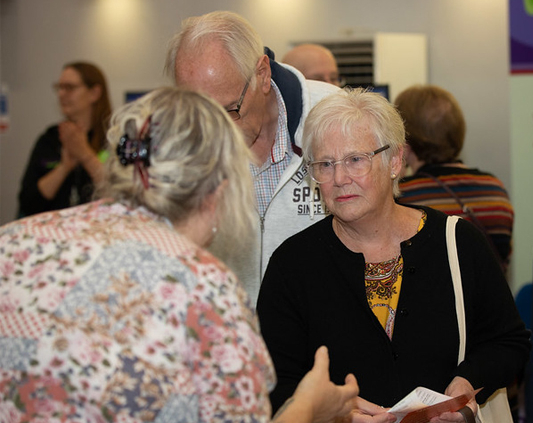
A big thank you to everyone who came along to our AGM ‘All Change!’ and Review of the Year 2022 at Northumberland College in Ashington on 19 October. Special thanks also go to the students and staff at the college and our speakers Rachel Mitcheson of the NENC Integrated Care Board and Neil Bradley of adult social care at Northumberland County Council.

Around 100 people came to the event where we heard about upcoming changes in NHS and social care from those leading the changes. We also gave a review of our work over the last 12 months and enjoyed lunch and a chance to chat to guests.

Have a look at the photos from the event on our Facebook page.

The presentations, draft minutes, plus answers to the questions raised before and during the event can be found below.

AGM 2022 presentations

AGM 2022 draft minutes

How to stay well this winter

How to stay well this winter

Winter conditions present an increased risk to our health, especially if you are older or have a long-term health condition such as heart or kidney disease, asthma or diabetes.

Being cold can raise the risk of increased blood pressure, heart attacks and strokes. The cold, damp weather can aggravate existing health problems, making you more vulnerable to respiratory winter illnesses. Here are some tips to help you stay well this winter.

Top tips to stay well from the NHS

  • Make sure you get your COVID-19 booster and flu vaccination if you are eligible.
  • Keep warm by wrapping up, wearing lots of layers of thin clothes.
  • Stay active by moving around indoors, avoid sitting for more than one hour. Keeping active can also support your mental health.
  • Keep the heat in by drawing your curtains at dusk and keeping doors closed to block draughts. Try and heat rooms you regularly use to at least 18°C and keep your windows closed at night. Make sure you’re getting the help you’re entitled to with heating costs.
  • Use a hot water bottle or an electric blanket to keep warm in bed – but don’t use both at the same time.
  • Have at least one hot meal a day. Eating regular meals and drinking hot beverages can help you keep warm.
  • Look after your mental health by speaking to someone – a friend, family member or healthcare professional, like your doctor – if you are feeling down. Check out the NHS website for support on where to get urgent mental health support.
  • Make sure you have the right medicines at home in case you get poorly. Ask your pharmacist if you are unsure.
  • Wash your hands with soap and water:
    • When you get home or into work;
    • After you blow your nose, sneeze or cough; and
    • Before you eat.
  • If you get ill, rest and keep warm, drink lots of liquids, have at least one hot meal each day and take the tablets you have been recommended by a healthcare professional.

If you get ill

  • If you think you need medical help right now, call 111 by phone or use NHS 111 online.
  • If it is a real emergency and life-threatening, then you can call 999.
  • If it’s less urgent contact your doctor or pharmacist.

Look out for others

  • Keep in touch with your friends, neighbours and family and ask if they need any practical help, or if they’re feeling under the weather.
  • Make sure they’re stocked up with enough food supplies for a few days, in case they can’t go out.
  • If they do need to go out in the cold, encourage them to wear shoes with a good grip and a scarf around the mouth to protect them from the cold air, and to reduce their risk of chest infections.
  • Make sure they get any prescription medicines before the holiday period starts and if bad weather is forecast.
  • If you’re concerned about someone’s health or safety, call NHS 111 for health advice, or 999 in an emergency.

Download the NHS stay well this winter leaflet

Download the NHS stay well this winter easy read leaflet

Need more advice?

Read more tips on keeping well this winter at the NHS website.


Tell us about your Covid booster

What you told us: October 2022

What you told us: October 2022

Thank you to everyone who gave us feedback on NHS and social care services last month.

Below is our ‘at a glance’ report for October 2022, which gives an overview of who we have been hearing from and what they told us. What we hear from people living and working in Northumberland helps us build a picture of what is working well and where there are issues in NHS and social care services.

Often, we can get a quick response to your enquiry or signpost you to the right service.

Some issues are already being looked at by other organisations and we pass on your comments and concerns to them so that they have as much feedback as possible from those using services, to help them make decisions and improvements to services.

There are some issues that we look into in more detail and set aside time and resources to investigate further and put together recommendations for change.

Read more about our work.

Healthwatch Northumberland feedback report October 2022

West Northumberland patient group

West Northumberland patient group

Are you passionate about the health and wellbeing of your community?

If you are a patient of a West Northumberland GP primary care network (PCN) practice (see list below), join the patient group and have your voice heard! The West Northumberland PCN Patient Group is a group of patients, carers and practice staff which provides a patient perspective of services provided within the PCN.

What does the patient group do?

Patient group members support the PCN in its aims to provide high-quality, integrated person-centered care in a proactive and cost-effective way and feed in ideas as well as help get information out.

Collectively the group supports the PCN in its purpose by providing a patient-orientated view on changes to services proposed by the PCN and by suggesting improvements to services based on patient experience.

How can I take part?

There are two types of membership; a core group and a virtual group.

The core patient group meets every month, in person, at alternating venues. The virtual patient group is for those unable to attend the core group meetings but who are still keen to get involved.

Virtual group members participate mainly via email and/or social media, helping share information with others, and attend quarterly patient group meetings online via Teams, together with core group members.

Members from any gender, age, ethnicity are welcome and all opinions and input is valued.

If you would like to join the West Northumberland PCN patient group, or have any questions, please email nencicb-nor.westnorthumberlandpcn@nhs.net or visit the West Northumberland Primary Care Network Facebook page.

West Northumberland PCN GP practices

Branch End Surgery

The Bellingham Practice

Burn Brae Medical Group

Corbridge Medical Group

Haltwhistle Medical Group

Humshaugh and Wark Medical Group

Prudhoe Medical Group, Scots Gap Medical Group

Sele Medical Group

White Medical Group

Although not members of the PCN, Adderlane Surgery and Riversdale Surgery receive services from the West Northumberland PCN, so patients from these surgeries are also welcome to join this patient group.