Carers Rights Day 2024

Carers Rights Day 2024

Carers Rights Day is on Thursday 21 November 2024.

Every day, 12,000 people become unpaid carers for a partner, family member or a friend – many of whom don’t see themselves as carers, often unaware of their legal rights and what they’re entitled to in terms of support and benefits. This year’s theme is about helping carers recognise and understand their rights, and to access support.

We’ll be at the Carers Northumberland Carers Rights Day information event on Thursday 21 November, 2pm to 4.30pm, at Morpeth Town Hall. Come along to find out more about your rights as a carer and how to get support for you or the person you care for.

If you would like to tell us about your experience of health or social care services as a carer or would like information about local services and support please get in touch.

Spotlight on… Bell View

Spotlight on… Bell View

As part of our Information and Signposting Service, we’re shining a spotlight on voluntary and community organisations offering all kinds of support to people in Northumberland.

Bell View is an independent charity based in North Northumberland. It offers a range of health, wellbeing, and social activities from its Resource Centre and from community spaces across the region. The Resource Centre has a community café with free internet access and is a Warm Space offering tea, coffee, cake and soup. A range of activities are on offer including arts and crafts, exercise, digital support and much more.

Bell View also has a CQC registered care provider, Help at Home, delivering personal care and enabling support across the whole region.

For more information please email: Daycare@bellviewbelford.co.uk or telephone 01668 219221.

Share your views of your local pharmacy

Share your views of your local pharmacy

We’re working with Northumberland County Council to assess pharmacy services in the county.

Most of us use pharmacy services at some time or another. By telling us how you and your family use these services you can help make improvements for everyone in your community.

What you tell us about how you use your local pharmacy will help the council to write a local Pharmaceutical Needs Assessment, which will help to ensure that your local pharmacy provides the service you need both now and in the future.

You can give us your feedback online, or get in touch to ask for a postal copy with freepost return. If you’d prefer to tell us your experiences over the phone please call us on: 03332 408468 or call into one of our drop-in events.

This survey closed on 30 November 2024.

September 2024 feedback

September 2024 feedback

This month we heard from 210 people. The issues you told us about most were hospitals and GP services. Poor communication was the most common issue with hospitals, either with the patient or between GP and hospital and/or between hospitals. Just under a third of the feedback we received praised the quality of care within hospitals.

Access to GP services was the most reported concern, with issues about difficulty getting an appointment being the most common reason for access concerns. There appears to be emerging concerns around patients and online access too. Similar to hospitals, around a fifth of the comments we received were complimentary about the quality of service received.

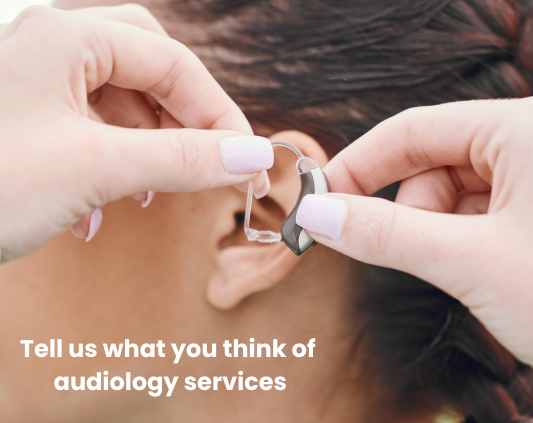
Just over 5% of your feedback was about the audiology service, with concerns raised about the decline in services.

This month’s focus

We spoke to lots of people at our Here to Hear drop-ins and attended 11 additional events. At Allendale Meet and Eat, Hexham Auction Mart and rural roadshow events at Bowsden and Wooler, we heard from farmers and people living in rural locations. We also went to mental health events in Ashington, at Cramlington Memory Cafe and the first of Northumberland County Council’s World Mental Health Day events across the county which was held at Queen’s Hall in Hexham.

We gave a presentation to Tynedale Soroptimists at their monthly meeting and attended Queen Elizabeth High School’s Freshers’ Fair, with a view to recruiting more young people as volunteers.

Working with North East Ambulance Service, we have been asking for people’s views on how it delivers services, and how it supports those who contact the service. Feedback will help shape future planning and delivery.

Our online talk this month was from Diabetes UK with 20 people joining us to hear more about the support available.

Impact

Harrogate and District NHS Foundation Trust asked to link our cost of living information webpage to its Children’s Health Services App. A representative said “We are increasingly having conversations about the impact of cost of living on our families. Our practitioners are frequently having discussions with our service users to promote financial wellbeing … The aim of our App is to provide parents and carers with access to reliable, trusted resources to manage their journey from conception to their child entering adulthood.”

Negative feedback example

A woman has two children with complex health conditions. Both children have to go to hospital for urgent treatment on a regular basis. She told us she is continually frustrated by the inability of hospitals in Northumberland and Newcastle to share information with each other.

She understands this is due to incompatible information systems. In an emergency she has to take the children to the nearest hospital which is a Northumbria Healthcare hospital. She says they do not have the same level of speciality in her children’s condition as Newcastle Hospitals, which delays treatment and they end up having to go to the Royal Victoria Infirmary anyway.

Cramlington, Bedlington and Seaton Valley resident

Positive feedback example

A patient told us their GP surgery provides an excellent service. They recently had a concern and began filling in an eConsult online form. Before they had completed all the details, they were sent an alert telling them they needed to contact the surgery about the issue.

They called and got a timely appointment with a medical student who was being supervised by a GP – this was fine for them and worked well. The patient has no complaints about the service provided by the GP.

Tynedale resident

Service providers we heard about and how many times

Northumbria Specialist Emergency Care Hospital 5
NENC Integrated Care Board (as commissioner) 4
Newcastle Hospitals NHS Foundation Trust 3
Wooler Health 2
Wansbeck General Hospital 2
Royal Victoria Infirmary 2
Bellingham Medical Practice 2
Wellway Medical Group 2
Hexham General Hospital 2
Allendale surgery 2
Bedlingtonshire Medical Group 2

We also heard about 20 other organisations once each.

Download a pdf version of the Healthwatch Northumberland summary of feedback for September 2024
Thank you Berwick!

Thank you Berwick!

Cholesterol awareness: get tested!

Cholesterol awareness: get tested!

This month is Cholesterol awareness month. Did you know high cholesterol can be caused by your diet, lack of exercise, or even your family history? Don’t wait until it’s too late! High cholesterol is often a silent killer with no symptoms. Getting a cholesterol test can help prevent heart attacks and strokes.

Learn more about cholesterol

Cholesterol is a type of fat found in our bodies, and while we do need some, there are both good and bad types. Too much bad cholesterol can increase the risk of strokes and heart attacks. Don’t forget, a cholesterol check is the first step! It’s quick and easy, and you can get it done at your GP surgery or even at some pharmacies.

If you’ve been diagnosed with high cholesterol

If you’ve been diagnosed with high cholesterol, you can keep your cholesterol in check with healthy lifestyle changes like eating a balanced diet and staying active. It’s important you have a test yearly to keep it in control and continue taking your prescribed medication if needed. There are a variety of treatment options available – contact your GP surgery to find what’s best for you. Find out more.


Getting tested

High cholesterol does not usually cause symptoms. You can only find out if you have it from a blood test. A simple cholesterol check can go a long way in preventing heart disease. If you’re aged over 40 and haven’t had a cholesterol test before – or it’s been more than five years since your last one, please contact your GP surgery to book a quick and simple cholesterol test.


Have you had a cholesterol test recently? Let us know about your experience.


Karen’s story: life after limb loss

Karen’s story: life after limb loss

Our office volunteer, Karen, writes about her experiences of undergoing an amputation five years ago and the challenges she has faced as a wheelchair user living in Northumberland.

Issues with my left leg began in 1988 when my knee was injured during an accident. It required two operations before I was fit again.

Some years later, however, I fell down the stairs at home and broke the same knee badly and had to undergo further surgery. Unfortunately, I had  a reaction to the metalwork in my knee, which led to an infection. After another fall and a broken leg which took months to sort out, my leg finally gave way and in May 2019, on medical advice, my leg was amputated. I was given no psychological preparation before the surgery; it was treated like any other operation.

I was discharged after seven days despite not feeling ready. It felt very daunting to be on my own. Unfortunately, I had post-surgery complications, however, I had support from carers visiting four times a day, which was a great help.

I have experienced all sorts of challenges since my amputation, both physical and psychological. My amputation has affected my mental health, going from being a happy person pre-amputation to then feeling ground down. My GP offered me counselling, however, the support on offer felt like I was simply answering questions being asked from a form, rather than being an open conversation, which I felt wasn’t what I needed. Having made my own enquiries, I then received six weeks of telephone counselling support through the Bridge Project. I made further enquiries of my own and discovered Talking Matters. I had to wait 19 months to receive support from them, which helped a little, but just scratched at the surface of my feelings.

Most amputees suffer from phantom pains in the amputated limb. However, my biggest issue is that I have been left with severe sciatic nerve pain. Despite seeing physiotherapists, my sciatic pain persists five years on. It wears me down and I often feel that no one is listening to me.

I feel that people in my position would benefit from receiving better support, both physically and psychologically, at the time of amputation so they can be better prepared for what they might face in the years to come, given realistic information about what pain they might experience and being informed of what mental health support is available for them. It can be harder to seek help at the point at which you actually need it.

Whilst I was in hospital, my housing association landlord carried out some planned works to my home, replacing the kitchen and bathroom. However, despite informing them of my recent amputation, no changes were made with the ongoing works to accommodate my new needs. As a result, I struggle with the height of my kitchen cupboards, having to stand up on my one leg, to put crockery away, often leading to me stumbling.

I was offered some basic equipment through my Occupational Therapist, such as a commode, a chair to sit in and my wheelchair, but some of the items offered weren’t of great use, e.g. a stool for transferring from my wheelchair to my shower that I would fall off. Although I have a ramp at my front door for access, there are steps at my back door, meaning I’m unable to hang my washing out, put rubbish in my bins or even sit in my back garden. I always thought that support would automatically be offered to people in my situation, but it feels like even if the support is out there, you have to go and look for it yourself.

Finding reliable support at home has been very challenging. Social services carer support couldn’t meet my needs and was going to cost me more money in the long run, so I have had to seek private support. I now have a carer that visits three times a week, however, when she is off sick or on holiday, there is no replacement carer.

Getting out of the house to visit places of interest is not easy. I don’t feel confident at all using public transport with my wheelchair on my own, so I rely on using wheelchair-accessible taxis, which can be very expensive when living in a village within such a large, rural county. Even accessing my nearest town means a £20 taxi fare. Once there, there are only a couple of buildings I can access, which makes me feel like a second-class citizen. Many shops and businesses still aren’t wheelchair accessible, and this frustrates me to the core. A local pharmacy displays a ‘Disability Friendly’ sticker, however, when I was unable to get in through their main entrance, my carer went inside to ask where the wheelchair accessible entrance was and was told that there wasn’t one.

I feel that society doesn’t fully appreciate the difficulties faced by people who are disabled. It’s not just the getting there that is the problem, it’s then being able to access buildings, negotiate tight spaces or find pathways suitable for my wheelchair. It can be very frustrating and isolating. I am lucky, because I can go online and check which organisations have adequate access for wheelchair users, whereas some people aren’t able to do that. I feel strongly that wheelchair users should be able to access any premises where able-bodied people can.

Following my amputation, I decided I wanted to do something positive with my life. I saw an advert on Facebook from Community Action Northumberland which was advertising its Bridge Project scheme to support people to get back into work or to get into volunteering. They put me in touch with Healthwatch Northumberland, which was looking for a volunteer to assist in the office. Unfortunately, the arrival of Covid meant that I couldn’t start my volunteering work until a couple of years later. However, I have now been volunteering with them for over two years, attending the office twice a week – Healthwatch Northumberland covers my taxi transport costs to get me there and back.

Many years ago, I spent six years working as a Nursing Auxiliary, so I already had some experience of NHS services. I also had some experience of working with the Blood Transfusion Service as a temporary administration officer. On a personal level, I have experience of social care. I believe that it is very important for people to be able to have their say about their experiences of health and social care services, so Healthwatch Northumberland is a good fit.

Volunteering has been a godsend for me. The Healthwatch Northumberland team have made me realise the importance of getting out and about and have helped me with challenges I’ve faced. I have gone from feeling very isolated, having no one to support me or to communicate with, to now being able to see my colleagues in the office twice a week. This helps me a lot. They have given me back some confidence and the strength to carry on with life, for which I am very thankful to them.

Cervical screening my way

Cervical screening my way

In 2023, NHS England set a target to eliminate cervical cancer by 2040. It’s an admirable but challenging goal, set against declining levels of uptake by women of cervical screening over the past 20 years.

In response, Healthwatch England launched research to investigate why some women are hesitant to go for screening, to make recommendations to policymakers on how to improve uptake and to help meet the elimination goal.

Key findings

  • The top reasons for hesitancy among respondents were worries about physical discomfort, embarrassment at undressing in front of healthcare professionals and a belief they didn’t have to go because they weren’t currently sexually active.
  • Women felt NHS information describing the purpose of cervical screening was good/clear (78%), but fewer (58%) said it explained Human Papillomavirus (HPV) the leading cause of cervical cancer.
  • Some women didn’t receive accessible or translated information to enable them to understand the invitations and make an informed decision about attending screening.
  • Most women (81%) who’d attended screening previously said staff treated them with respect. However, only a third (33%) felt they’d been able to ask staff for practical changes that could make them feel comfortable in appointments.
  • There was strong support (73%) for home testing – currently being considered as an option by screening experts – if it was offered free on the NHS.
  • There are major gaps in national data on the diversity of women who attend cervical screening.
  • In-depth interviews with women provide examples of innovative practices that improve uptake among diverse women.

Recommendations at a glance

Recommendations to policymakers include calls for:

  1. NHS England to investigate solutions to ensure that disability and ethnicity data about people attending screening can be captured, analysed, and published alongside regional and age uptake data in the future. This would allow for a more comprehensive picture of uptake among diverse groups.
  2. NHS England to address the gap left by the closure of Jo’s Cervical Cancer Trust (the only charity and national helpline dedicated solely to cervical cancer), with high-profile promotion of alternative, trusted sources of direct support and information for women.
  3. Screening providers to ensure they train and enable admin and screening staff to meet their responsibilities regarding accessible information and adjustments to care.
  4. Screening providers, working with local Healthwatch, to seek feedback from their local communities to understand views on booking methods, appointment times and preferred locations for drop-in clinics. Services should adapt access accordingly to help increase uptake.
  5. NHS England to introduce an NHS-branded Trauma Card, based on a Healthwatch Essex initiative for affected women to bring to appointments.
  6. Subject to the results of NHS-commissioned research on the safety and effectiveness of self-screening, the NHS should adopt self-screening as an alternative option offered to all women nationally who would prefer it. Instructions for their use should be co-designed with women.

Read the full report and recommendations

If you would like to leave feedback about cervical screening or another health or care service please get in touch.

Share your views on North East Ambulance Service

Share your views on North East Ambulance Service

We’re working with North East Ambulance Service (NEAS) and other local Healthwatch to understand people’s experiences and expectations of the services. This includes:

  • Ambulances and paramedics
  • Patient transport
  • 999 call handling
  • NHS111

While people think about NEAS as ambulances responding to 999 calls, nearly two-thirds of its work is answering calls to NHS111. From life-threatening emergencies to general health advice, NEAS plays a key role in the North East healthcare system.

Your views on how it delivers its services, and how it supports those who contact the service will help shape future planning and delivery.

We are interested in hearing your views whether you have contacted the ambulance service recently or not. The survey is short and your responses will be anonymous.

Have your say before Monday 21 October 2024.

This survey is now closed.

As a thank you for your time and contribution, at the end of the survey you will have the opportunity to take part in a prize draw to win £100 of Love2Shop vouchers.

You can get in touch with us at any time for more information or if you would prefer the survey in a different format.