You asked us about Cold Caps

Healthwatch Northumberland was contacted by someone who reported that cold cap hadn’t been available for them during cancer treatment at Hexham General Hospital. The cold cap is a special cap filled with cold gel that can reduce hair loss caused by chemotherapy. It works by reducing the amount of chemotherapy drugs reaching the hair follicles.

We contacted some local groups for more information and were invited to attend a coffee morning held by the Northumberland Cancer Support Group. The people we spoke to seemed sure there is in fact a cold cap available at Hexham Hospital. Some people told us that they were offered the cold cap treatment but declined because of potential drawbacks and limited success rates;  others told us that because of the type of cancer and its severity, they had not been eligible for this type of treatment.

We also met a volunteer with Macmillan Cancer Support at the coffee morning, who agreed to ask some questions when she was next at the hospital.  The volunteer got back in touch with the following information:

“Hexham Oncology Day Unit has two cold caps.  These are offered to patients and are readily available as appointments can be made to accommodate everyone.  Usually the patient’s consultant would have discussed the situation with them beforehand.”

“Everyone is eligible but the consultant may be of the opinion that the patient could be at risk of metastasis to the brain if taking a certain drug during treatment.”

Healthwatch Northumberland also spoke to the staff on the Macmillan Cancer Support bus which was visiting Hexham at the time.  They suggested two useful websites for further information on hair loss during treatment:


Breast Cancer Care

Macmillan Cancer Support


Further research concluded that it is the decision of the individual cancer specialist whether or not the cold cap is suitable for a patient.  Cold cap treatment is not available for use during radiotherapy.  It can be used with chemotherapy but if the chemotherapy treatment is very strong or if the patient has very long periods of chemotherapy treatment, the cold cap will not be suitable.  In short, the severity of the cancer and the strength of the treatment will determine whether the cold cap is recommended.

Patient Transport Services insight

Patient Transport Services insight

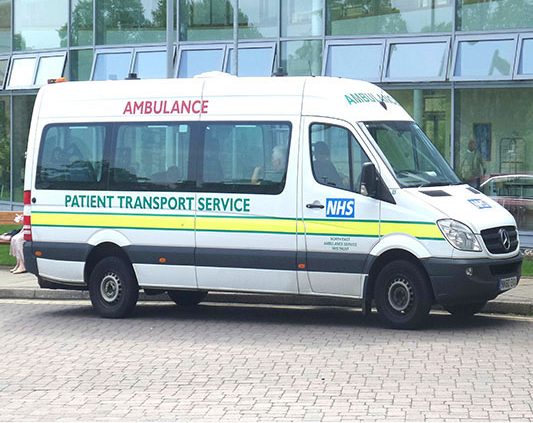
North East Ambulance Service’ non-emergency Patient Transport Service provides a vital link in the treatment chain for people with a medical need, who would not otherwise be able to get to hospital appointments.  With a 90.7% satisfaction rating across the North East we know the service is greatly valued by those who use it, but what became clear to Healthwatch Northumberland from feedback and monitoring information is that people in Northumberland have experienced problems actually getting to the service via the booking procedure – many only securing a service when they appeal after first being turned down.

Our initial analysis showed:

  • 4000+ people per year being declared ineligible for patient transport when they are later found to be eligible through the appeals process.
  • Around 5000 people per year are being declared ineligible for patient transport and not appealing
  • Almost 75% of ineligibility decisions appealed through the Patient Transport Appeals Team are overturned
  • Around 50% of ineligibility decisions are overturned due to distance where distance is not part of the initial eligibility criteria
  • The trend in Northumberland was worsening relative to other areas

This suggested to us that Northumberland patients are experiencing additional stress and anxiety by being put through a seemingly unnecessary appeals process, while others are missing out by not appealing even though they are eligible.

We decided we needed more insight on the transparency and application of eligibility criteria. We talked to North east Ambulance Service, NHS Northumberland Clinical Commissioning Group, North of England Commissioning Support Unit and North of Tyne Patient Advice and Liaison Service. Each organisation engaged with the issues quickly and positively and we are pleased to report the eligibility criteria have been changed. Of particular note is the extension of automatic eligibility for people with dementia or a 30-mile boundary and the ability to book multiple trips when people are undergoing a course of treatment.

Read the full report and the response from North East Ambulance Service

Annual Report 2016/17

Annual Report 2016/17


The latest Healthwatch Northumberland Annual Report is now available, outlining the work undertaken by Healthwatch Northumberland during the year. See how we made a difference to people’s expeiences of health and social care in the county.

Download the Healthwatch Northumberland Annual Report 2016-17.

Is it 999 or 111?

Is it 999 or 111?

At some point, most people will either witness or be involved in an accident or experience a medical emergency. Knowing what to do next and who to call can potentially save lives.

Life-threatening emergencies

Call 999 in a medical emergency – when someone is seriously ill or injured and their life is at risk.

Medical emergencies can include:

  • loss of consciousness
  • an acute confused state
  • fits that are not stopping
  • persistent, severe chest pain
  • breathing difficulties
  • severe bleeding that cannot be stopped
  • severe allergic reactions
  • severe burns or scalds

Call 999 immediately if you or someone else is having a heart attack or stroke. Every second counts with these conditions. Also call 999 if you think someone has had a major trauma. Major trauma is often the result of a serious road traffic accident, a stabbing, a shooting, a fall from height, or a serious head injury.


Non-life-threatening emergencies

If it is not a life-threatening emergency and you or the person you are with does not need immediate medical attention, please consider other options before dialling 999:

  • self care at home
  • calling NHS 111
  • talking to a pharmacist
  • visiting or calling your GP
  • going to a local NHS walk-in centre
  • attending an urgent care centre or minor injuries unit
  • making your own way to your local A&E department – arriving in an ambulance does not mean you will be seen any quicker

Choose the best service for your needs, as this will ensure the ambulance service is able to respond to the people who need help the most.

Source: NHS Choices.

Four easy steps to add ‘In Case of Emergency’ details to your phone

Four easy steps to add ‘In Case of Emergency’ details to your phone

Most of us carry a phone with us when we’re out and about, perhaps with keys and a wallet, but what happens if we’re involved in an accident and you aren’t carrying any means of personal identification? One of the easiest and most convenient places to keep ‘In Case of Emergency’ (ICE)  information is on your smartphone, but only if you know how to store the information so that someone can see it without having to unlock your phone. . Folllow these simple steps to set up ICE on your smartphone, and encourage family members to do the same.

I-phones

  • Click on the ‘Health’ application on your home screen.
  • Choose ‘Medical ID’ from the lower right-hand corner.
  • Add your emergency contacts from your contact list and note and input any medical conditions.
  • Make sure the option to ‘show when locked’ is activated. This means the ICE information can be accessed from your lock screen.

To find someone’s emergency contact on their phone:

First swipe to open. On the locked screen, you’ll see an ‘Emergency’ button in the bottom corner. Press to show a dialing screen with a Medical ID button at the bottom. Click on this for the emergency information.

Android Phones

  • Go to your ‘contacts’ list.
  • Click on ‘groups’.
  • The dropdown list will include ‘ICE – emergency contacts’.
  • Click on this option then select your emergency contacts. You can also fill in medical details.

To find someone’s emergency contact on their phone:

To access the emergency contact information on a locked Android phone, swipe to open. This will bring up the passcode page, with ‘emergency calls only’ on the bottom.

Click on ‘emergency calls’. On the top right will be a siren icon. Click on this and it will show the emergency contact information.

There are also several ICE apps available which you can download to your smartphone and which will appear on your lock screen. Have a look at your app store for options.

Annual Report 2015/2016

Every year we produce a report outlining the work we have done and what we have achieved during the year. In the last year; April 2015 to March 2016 we:

  • Reached over 40,000 people on social media
  • Had help from our volunteers with everything from gathering feedback to making animations.=
  • Reported on topics such as young people’s views on health services and how people access services
  • Spent over 100 hours gathering the views of children and young people
  • Visited over 60 local health and/or social care services
  • We met hundreds of local people at our drop in events and information stands