COVID-19: What people are telling us

COVID-19: What people are telling us

Each month, thousands of people share their experiences about NHS and social care services with Healthwatches across the country. During the COVID-19 pandemic, this has ranged from the effect lockdown has had on carers, to the problems getting emergency dental treatment.

In Healthwatch England’s latest briefing they outline the issues over 19,700 people have raised, as well as taking an in-depth look at how technology has been used in response to the pandemic.

You can find a summary of the key points below or click the following link to read the full report:

Read the full report here

The impact of COVID-19

At the start of lockdown, people told us how the measures introduced to help control the spread of coronavirus were affecting their care.

Changes to routine and planned care – In many cases, people were unable to find the information they needed to understand what they should expect from services and were unclear about what the next steps for their treatment or care would be – leaving them feeling stressed and frustrated.

Shielding measures – Those who were shielding told us about problems in getting transport to their hospital care. For some people, the cost of attending one or more hospital appointments was too expensive to arrange private transport, especially if the hospital was far from home.

Access to prescription medicines – Initially people were struggling to get through to their GP or pharmacy by phone, and others experienced delays in getting their medication. This caused anxiety for people running out of supplies, particularly for those with long term conditions.

What can services learn?

  • People need clear, accurate and consistent information about their care and the services they use.
  • People’s experiences of hospital appointments do not start and end at the hospital doors – their journey begins at home, so transport arrangements must be considered.

Lockdown begins to ease

As lockdown restrictions began to reduce, we started to hear new concerns from people.

  • Worries about the future – People raised questions with us about how services can reopen safely, reported problems using services that are supposedly already open for business and expressed frustration at some NHS services being slow to reopen compared to other areas of the economy.
  • Testing for COVID-19 – While some people found visiting a testing centre easy, we also heard that the online booking process was difficult to use and there were concerns about the accessibility of testing centres.

What have people been telling us throughout?

  • Lack of accessible information – Throughout the pandemic, we have heard about the difficulties of finding up-to-date information in the languages or formats people need – especially when advice from the Government was frequently changing.
  • Emergency dental care – People did not know how to access emergency dental care – causing them extra stress while experiencing acute dental pain or other symptoms. Many others have felt they have no option but to go private if they want to receive treatment for what their dentist considered to be non-emergency treatment.
  • Access to B12 injections – Although some people received injections, either as normal or at a different GP practice, we also heard that in many areas there was an inconsistent approach to providing this treatment.
  • Care homes – People’s feedback highlighted that while family and friends were unable to visit their loved ones in care homes, timely and regular communication from care home staff really mattered.
  • The hidden effect on families and carers – The lack of respite has left many carers feeling stressed, isolated and forgotten about. We also heard about the difficulties some people faced helping the person that they care for to understand and remember the lockdown measures.
  • Praise for health and social care workers – Throughout the pandemic, we have heard about how much people appreciate the hard work of health and social care professionals during this time of unprecedented challenges.
  • The impact on people’s mental health – Since the start of lockdown, we have heard about the effects of the pandemic on people’s mental health and wellbeing. For some people, the changes to the services they would usually access have left them feeling abandoned – with infrequent telephone appointments not meeting their needs.

What can services learn?

  • Accessible information and meeting people’s communication needs must be considered from the start and should not be an afterthought. The information must also be shared through trusted sources, such as community centres and groups.
  • Families and carers have been providing even more care than usual during the pandemic – but this often goes unnoticed, and many need more support.
  • Good communications between care homes staff residents and their family and friends is key, especially while visiting restrictions are in place. Where appropriate, this should include involving residents’ families or next of kin in decision making about their care.
  • The mental health impacts of the pandemic are affecting both existing service users and non-service users. Mental health services will require investment to support people in both the short and long-term.

Digital healthcare

The pandemic has seen the digitisation of many health and social care services overnight. While digital appointments don’t work for everyone, and services should not be exclusively digital, it’s important healthcare services embrace technology for those who find it an efficient way to communicate. Our recent work in this area demonstrates how services are embracing this shift to digital healthcare:

The doctor will zoom you now

How the new NHS COVID-19 tracing app offers better data privacy

Read the full briefing to find out what we can learn from the rapid roll-out of virtual NHS consultations, and the importance of involving patients from the start when setting up new services.


If you would like to share your own experiences of health and social care services during the pandemic you can do so here:


Tell us your coronavirus story

How to contact your GP and get the help you need

How to contact your GP and get the help you need

As a result of Covid-19, the way patients access GP practices has had to change. Whilst this can be frustrating and unsettling at times, it is necessary to make sure that all staff and patients are kept safe. The following guidance from Northumberland Clinical Commissioning Group will help you to contact your GP and get the help you need.

What to do if you need to contact your GP

If your needs are non-urgent, adult patients can contact their GP via the e-consult service on your practice’s website in the first instance. You can contact your GP practice and get a reply within two working days. You can also request medication, sick notes and bloods results through this service.

For health care needs regarding children, urgent problems or for those patients who are unable to access online services, you should telephone your practice and your call will be answered as soon as possible. The practice may ask for a brief summary of the problem to help direct you to the most appropriate member of the GP practice team.

Please note that your consultation may not need to be with a GP. It may be that the care/advice you need can be given by another member of the practice team.

Where possible and appropriate, consultations will be conducted either online or via telephone. If a face-to-face appointment is required and you need to visit the practice, please wear a face covering (unless exempt) when you arrive.

Face-to-face appointments

Your temperature may be taken on arrival and you will also need to sanitise your hands. Please be aware that the surgery doors may be locked and you will need to be granted access by a member of the practice team. There will be less people in the waiting room than usual and chairs are positioned apart from each other to ensure you can observe social distancing.

Please ensure you observe social distancing while in your GP surgery. There is clear signage to guide you. You are asked to wear a face covering if you need to attend the surgery in person.

If you have any coronavirus symptoms including a high temperature, new, continuous cough or a loss or change to your sense of smell or taste please DO NOT visit a GP surgery. You must stay at home along with anyone you live with and anyone in your support bubble. Only leave home to get a test. Self-isolate until you get your result.

Urgent medical needs

Please don’t delay in contacting your GP practice if you have an urgent medical need. The NHS is here for you and your family.
You can also get urgent medical advice online from 111.nhs.uk or by calling 111. For life-threatening emergencies please call 999 or go straight to A&E.

What practices are doing to ensure services can be resumed as soon as possible

Practices are working extremely hard to manage the backlog of work and patient appointments as a result of Covid-19. Please be assured that they will be doing all they can to arrange appointments and services for you as quickly as possible.

Please also be mindful that, at times, workforces may be affected by Covid-19, so teams may be smaller than usual. They are, however, all doing their very best to look after you. We ask you to be patient, polite and respectful. No type of abuse will be tolerated by any member of staff.

All the necessary steps are being taken to protect you and staff from coronavirus. Robust measures are in place to ensure that practices are safe.

When to self-isolate

If you have symptoms of COVID-19, however mild, you must self-isolate for at least 10 days from when your symptoms started. Please do not visit your GP surgery. You should arrange to have a test to see if you have COVID-19.

If you are not experiencing symptoms but have tested positive for COVID-19, you also must self-isolate for at least 10 days, starting from the day the test was taken.

If you develop symptoms during this isolation period, you must restart your 10-day isolation from the day you develop symptoms. If you live with others, all other household members must stay at home and not leave the house for 14 days. The 14-day period starts from the day when the first person in the household became ill or if they do not have symptoms, from the day their test was taken.

High risk groups

If you are in a high risk group, you can still go out provided you are well but you should:

  • Maintain two metres distance from people outside your support bubble
  • Avoid crowded spaces
  • Wear a face covering in shops and other enclosed spaces
  • Avoid touching your face
  • Wash your hands carefully and more frequently than normal
  • Use sanitiser outside your home (where available) especially as you enter a building and after you have had contact with surfaces.


Annual Report 2018-19

Annual Report 2018-19

Our latest annual report was published this week. The report documents our activity over the past year; where we’ve been, who we’ve heard from and how we’ve made a difference to people who use health and social care services. We will be talking more about the report at our Conference on 16 October in Blyth, so please put that date in your diary – more details to follow soon.

We will have hard copies of the report available very soon so please get in touch if you would like one in the post. You can download and read the report here.

Healthwatch Northumberland AGM 2018

Healthwatch Northumberland AGM 2018

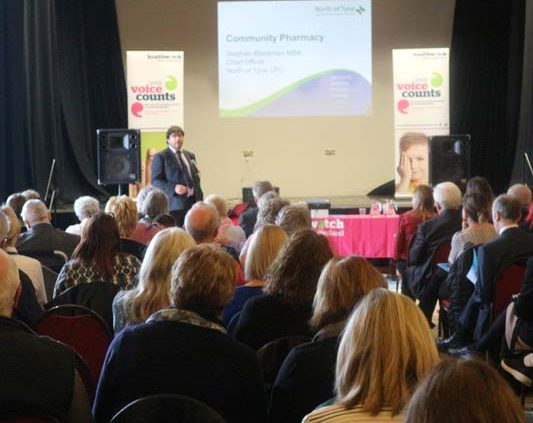
Our AGM this year saw around 100 people come together at Newbiggin Sports and Leisure Centre, to hear about the work of Healthwatch Northumberland over the last 12 months. Thank you to everyone who attended. Special thanks go to our guest speaker, Stephen Blackman of North of Tyne Local Pharmaceutical Committee, who gave an informative address on the role of community pharmacies in Northumberland and answered questions from our attendees. Big thanks also go to our information stand holders, who provided a wealth of information about services on offer from NHS, voluntary and community organisations in our region.

The minutes of the event and presentations from Healthwatch Northumberland and North of Tyne Local Pharmaceutical Committee can be downloaded below.


Healthwatch Northumberland AGM 2018 Draft Minutes

Presentation: Derry Nugent, Project Coordinator, Healthwatch Northumberland

Presentation: Stephen Blackman, North of Tyne Local Pharmaceutical Committee

Annual Report 2017/18

Annual Report 2017/18

Our Annual Report is a bitesized account of what the Healthwatch Northumberland team has been up to over the previous year. You can read about what you’ve told us about health and social care, how we’ve helped people find answers and how we’ve made a difference. We will be expanding on the report at our AGM on 16 October (more details to follow), and you can download a copy below or contact us to be sent a hard copy.

Healthwatch Northumberland Annual Report 2017/18