We’re recruiting – join our board!

We’re recruiting – join our board!

Could this be you?

  • Are you passionate about improving local NHS and care services?
  • Could you act as the ‘eyes and ears’ of your community and let us know about any changes needed to local health and social care services?
  • Do you want to ensure Healthwatch Northumberland works in an inclusive and equitable way?

Great! We would like you think about joining our board.

You would be one of 15 board members who guide and oversee Healthwatch Northumberland’s work.

It is very important the people involved with Healthwatch Northumberland have experience of using health and social care services including as a carer. We are keen to hear how you could use what you know to help understand what is happening in our diverse communities.

How much time is involved?

The minimum commitment is four board meetings per year plus a review day.  Meetings take place during the working day, and last approximately 2.5 hours.  We meet in different places (we pay travel expenses) or online.

If you want to you can get more involved including helping us at community engagement events or with research.  It would be up to you.

If you want to know more have a look at our information pack and or contact Derry Nugent, Project Co-ordinator on 07590 880016 or derryn@healthwatchnorthumberland.co.uk.

Please return completed application forms by 1 October 2021.

Information Pack

Application Form

This vacancy has now closed.

£2million investment in Northumberland’s mental health services

£2million investment in Northumberland’s mental health services

Community mental health services for people with serious mental illness in Northumberland are to receive £2million of additional funding over the next three years.

The national funding from NHS England/Improvement is to support more ‘joined up’ mental health care across a variety of organisations, including hospitals, community organisations, GP practices and charity and voluntary organisations, improving access to care closer to home.

As a result, people with serious mental illness, accessing mental health services and support across Northumberland will receive more holistic and tailored care depending on their need – just telling their story once.

Watch the launch video for the programme

Over the next three years, funding will be invested in transforming care for specific mental health conditions.

For example, this year the Cumbria, Northumberland, Tyne and Wear NHS Foundation Trust is employing mental health practitioners to work in primary care in a joint initiative with six Primary Care Networks (groups of GP practices that work together) to ensure that mental health support and interventions are more accessible.

The community adult eating disorder service will be developed across Northumberland to respond to a range of eating disorders at a much earlier stage. This will enable opportunities for early detection and care being given at an earlier stage, improving the outcome for patients.

Patients who have complex emotional needs, and who may have suffered trauma, will receive support from staff who work closely with their GPs and other healthcare partners to provide greater emotional support.

More will be done to help prevent hospital admission, to seek alternative care and to prevent escalation of symptoms by enhancing the crisis pathways with staff who understand the social aspects of poor mental health, like fuel poverty, loneliness, and lack of employment.

Kate O’Brien, Senior Head of Commissioning, Child Health, Learning Disabilities and Mental Health, for NHS Northumberland Clinical Commissioning Group, said: “This is such a welcome and needed programme of work and I am extremely proud to be involved in it. We know it is going to improve the support and care for those that need mental health care across Northumberland. And after the last year and a half, this has never been more important. People have been through a very difficult period and I’m sure many are dealing with some very tough personal challenges and circumstances.

“Working in partnership across the wide range of organisations that provide mental health care and support is absolutely crucial to improve access and for this transformation to be a success and I know all involved are committed to improving the mental wellbeing of those that live in Northumberland. The integrated working across organisations will ensure that there is ‘no wrong door’ to access services and individuals should only need to tell their story once.”

GP practices, hospital mental health services and the voluntary sector across Northumberland will also work together to encourage the uptake of physical health checks for those with serious mental illness. These health checks will be available in GP practices and other community settings.

Northumberland Recovery College, which was launched in May 2021, is also part of this transformation work. The college is open to any adult living in Northumberland who would like to improve their mental health and wellbeing. It is not a physical building, but instead provides learning experiences, mutual support, and activities in local communities to improve wellbeing. The activities are often led by people with lived experience of mental ill-health. To find out more visit the website.

Partners working together on this transformation programme include Northumberland County Council, Northumberland NHS Commissioning Group, Cumbria, Northumberland, Tyne and Wear NHS Trust, Northumbria Healthcare NHS Foundation Trust, Primary Care Networks across Northumberland, Healthwatch Northumberland, Mental Health Matters, Mental Health Concern, Carers Northumberland, the voluntary sector and service users themselves.

Find mental health services and support

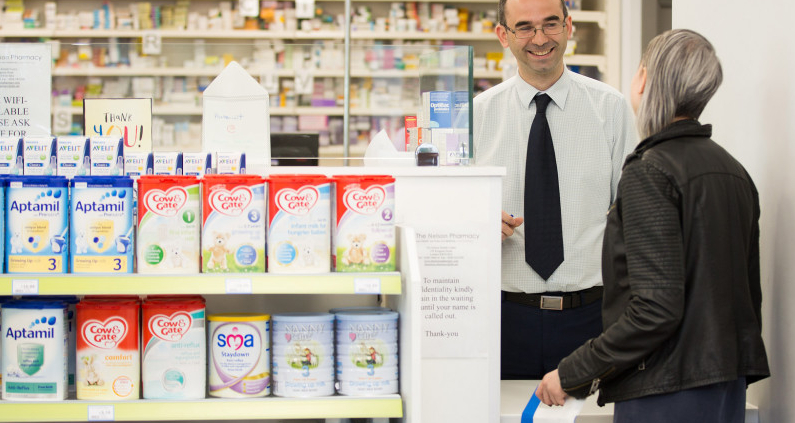
How can your pharmacy help you?

How can your pharmacy help you?

Did you know that pharmacies provide advice and information on minor illnesses and ailments?

Pharmacists are qualified healthcare professionals who can offer clinical advice and over-the-counter medicines for a range of minor illnesses. The pharmacist will let you know if you need to visit a doctor, but they can help you with a number of things first.

Healthwatch England has put together some questions and answers about how a pharmacist can help you.

Can a pharmacist prescribe medication?

Pharmacists can offer advice and over-the-counter medication to help with a range of common conditions and minor injuries such as:

  • common ailments such as coughs, colds and the flu
  • tummy trouble
  • aches and pains
  • skin rashes
  • cystitis
  • access to the morning after pill and pregnancy tests

Your pharmacist can help manage repeat prescriptions and help with any questions that you might have about medication that you have been prescribed by the doctor.

If you’re taking lots of different medicines, you may be able to have a Medicines Use Review with your pharmacist to help you work out when you should be taking your medication and discuss any questions or side effects.

Do I need to see the doctor every time I need a prescription?

Not necessarily, your pharmacist can help manage repeat prescriptions for you. If you take medication on a regular basis and your condition is stable, your GP may be able to offer a long-term repeat prescription.

Who do I turn to about general advice for my health and wellbeing?

You can visit your pharmacist instead of your GP about how best to keep you and your family well. They’ve all sorts of advice, from how to eat healthily, lose weight, and what type of exercise you could be doing.

What other services do pharmacists offer?

Your local pharmacist might also offer other NHS services such as smoking cessation, blood pressure tests, weight management and flu vaccination. To find out what your community pharmacist offers, just ask them.

What training do pharmacists have?

All pharmacists train for five years in the use of medicines. They are also trained in managing minor illnesses and providing health and wellbeing advice.

Is a chat with my pharmacist confidential?

Many pharmacies have a private consultation room where you can discuss issues with pharmacy staff without being overheard. Ask them if you would like to talk in private.


Find your local pharmacy

Tell us about your recent experience of a health or social care service

Join the Stroke Service User Voice Group

Join the Stroke Service User Voice Group

Do you have experience of having a stroke or caring for someone after a stroke? The North East and North Cumbria Integrated Stroke Delivery Network (ISDN) is looking for people to help develop and improve stroke care in the region.

It is important that stroke survivors are actively involved in discussions and decisions about stroke care to ensure services meet the needs of the people who use them.

The recently formed Stroke Service User Voice Group (SSUV) aims to represent the views and experiences of stroke survivors and their carers. To ensure that all areas across the North East and North Cumbria are represented in this group, the ISDN is currently looking for people who live in North Northumberland (Alnwick, Wooler, Berwick upon Tweed, Seahouses or Amble) to join.

For more information please contact:

Dementia diagnosis: what next?

Dementia diagnosis: what next?

Getting a dementia diagnosis can be a big shock, and it can be hard to know what to do next. Take a look at this guide to find out what support you should receive.
The essential information you should get after a dementia diagnosis
  • Your type of dementia and how it will affect you.
  • Any further tests, treatment, activities or therapies that might help you.
  • Who will provide your care and how to contact them, including the professional who will coordinate your care.
  • Support groups and charities that can help you.
  • How dementia can affect your driving and what you need to do.
  • How your employer should support you if you work (or are looking for work).
  • Any research studies you could take part in.

This information should be explained to you and given to you in writing. You can also ask for it in a format you understand. If you don’t need this information straight away, you can ask for it later on.

What else should you talk about with your GP?

  • Consent – Do you agree to services sharing information about you? Who can they share information with, and what are you willing for them to share?
  • Information – Do you know who to contact for more advice if your needs change?
  • Future contact – You may not need any help or further appointments now. If that is the case, would you like to be contacted again and if so, when?

Next step checklist

It’s not just health and care support you need to think about when diagnosed with dementia. To help you, Dementia UK has created a checklist to follow, which includes information on benefits and discussing plans and wishes with your family.

Dementia UK checklist

What support have you received? 

Have you or loved one had a dementia diagnosis? We want to hear your experience of dementia care and support – good and bad. We have the power to make sure NHS leaders and other decision makers listen to and act on your feedback. So, if you’ve got a story to share, tell us!

Planning your care

Now

After your dementia diagnosis, your GP should direct you to services that can give you more information and support. You should also be given the name of a professional who will coordinate any care and support you might need.

The future

Thinking ahead can feel overwhelming, but planning care can help make sure people know your wishes for the future. When you’re ready for this, you should be offered support and information to discuss your options.

Support for carers

Anyone with caring responsibilities for a person with dementia is entitled to a Carers’ Assessment. Their local Authority will carry this out. The Assessment will look at the impact of caring for a person with dementia and what support is needed. Take a look at Dementia UK’s guidance on Carers’ Assessments for more information.

As a carer, it is essential to think about your health and wellbeing. It is a significant adjustment, so you should take a look at the options available to you. These can include:

  • Training
  • Support
  • Advice

More information

The information on this page is from The National Institute for Health and Care Excellence guide for people with dementia and their family and carers. Take some time to read the guide in full to understand better the support available to people with dementia and their carers.

Read full guidance

Visit our dementia health page for information on local services

Northumberland Pride 2021

Northumberland Pride 2021

This year’s Northumberland Pride event takes place at People’s Park, Ashington on Saturday 28 August. The event will be ticketed for the first time, to make sure that it can go ahead in a Covid-safe way.

Kicking off at 11.00am the day will include live entertainment, a Health and Wellbeing Zone in partnership with Northumbria Healthcare NHS Trust, and a Children, Young People and Families Area in partnership with regional charity NE Youth.

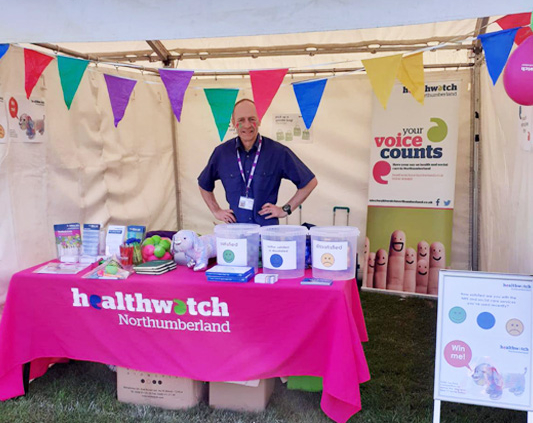
We will once again have a Healthwatch Northumberland stall, so come and see us and tell us your care experiences. Plus you could win a prize or take home a goodie bag.

Book tickets

Click and Connect: GP online services report

Click and Connect: GP online services report

GP online services report

GP online services can cover a range of different functions, for example, booking appointments online, ordering repeat prescriptions and viewing medical records, test results and medicines. Many people find it more convenient to register for online services rather than having to rely on telephone or in person contact with their surgery. This has been magnified by the Covid-19 pandemic, due to social distancing restrictions.

We were contacted by someone who told us about the difficulties they had experienced trying to register for GP services online. They found the process complicated, particularly as they were asked to visit the practice in person with ID, in the middle of the pandemic. We decided to do some work to look at how people in Northumberland could register for online services at GP practices across the county.

Click and Connect: GP Online Services Report

What you told us: April to June 2021

What you told us: April to June 2021

Healthwatch Northumberland Feedback Report April to June 2021

Between April and June 2021, we received feedback from 63 individuals from talking to people at face-to-face engagement events, telephone calls, emails, our website, social media, and other sources. We signposted 20 of these people to services.

This quarter we received feedback and enquiries from:

  • Telephone calls (42%)
  • Emails (23%)
  • Website (19%)
  • Social media (12%)
  • Engagement event (5%)

Each quarter we look at who we are hearing from across the county, including location, gender, age, and whether the respondent is sharing their own health and social care experience or speaking on behalf of a friend or relative.

We also look at the general sentiment of comments, with specific reference to the service type, for example whether that’s primary care (doctors, dentists, pharmacies), secondary care (hospital services), mental health or social care, as well as whether the feedback relates specifically to quality of the care or access to services.

Find out more about who we heard from and what we were told, below.

Feedback Report April – June 2021

Top tips to get the most out of your GP appointment

Top tips to get the most out of your GP appointment

One of the main things we hear from the public is getting a GP appointment can be tricky. And when you do get an appointment, the time you get to talk to your doctor can be limited. Healthwatch England has pulled together some top suggestions to help you make the most of your appointment slot.

These suggestions will help you feel prepared for your appointment and make the most of the time you have with your GP.

Read Top tips to get the most out of your GP appointment

If you would like to tell us about your recent experience of a GP appointment you can Tell us your Story here.

Covid restrictions after 19 July

NHS health teams across the region are set to continue with the current pandemic safety measures for the foreseeable future to help protect everyone from infections such as Covid-19 and flu.

The safety measures introduced nationally during the pandemic have helped not only protect staff, patients and visitors over the past year, but enabled the NHS to continue providing many of the non-urgent services that would otherwise have been postponed.

Healthcare settings across Northumberland are asking for patients and visitors to continue wearing a face covering after 19 July. This includes GP practices, hospitals, dental practices, optometrists and pharmacies.

Staff, patients and visitors will also be expected to continue to follow social distancing rules and wash their hands regularly when visiting any health or social care setting.
These measures can help you protect yourself and other people and prevent the spread of infection. This will help keep services open and limit any disruption.
While the government roadmap plans to remove measures like this from everyday life from 19 July it’s vital that the public can be confident about accessing or visiting local healthcare services safely.