Care homes forum 27 July 2023

Care homes forum 27 July 2023

Care homes forum Northumberland

Thursday 27 July, 10am – 11am via Zoom

Please join us for our next online forum for those with family or friends living in care homes in Northumberland.

Are you a relative of someone who lives in a care home, or have you recently helped a loved one access respite within a care home? Would you like support or information from others who have shared similar experiences? Come along to our next care homes forum to share your feedback or simply come along to find out more.

We will also give an update on our ‘look and listen’ visits into care homes.

To register for a space or give feedback outside the forum please email: info@healthwatchnorthumberland.co.uk or call us on 03332 408468.

See what we discussed at previous care home forums

Online event –  Long Covid

Online event – Long Covid

Online event – Long Covid

Join us for our next free online lunchtime event on Friday 14 July, 1pm-2pm.

We will hear from Dr Charles Shepherd, Hon. Medical Adviser at the ME Association, who will talk to us about Long Covid and the similarities with ME/Chronic Fatigue Syndrome.

He will explain what is known about the condition and discuss the best approach to managing the symptoms. He will also talk about how functional ability and quality of life might be improved.

There will be a chance to ask questions.

 and we will send you a link to join closer to the event.

If you would like to tell us about your experience of Long Covid and the health and care services you have used, please get in touch.

This event has now passed

Our Strategic Plan 2023-26

Our Strategic Plan 2023-26

Our strategic plan sets out what we want to do over the next three years, as identified by our board.

Health and social care are vital parts of many people’s day to day lives. Many of us are passionate about the NHS and social care because we, or a loved one, are using a service right now. At some point, though, it is likely that every one of us will need support or treatment.

Before the COVID-19 pandemic we were working in a period of major change in health and social care and their delivery mechanisms. The pandemic and the response to it have increased the challenges that relate to demographic, economic and environmental factors and we need to take all of these into consideration when developing our strategy and planning our work.

Healthwatch Northumberland voices people’s concerns and provides feedback to service providers and commissioners. By engaging directly with users of the service and their carers we collect vital data on how and why people us e services in their area.

The potential scope of our work is vast as it covers health and social care services for all adults, children and young people in Northumberland with particular reference to those who are most vulnerable or may be excluded. This means we must prioritise the issues we focus on.

We have three strategic aims which are the themes for our work over the lifetime of the strategy. Our work each year will be identified as meeting one or more of the aims.

Health
With the help of Healthwatch Northumberland, the views, knowledge and experiences of a health service users and carers, particularly those less often heard, are listened to, and have a positive influence on changes and developments in health services in Northumberland.

Social care
With the help of Healthwatch Northumberland, the views, knowledge and experiences of a social care service users and carers, particularly those less often heard, are listened to, and have a positive influence on changes and developments in social care services in Northumberland.

Promotion
Healthwatch Northumberland is used by people in the county as a trusted source of information and signposting to health and social care services. Service providers, commissioners and key stakeholders in Northumberland and the wider care system know, trust and actively engage with Healthwatch Northumberland.

The activities and projects we do will change each year and will be set out in an Operational Plan as Strategic Objectives. These provide the framework for specific activities in the Operational Plan and delivered through our core activities of Engagement and Insight, Communications, Volunteering and Strategic Influence.

Healthwatch Northumberland Operation Plan 2023-26

Our Chair steps down

Our Chair steps down

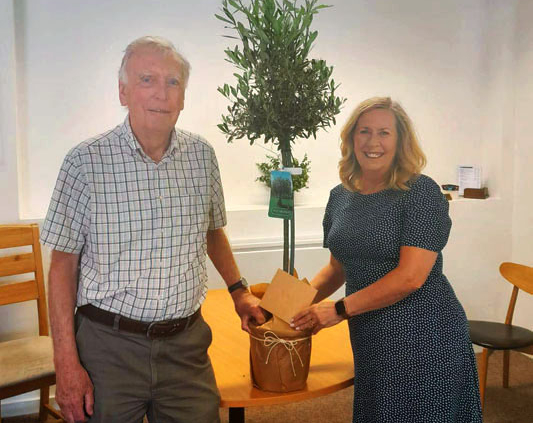
Healthwatch Northumberland’s Chair, David Thompson, stepped down this month after six years in the role.

Healthwatch Northumberland is the independent health and social care champion for people in Northumberland and is delivered by Hexham-based charity Adapt (NE).

David has been at the helm since 2017 and has been instrumental in championing the voice of the people in health and social care decision making with those providing and commissioning services.

During his time as Chair of the Healthwatch Northumberland Board, David was involved with the Northumberland Health and Wellbeing Board, the Primary Care Commissioning Committee and the System Transformation Board, and for the past 12 months he represented the North East and North Cumbria Healthwatch Network on the Integrated Care Board.

David says “The past six years have flown by and it has been a real privilege to have shared a journey with such a dedicated band of staff, board members and volunteers. Meeting members of the public and professionals has been very rewarding as there has been and remains a determination from everyone to improve services even further.”

Before joining Healthwatch Northumberland David was Chair of leisure trust North Country Leisure and Tynedale Sports Council. Previous to that he was Head Teacher of Haydon Bridge High School for 19 years.

A new Chair is now in post and Peter Standfield of Morpeth will take the reins of the Healthwatch Northumberland Board.

David says he is ‘delighted’ with the appointment, adding “Peter will be a decided asset to Healthwatch Northumberland, bringing with him a broad range of experience and expertise.”

Healthwatch Northumberland’s Vice Chair Margaret Young is also leaving after six years in post. David told us “Margaret has been a stalwart of Healthwatch Northumberland since 2017. She has brought great knowledge and awareness to the board about what is happening in health and social care across the county.”

We’ll bring you more information about new chair Peter Standfield soon!

What you told us: May 23

What you told us: May 23

Health and social care feedback Northumberland May 2023

During May you told us about the difficulties you were having ordering and getting hold of prescription medicine. We also heard from a number of people that they were still having issues booking a GP appointment. Poor service in local hospitals was another theme from feedback this month.

This month we spent time listening to customers of Lloyds Pharmacy in Sainsbury’s Cramlington, about the impact of the planned closure of the pharmacy this summer. We visited the pharmacy, which is the only 100 hours per week pharmacy in Cramlington, at different times of the day and week, to speak to customers and the wider community, to see what effect the closure would have on local people and other pharmacies in the area. We also provided an online feedback form and heard from 230 people.

As well as our regular Here to Hear drop-in sessions in Berwick, Blyth, Prudhoe, Morpeth and Bedlington, we attended events which included Prudhoe Health Week, the Fishermen’s Mission SeaFit event in Amble and the Choppington Disability Group monthly session.

Read our short report below to find out more.

Healthwatch Northumberland report May 2023

Eye care pathways Northumberland

Eye care pathways Northumberland

Eye care pathways in Northumberland – do they really work and how could they be improved?

In Northumberland, as across England as a whole, growing numbers of people are living with sight loss or impairment. This is likely to increase further as people live longer since a good deal of vision impairment is related to the ageing process. The estimated number of people living with sight loss in Northumberland is 13,500 (4% of the county’s population) which is higher than the national average and this is estimated to rise to 5% of the county’s population by 2032.

Consequently, vision rehabilitation services are considered key to prevention, supporting independence, and reducing demand for health and social care services.

The total estimated indirect cost of sight loss in Northumberland is over £32million. In 2020-2021 people in Northumberland living with sight loss and a wider audience told Vision Northumberland that some people in the county experience unfair barriers to accessing registration and low vision/rehabilitation services, that the eye care pathway in Northumberland was flawed, and that people did not know what services were available to them.

People stressed the importance of:

  • Support close to home rather than travelling to Newcastle
  • Support that focuses on the health and wellbeing impacts of sight loss such as depression, social isolation and loneliness
  • Good support from officers such as Eye Clinic Liaison Officers, low vision specialists and rehabilitation officers
  • Joined up working and effective signposting between services
  • Developing the necessary skills to live with sight loss and maintain independence
  • Access to comprehensive assessments that balance different aspects of a person’s life
  • Health and social care professionals who are compassionate, understand the challenges of sight loss, and have knowledge of visual rehabilitation services and support
  • Accessible information and advice especially in GP services

This report, funded by Healthwatch Northumberland, follows up on that work asking the key questions:

What challenges do people with sight loss in Northumberland experience when accessing registration and low vision/rehabilitation services as outlined in the Care Act 2014?
Does the eye care pathway really work in Northumberland and how could it be improved?

Read the eye care pathways in Northumberland report

Online event – Arthritis Action

Online event – Arthritis Action

Online event – Arthritis Action

Join us for our next online lunchtime event on Friday 9 June, 1pm-2pm. Ruth Smith, Engagement & Events Coordinator for Arthritis Action, will be joining us to talk about arthritis, self-management and resources for people living with the condition.

She will cover topics including pain management, diet and keeping active for those who may be new to exercise but want some tips on how to start.

This session is suitable for people who live or work in Northumberland and are living with or working with any form of arthritis, including osteoarthritis, inflammatory arthritis and gout. The presentation may also be useful for those with other conditions causing joint pain such as fibromyalgia.

There will be a chance to ask questions.

 and we will send you a link to join closer to the event.

If you would like more information or would like to tell us about health or social care services you have used please get in touch.

This event has now passed

Cost of living

Cost of living

Cost of living – a barrier to healthcare for the most vulnerable

The cost of living is having a detrimental impact on people’s decisions about their healthcare.

If you are disabled, on means-tested benefits or aged 18-24, research shows you’re more likely to avoid vital health services due to the fear of extra costs. Healthwatch England has set out immediate actions for the government and the NHS.

Over the last year, many charities and campaign groups have warned that millions of people are struggling with the cost-of-living crisis.

To understand the scale of this impact, especially on people’s health and their use of health and care services, Healthwatch England commissioned a poll of people in England.

Findings from waves 1 and 2 were reported on earlier this year.

Key trends

The poll of 2000 adults in England, conducted four times between October 2022 and March 2023, suggests that people are increasingly avoiding vital health and care services due to the fear of extra costs. These include:

  • going to a dentist because of the cost of checks ups or treatment
  • booking an NHS appointment because they couldn’t afford the associated costs, such as accessing the internet or the cost of a phone call
  • buying over the counter medication they normally rely on
  • taking up one or more NHS prescriptions because of the cost.

Rising costs further exacerbate health inequalities

The research also highlighted that the financial burden of healthcare is weighing heavily on specific groups:

  • people on disability benefits
  • people on means-tested benefits
  • and younger people, aged 18-24.

People from these groups are more likely to be making tough decisions to avoid essential services. Examples include:

  • People on disability benefits are over twice as likely to have avoided their usual over-the-counter medication than the general public, 15% compared to seven per cent.
  • 20% of people on means-tested benefits have avoided booking an NHS appointment due to the associated costs, including the internet or phone call, compared to six per cent of the general public.
  • People aged 18 to 24 are twice as likely to have avoided an NHS appointment due to travel costs compared to the general public, 14% to six per cent.
  • On average, one in five people from each group avoided the dentist because of the related costs.

The cost of living should never be a barrier to care

As a patient champion, we are worried that vital health and care services are out of reach for many people.

We know that people living with ill health and disability are already much more likely than others to be pulled into poverty because of spiralling costs.  Making decisions between eating, medications and keeping medical devices running, can further impact their physical and mental health, putting them in danger.

The cost of living should never be a barrier to healthcare.

Recommendations

While we welcome the support already in place, social tariffs and schemes must be better communicated to the people who need it.

This includes ensuring that:

  • Communication providers communicate about and signpost to social tariffs
  • Primary care teams make people who need medication aware of pre-payment options
  • Dentistry teams offer check-ups based on individual need, to free up more NHS slots
  • More people are aware of the Healthcare Travel Cost Scheme (HTCS).

The government working with health and care services must also go further to support people in the cost-of-living crisis.

Tangible actions

Healthwatch England has set out immediate tangible actions:

Prescriptions 

Guidance should encourage GPs to offer people over-the-counter medications on prescription based on socioeconomic grounds.

Travel 

NHS England should re-open its review of the HTCS, and introduce reimbursement for journeys to people’s GP, dentist and pharmacy teams.

NHS freephone 

NHS England should work with Ofcom and telecommunications companies to ensure that hospital and GP phone numbers are part of the freephone service, so cost is never a barrier to phoning a health service.

Benefits system 

Government should ensure benefits, including Statutory Sick Pay (SSP), keep pace with inflation in real terms.

Government should also extend the amount of time SSP can be paid to people who can no longer work due to long waits for NHS treatment. One in ten people wait over four months for a GP referral, and 92% of people on waiting lists are currently waiting up to 46 weeks for a hospital appointment. This means that the current 28-week access cannot support those who need it.

Broadband

Health leaders and regulators should look at what more can be done to ensure telecommunications providers introduce and raise awareness of social tariffs to eligible households, as the uptake of this support remains low.

Recent research by Citizens Advice suggests that up to one million people have cancelled their broadband in the last year because they couldn’t afford it.

As we increasingly move to more remote ways of communicating, tracking, managing and attending NHS appointments, we must ensure that everyone can access the support they need.


If you would like to tell us about your experience of the cost of living and how it has affected health and social care services you have used please get in touch.

Autistic young people and mental health services

Autistic young people and mental health services

 “We’re scared parents with even more scared children”

Are NHS mental health services working for autistic children and young people?


We heard from local families that some NHS mental health services aren’t working for their autistic children. To get a better picture of what is happening we asked people living in Northumberland to tell us about their experiences of mental health services including what is working well and what could be better. We heard from parents and carers of children and young people with a formal autism diagnosis or currently being assessed, or where there is an indication of autism. We asked for feedback on the different services that families were involved with such as school nursing, Children and Young People Service (CYPS), Primary Mental Health Work Service (PMHW), Universal Crisis Team (UCT), and any other services with which they may have been in contact.

We worked with parents and carers to create our feedback form to make sure the information we were asking for was appropriate and gave enough opportunity to provide relevant feedback on the services. Thank you to everyone who shared their views and experiences with us and helped to promote this piece of work.

We are aware there are issues not only in Northumberland but also nationally with recruitment and retention of staff across the health and social care sector as a whole, and we appreciate that the feedback should be considered within this wider context.

This report is an overview of out findings and key recommendations on the issues raised by parents and carers of autistic children and young people who live in Northumberland and use, or have used, NHS mental health or autism diagnosis services.

Autistic young people and mental health services report

Ponteland High wins our hamper!

Ponteland High wins our hamper!

We recently ran a campaign to help us hear from young people aged 13 – 24 who live in Northumberland. We wanted to hear how they were feeling, which healthcare services they had recently used and what their experience had been. To help us reach young people we worked with a number of schools in the county. They helped by distributing information about the campaign, the links to the online form and signposting information to services and organisations providing care, support and advice for young people. As an incentive we were able to offer a £100 Love2Shop voucher in a proze draw to one person who gave us feedback – the winner of the voucher was a student of Castle School in Ashington.

We also offered a wellbeing hamper to the school with the highest percentage of students completing our form. The winner was Ponteland High School – congratulations to them! Pictured is Jonny Greenshields, Assistant Head Teacher at Ponteland High School, being presented with the hamper by our Communication and Marketing Officer, Claire. Jonny told us “We’re very happy to have won the wellbeing hamper as part of this campaign. We scheduled this into lesson plans and the campaign fit extremely well with the work we have been doing with students around ‘having a voice’ in varying aspects of life, from democracy to healthcare.”

The results of this piece of work will be published later in the year.