

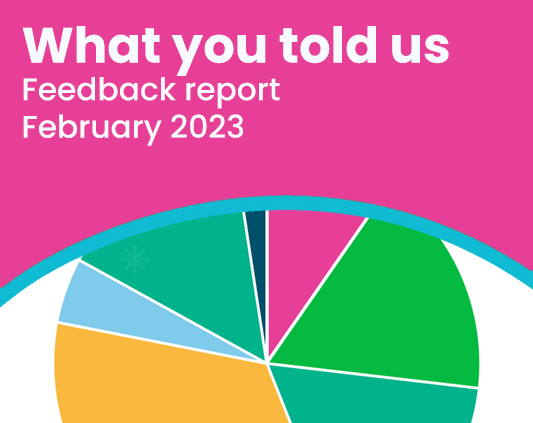
Our monthly reports provide an overview of the feedback we have had and who we’ve been hearing from. In our February 2023 ‘at-a-glance’ report you can read some examples of positive and negative feedback we received and what our main focus has been throughout the month.
Healthwatch Northumberland feedback report February 2023
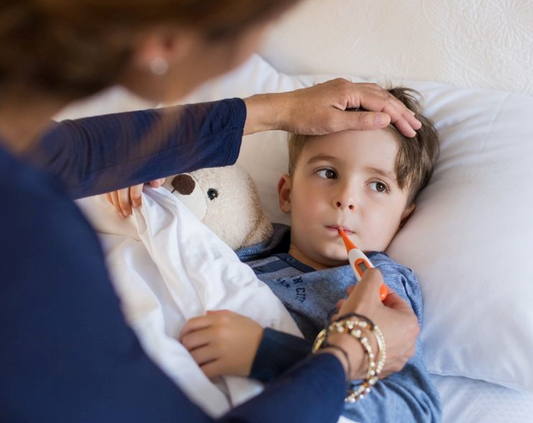
The Healthier Together website is full of useful health advice for parents, carers, young people and health professionals. All of the information has been approved by clinicians so it’s a great place to go for reliable advice.
Topics include common illnesses in babies and children, when to keep your child off school/nursery, support for young people and a guide to how the NHS works.
If you need some help finding local health and care information or support, please get in touch.

Thank you to everyone who told us about their experiences of maternal mental health care. Healthwatch England has analysed the responses shared by 2,693 new mothers and birthing parents since April 2020 and you can read the findings below.
The analysis suggests that not all GP practices comply with the requirement to provide six to eight-week postnatal checks. And where those checks take place, it is not clear that GP practices are aware of NICE guidance which tells them in detail how to spot mental health problems and provide help.
In April 2020, the Government introduced the six to eight-week postnatal check after Healthwatch England shared the experiences of almost 1,800 women on mental health during their journey to parenthood.
General practitioners in England have since been contractually obliged and paid to assess new mothers’ mental health and wellbeing, providing an opportunity for referral to specialist services and additional support. Crucially, the checks must take place separately from a postnatal check focused on the health of the baby.
The latest research took place between October and December of 2022 to find out to what extent mental health support has improved during and after pregnancy.
Louise Ansari, National Director at Healthwatch England said: “With mental ill health affecting up to a third of new and expectant mums, six-week postnatal checks are key to assessing their wellbeing after the birth. If left untreated, poor mental health can have a devastating impact on new parents and their families.
“Unfortunately, our findings show that although most new mothers and birthing parents are likely to be invited to a postnatal consultation, these are frequently carried out as a tick-box exercise, where mental health is not treated as a priority or not assessed at all.
“Monitoring the delivery of six-week checks should be the first step to ensuring there’s a consistent approach to offering quality mental health support to all new mothers. NHS England should consider what additional support and guidance it can provide to GPs so that the help new parents get is of the best quality.
“We also need to ensure that maternal mental health and peri-natal services continue to remain on the government’s agenda and a priority in workforce planning and funding budgets.”
Healthwatch England has made five recommendations to help ensure every new mother and birthing parent receives the six-week check, and that it is of the highest quality:
Find maternity and parenting information and support
Get in touch to tell us about your experiences

As part of our work on NHS dentistry services in Northumberland, we, along with 29 other Local Healthwatch, made a formal submission to the House of Commons Health and Social Care Committee. The committee has now published the submissions.
The Chair of the Committee, Conservative MP Steve Brine, was interviewed on the BBC Radio 4 PM programme on 6 March. The item is at 38 minutes in, with reference to Local Healthwatch just after 42 minutes.
In the interview Mr Brine says “We’ve had hundreds of pieces of written evidence from trade bodies, professionals, charities, people working in the profession, but quite a lot of it has been from local Healthwatch and from patients themselves, telling some pretty painful stories of…DIY dentistry…home tooth extractions, people tying shoelaces to teeth…”
At the Overview and Scrutiny Committee meeting on 7 March, our Project Coordinator Derry Nugent, urged local elected members to encourage their residents to contact us for issues such as this, which can only be fixed at national level.
NHS dentistry in Northumberland continues to be difficult to access, especially in the Berwick area. If you are in pain and need to see a dentist urgently, please call NHS 111.
Please keep sharing your experiences of NHS dental care, so that we can keep making sure these are heard by those paying for services.


Join us for our next free lunchtime event on Friday 14 April, 1pm-2pm, to hear from Maria Lavelle of Eating Distress North East (EDNE), who will talk about the early identification of eating disorders and how best to support those who have one.
She will cover how to recognise signs, symptoms and potential triggers of an eating disorder; practical strategies for working with people with eating disorders; and increase your knowledge of local support services in Northumberland and the North East of England.
This session is suitable for anyone living or working in Northumberland. There will be a chance to ask questions after the presentation.
and we will send you a link to join closer to the event.
If you would like to tell us about your experience of accessing support for an eating disorder or would like help finding local support services please get in touch.
This event has now passed

Following a public meeting at Felton Village Hall on Tuesday 31 January regarding the development of the new Felton GP surgery, further responses have been added to the Frequently Asked Questions on the project website. These new FAQs address some of the questions raised in the survey responses with answers from the developer, Assura.
Questions include car parking, emergency access for ambulances, when the building will be complete and the space available in the new surgery.
If you would like to leave feedback or ask a question about the development you can do so via the project website or by emailing: hello@assura.co.uk
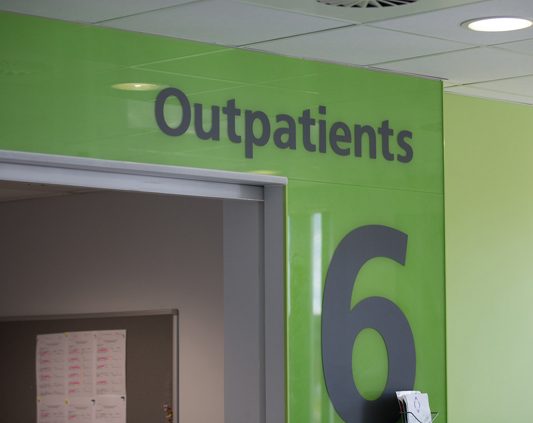
When accessing audiology appointments there are five general appointments open to patients:
Appointments may be offered at The Freeman Hospital or other local clinics across Northumberland. To request batteries or replacement tubing call: 0191 223 1043, email: tnu-tr.audiology@nhs.net or visit the Newcastle Hospitals website.
We are currently doing a piece of work on how people in Northumberland are accessing audiology services. If you, or someone close to you, uses these services, or have used them in the last two years, we’d like to hear from you. This could be at The Freeman Hospital where the service is based, or at one of the outreach clinics.
Your feedback will help the NHS know what is working well and how the service could be improved.
Please share your experiences of accessing audiology services

Our short monthly reports give an overview of what people have been telling us about the NHS and social care services they have used recently. We can also see who we have been hearing from and if we’ve had more feedback from some parts of the county than others.
What you tell us helps us build a picture of what is working well and where there are issues in services, and is taken into account by those providing services when making decisions about local care.
Read our ‘at a glance’ feedback report for January 2023.
We are your local health and social care champion. We’re here to make sure your views on NHS and social care services in Northumberland are heard.