Spotlight on…Berwick Cancer Cars

Spotlight on…Berwick Cancer Cars

As part of our information and signposting service, we’re shining a spotlight on organisations offering all kinds of support to people in Northumberland.

The Berwick and District Cancer Support Group, commonly known as Berwick Cancer Cars, was founded in 1992 by two women from Spittal, Violet Carter and Kathleen Horsburgh, who were having difficulty accessing their cancer treatment in hospitals over 60 miles away.

Over 30 years later the charity continues to grow and now has six cars to help transport patients to appointments. The service is run completely by volunteers.

If you need help getting to a cancer related appointment or treatment session, you can call Berwick Cancer Cars on 07780 795244.

The service is available to anyone who has received a cancer diagnosis and is registered with a GP practice in Berwick, Belford or Wooler (Clients living in the Cornhill area may be registered with a GP in Coldstream).

Berwick Cancer Cars website

EMPOWER: type 2 diabetes course

EMPOWER: type 2 diabetes course

EMPOWER is a free course delivered by Spirit Health on behalf of the NHS in our area. It is designed to give people with type 2 diabetes the knowledge and confidence to manage their diabetes effectively.

The course is for patients aged 18 and over, diagnosed with type 2 diabetes, and registered with a GP in Northumberland.

Attending a diabetes education course is an important part of learning how to self-manage your diabetes and help avoid long-term health complications.

In just four hours, you’ll learn how diabetes affects your body, learn about food choices, and discover small lifestyle changes that can lead to a big difference. You’ll also have the chance to ask a trained educator questions about type 2 diabetes.

People that complete an EMPOWER Type 2 course reduce their blood sugar levels and improve their health.

What does the course offer?

  • A single, interactive four-hour session – helping people to understand what type 2 diabetes is and how it affects their body
  • Practical advice – small changes to diet and lifestyle that can improve health and blood glucose levels
  • Expert guidance – sessions led by trained educators in a supportive group setting

  Flexible options for patients to suit your schedule

  • Group sessions: available online or in-person at local venues.
  • Sessions are available during the day, evenings, and weekends.
  • Self-learn on-line option: patients can complete the course at their own pace over four weeks.
  • You are welcome to bring a carer, family member or friend to support you.

How to join 

For more information or to book a course visit empower-diabetes.co.uk or call 0800 852 7460.

Eye care costs

Eye care costs

New research from Healthwatch England reveals costs of additional eye care services are likely to deter some people from visiting opticians altogether.

An estimated 50% of sight loss is avoidable. That’s why it’s vital that people can have their eyesight tested regularly and get the help they need if there is a problem. Yet new research from Healthwatch England found that costs associated with visiting opticians are deterring those on the lowest incomes from getting regular eye tests.

An online survey was carried out asking about people’s eye care experiences between July and September 2024. 14% of people who responded to the survey had avoided eye care due to cost in the last two years.

People who described themselves as ‘not at all comfortable financially’ were much more likely to say they avoided going to opticians than those who were financially very comfortable (39% vs 3%). Lack of awareness of the financial support available may also contribute to the high rate of people avoiding eye care.

Additional costs may put off patients

As people face rising eye care costs and lack of financial support, many high street opticians, which are private businesses, increasingly rely on generating income through offering services in addition to eye tests.

The survey found that of those who had attended an eye test in the last two years, 72% had experienced staff offering additional services at a cost. This practice has made some people reluctant to visit optician services at all. Those who said that opticians had offered them additional paid services were twice as likely to say they had avoided getting eye care in the last two years compared to those who had not experienced this.

84% of the respondents to the survey were eligible for free eye tests. However, as the results of the survey show, many people eligible for financial support for their eye care may find it difficult to afford additional costs. They may put off getting eye care because they are concerned about being pushed into paying for products or services they can’t afford.

Healthwatch England set out the following steps to protect people from the rising impact of eye care costs:

  • The Department of Health and Social Care should review support for the costs of NHS eye care for those on the lowest incomes.
  • The Government and the NHS should consider a targeted communications campaign through direct channels to low-income eye care patients.
  • The primary eye care sector should have clear guidelines for how staff should assist those on lower incomes without affecting their confidence in seeking care.

If you would like to tell us about your experiences of accessing eye care, please get in touch.

Your feedback: March 2025

Your feedback: March 2025

Your NHS and social care feedback from March 2025

Top issues

During March you told us you continue to have difficulty getting an appointment with your GP. This was due to feeling forced to go online to do this, or because of poor communication with and from the practice. Around one in five comments about GP services were in praise of the service received at the practice.

Feedback around A&E departments at hospitals was that the quality of care had been poor.

You also told us that waiting lists for mental health services were long, plus the quality care was inconsistent.

This month’s focus

We attended many events hosted by other organisations this month including Allendale Meet and Eat and Berwick dementia café, as well as events in Cramlington, Seahouses, Blyth Family Hub’s Step into Spring event and Vision Northumberland’s equipment day. This is in addition to our usual Here to Hear events in Bedlington, Hexham and Morpeth.

Our Annual Survey had 377 responses and we will share what you told us shortly.

Our online talk for this month was from Northumberland’s Domestic Abuse Service.

Positive feedback example

A patient got in touch to leave positive feedback about their experience of a hip operation at Wansbeck General Hospital.

They said “To help alleviate the fears and concerns regarding a hip operation, Wansbeck Hospital are getting it right. A whole team of people descended on me, helping me (literally) every step of the way. I felt well looked after and completely informed. Well done Wansbeck.”

Cramlington, Bedlington and Seaton Valley resident

Negative feedback example

An elderly person told us they had to call an ambulance during the night as they had been unwell, their condition was deteriorating and they lived alone. They were taken to the RVI and waited four hours to be seen/assessed. They were then placed on a trolley bed in a corridor where they remained for nine hours without being given any water (or food) and too weak to call out for someone’s attention.

Eventually a member of nursing staff commented they looked dehydrated and brought a tiny cup of water. The staff member promised to bring more but never did. On discharge from hospital staff said ”don’t hesitate to come back if you have any more problems”. The person said they’d rather stay at home and face the consequences because at least they’d have access to water.

Tynedale resident

Impact

“The JobCentres are feeding back saying that the Mental Health Support in Northumberland booklets are good and offer clear options of support for customers. They issue them to so many customers who are saying they need support with their mental health.” Partnership Manager, DWP

Information and Signposting Service

We were able to give information or point people in the direction of support for a number of issues including benefits/housing advice, NHS complaints advocacy, patient transport, volunteering activities, and weight loss support.

Read more in our short report.

Free event – Parkinson’s UK

Free event – Parkinson’s UK

Find out more about Parkinson’s and the support available to people living with this long-term condition at our free online event on Friday 9 May, 1pm-2pm. Plus find out how you can help those with Parkinson’s who you may come across in daily life.

Delivered by Parkinson’s UK‘s Area Development Manager, Kirsty McDowell, and a local volunteer who lives with Parkinson’s, we will share personal experiences of Parkinson’s alongside information about the condition and details of support in Northumberland and beyond.

This session is suitable for professionals and the general public. There will be a chance to ask questions after the presentation.

This event has now passed.

Sign up to our newsletter to hear about future events or catch up with previous events on our online events page.

Eye care waiting times

Eye care waiting times

New research from Healthwatch England has revealed people’s eye health often deteriorates while they wait a long time for specialist eye care.

They are calling for greater use of high street optician services, including optometrists working in optician services, to help cut waiting times.

Responses from 1,051 people currently waiting for specialist eye care appointments suggest that the vast majority (85%) of people support the idea of optometrists being able to refer patients without seeing a GP first. Over 65% are comfortable with them helping to monitor and treat eye conditions.

An optometrist’s role is to detect defects in vision, signs of injury, ocular diseases or other abnormalities. Optometrists often work alongside other professionals in primary eye care, supporting people with a range of eye problems and referring people for specialist care.

Expanding their role and responsibilities, such as being able to treat patients for a greater range of conditions, would help more people with the most serious eye conditions to be identified and referred for specialist care earlier.

The survey, which asked people to share their experiences of eye care between July and September 2024, found many people struggled while waiting for specialist care:

  • Of those currently waiting, 70% said they noticed some deterioration in vision.
  • People currently waiting for eye care reported that long waits affect their ability to continue their hobbies, 75%; mental health, 69%; ability to work, 52%; and relationships, 36%.
  • The most common type of support people reported needing was ‘knowing who to contact for further information’ about their care. However, only 14% of people said they knew who to contact.
  • Only 4% said they had been given advice and information to help them with day-to-day activities, such as working.

Eye care is the busiest outpatient speciality in the NHS in England, and with an ageing population, demand is set to grow further. According to NHS statistics, last December nearly 600,000 people were waiting for specialist eye care, a third of whom had been waiting more than the 18-week target set by the Government.

And getting referred for specialist eye care may be a long process for some. Of those currently waiting, almost a quarter (22%) had to have multiple appointments before being referred.

Healthwatch England calls for optician services to take on more responsibility for managing people’s eye care and referring them for specialist treatment to help cut waiting times. Additionally, actions such as those proposed in the Optometry First model are needed to improve communications and support for people waiting for eye care.

Read the full report at the Healthwatch England website

If you would like to tell us about your experiences of eye care services please get in touch.

Healthwatch England’s response to NHS England reform

Healthwatch England’s response to NHS England reform

The Prime Minister Keir Starmer has announced that NHS England will be abolished to bring management of the NHS back to ministers. Its functions will be taken into the Department of Health and Social Care, with the merger lasting about two years.

The move is to make savings and empower NHS staff to deliver better care for patients.

Responding, Healthwatch England Chief Executive Louise Ansari said:

“We know people want better access to and experience of care for everyone, in particular those facing health inequalities, including disabled people, carers, and those on low incomes.

“During the forthcoming period of change for NHS England, it’s important that everything possible is done to ensure that patients’ care is not disrupted and that the progress the NHS has been making in some areas is not reversed.

“Going forward, any changes in structures need to have improvements in patient access to and experience of care at their heart.”

What is NHS England?

NHS England leads the National Health Service (NHS) in England and has a wide range of statutory functions, responsibilities and regulatory powers. NHS England was established in 2013 with the aim of establishing greater independence and autonomy for the NHS.

What do the changes mean for the NHS?

The NHS is not going anywhere.

Healthwatch England has explained that the announcement relates to the structure of the NHS; the change means that the ‘functions [of NHS England] will be taken into the Department of Health and Social Care, with the merger lasting about two years’.

The Prime Minister and Health and Social Care Secretary, Wes Streeting, have said that the motivation behind the change is to bring decisions about the NHS back into government control and empower NHS staff to deliver better care for patients.

What does this mean for Healthwatch Northumberland?

Healthwatch Northumberland is the independent champion for health and social care users in the county. We work independently of the NHS and social care services. Our role is to understand local people’s experiences of services and make recommendations to service providers.

The dissolution of NHS England does not change our mission or the role we play in ensuring that services put people at the heart of the care they receive. We will continue to champion local people to ensure their voices are heard.

Your feedback: February 2025

Your feedback: February 2025

Your NHS and social care feedback February 2025

The services we heard most about this month were GP services, followed by mental health services.

For GP services, the main issue was getting an appointment. People found it difficult to get through on the telephone or were being told to book an appointment online. Around a sixth of the comments were in praise of their GP practice.

We heard concerns this month around difficulty getting access to mental health services, including a couple of examples where support had been withdrawn. Over a quarter of the comments were positive about services.

This month’s focus

As well as our usual Here to Hear sessions in Alnwick, Ashington, Hexham and Morpeth, we also have been visiting communities we don’t hear from very much, such as those living in rural communities and refugees. Our Annual Survey launched this month, asking people to ‘join the conversation’ on health and social care services. Behind the scenes we have been analysing the responses from the Audiology Services project. The results will be published next month. February’s online talk from Kidney Care UK was well received and two thirds of attendees went on to sign up for our newsletter.

Positive feedback example

“Excellent care from Consultant Psychiatrist and a Cognitive Analytic Therapist. With understanding, advice and improved medication I began to recover from a prolonged, severe depression. Once I was a little better the therapy has helped me become more resilient against further episodes. Nothing about the service I would change. It was a struggle to get my GP to make the referral though.”

Tynedale resident

Negative feedback example

Someone told us that their GP surgery tries to persuade patients to make appointments via its online system (Klinik) rather than ringing. They told us that they struggle to make an appointment online as they find the booking system too complicated and a very long process having to type lots of information – they said they find this difficult. The person was supported with making an appointment by a Citizens Advice Northumberland staff member who also described the process as being too long and complicated.

Ashington and Blyth resident

How we made an impact

“This is such an informative session, thank you so much. I had no idea of all of this support available. I have never been informed of any of this by GP surgery, or what I can do to slow things down. Actually got letter with CKD [Chronic Kidney Disease] on from GP surgery and had no idea about it. I will be promoting the support you have available to colleagues and family/friends.”From an attendee at our online session in Feb 25 given by Kidney Care UK

Information and Signposting Service

We were asked for more information and support around issues including dementia, mental health support, dentistry, cancer care, audiology and support for unpaid carers.

Read more in our short summary.


Join the conversation!

Join the conversation!

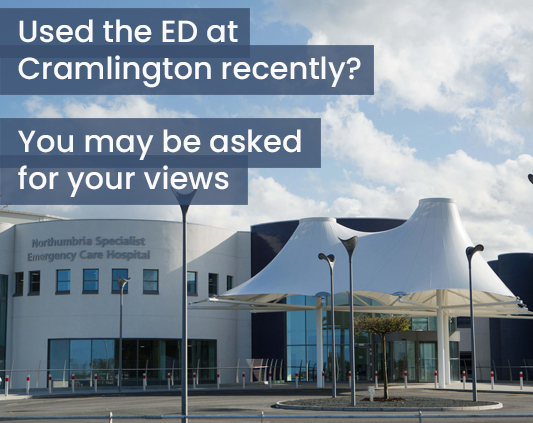
Visited the ED at Cramlington?

Visited the ED at Cramlington?

Understanding people’s experiences of the new Front Door Service at Northumbria Specialist Emergency Care Hospital

We want to understand people’s experiences of a new approach to assessing people who walk into the Emergency Department at Northumbria Specialist Emergency Care Hospital in Cramlington.

The new Front Door Service is sometimes used to identify the treatment needs of people arriving and how best to meet these needs.

We’re working with Healthwatch North Tyneside and Northumbria Healthcare NHS Foundation Trust, which manages the hospital, to get feedback from people about this service.

If you have visited the Emergency Department recently, you may receive a text message from the NHS, inviting you to leave your feedback. You can also choose to take part in a follow-up interview, which will be carried out by us here at Healthwatch.

Your feedback will help the hospital evaluate how well the Front Door Service is working for people.

To say thank you for completing the survey, you will also have the opportunity to enter a prize draw to win £100 of Love2Shop vouchers.

If you have views or feedback about any other NHS or social care service, please get in touch.