What you told us: Oct to Dec 2021

What you told us: Oct to Dec 2021

NHS and social care feedback October to December 2021

Thank you to everyone who told us about their experiences of NHS and social care services over the last three months.

Between October and December 2021 we had feedback from 73 people who live in Northumberland. This was from face to face events across the county, telephone calls, emails, our website and social media. We gave 14 of these people details of local services and support as part of our Signposting and Information Service.

One person, who came along to one of our Here to Hear drop-in events wanted to know what support there was available for his wife with arthritis. She is getting good care for her borderline diabetes and high blood pressure but doesn’t want to ‘make a fuss’ about getting support and treatment for her arthritis. Her arthritis is so bad that she can barely walk 20 metres. The GPs have referred her to the physiotherapist but this was during the height of the pandemic when they weren’t doing face to face work and she hasn’t followed it up since. We recommended to the husband that she pursue her case at the GPs to get the physiotherapy treatment, and we signposted them to Arthritis Action for advice and support and also DWP for PIP assessment.

Read more in our Feedback Report October to December 2021

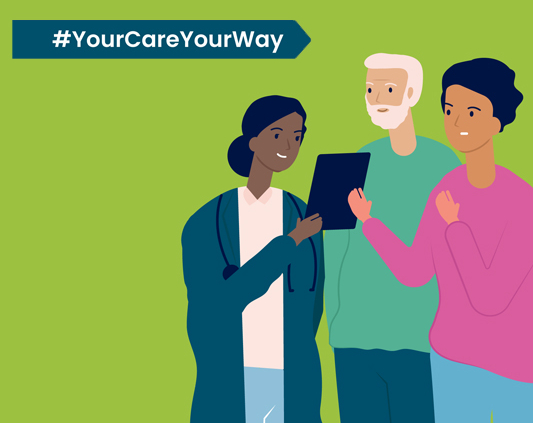
Your Care, Your Way

Your Care, Your Way

Clear, understandable information is important to help you make decisions about your health and care and get the most out of services. 

The Accessible Information Standard gives disabled people and people with a sensory loss the legal right to get health and social care information they can understand and communications support if they need it. But, is the standard being delivered by services and does it go far enough?

We want to help NHS and social care services understand the answer and make sure health information is clear for everyone, no matter what their needs.

Our campaign ‘Your Care, Your Way’ aims to:

  • Find out how well health and care services are delivering the accessible information standard.
  • Make sure that, if the standard covers you, you know your rights.
  • Find out who else has problems understanding information about their healthcare and needs to be covered by the standard.
Why is clear information important?

We all expect to be involved in decisions about our health, treatment and support.

But medical and healthcare information can be complex, and if you don’t get clear and understandable information, you might not make decisions that are right for you.

Some people find getting clear and understandable information even harder because they have communication needs that require support.

For example, you might need an interpreter or information in format like Braille.

What rights do you have?

The Accessible Information Standard gives you the right to be given information and communication support when using health and care services.

If you have a disability, impairment or sensory loss, or are a parent or carer of someone who does, you should expect:

  1. To contact and be contacted by services in ways you find accessible
  2. Services to give information and correspondence in formats you can read and understand
  3. To be supported at appointments if needed.
  4. Health and care services to support you to communicate.


Find out more about the campaign and your right to accessible information.

Find out more: BSL and Easy Read

Longhoughton Surgery closure proposal

Longhoughton Surgery closure proposal

We are hosting two public sessions as part of the practice’s 12 week period of listening to the views and ideas of patients.
The sessions are online via Zoom on:
Tuesday 1 March at 3.00pm
Thursday 3 March at 6.00pm
To register please email: norccg.amglonghoughtonclosure@nhs.net.
If you can’t attend one of the online sessions but would like to leave tell us your views please get in touch.
This piece of work is now finished.
Parkinson’s UK free online event

Parkinson’s UK free online event

At our next free online public event on Friday 11 March 2022, from 1pm, we will hear from Vivienne Rogerson from Parkinson’s UK.

Parkinson’s is the fastest growing neurological condition. Parkinson’s UK is the national charity, working locally, to provide support for those living with the condition and their family and friends. It is also a campaigning and research organisation.

Area Development Manager, Vivienne Rogerson, will give a brief overview of what Parkinson’s Disease is, what it means for people living with the condition, how Parkinson’s UK supports those with the condition, influences health and social care services and works towards a cure.

The event is suitable for people who live or work in Northumberland and are interested in finding out more about this disease and what support there is locally.

Register now and we will send you a link to join closer to the event:

Sight loss services project

Sight loss services project

Understanding the support available for people with sight loss in Northumberland

Contracting organisation: Adapt North East
Contract value: £5,500
Delivery period: March 2022 to June 2022

Healthwatch Northumberland was established in 2013 and is delivered by Adapt (NE) based in Hexham. As defined by the Health and Social Care Act 2012, Healthwatch Northumberland is the independent champion for health and social care across the county. Our role is to give a voice to people who use services, encourage, and influence positive change to services and help meet the health and social care needs of the population.

Contract purpose and focus

This project will learn about the experiences of people in Northumberland who, in the last three years, have been issued with a Certificate of Visual Impairment. This could be due to a diagnosed eye condition or resulting from a health condition or incident (diabetes, stroke etc).

The ‘sight loss pathway’ aims to promote independence and autonomy for adults with sight loss to ensure that services are well coordinated across health and social care. The project will map the current eye care pathways and use the Seeing it My Way outcomes to gather people’s experiences before, during and as we come out of the pandemic. It will seek to understand what services have worked well and ideas for improvements.

This will require desk research, questionnaires/interviews with service providers and commissioners and interviews with people who have used services. The project’s key output will be a report describing the service user and where appropriate, carer experience, highlight good practice and make appropriate recommendations for changes or improvements. The report will be public and will be discussed with Northumberland County Council and health service commissioners and providers before publication.

We anticipate the project will use a mixture of structured and semi-structured individual interviews and possibly focus groups if relevant. The minimum number of participants required who have sight loss is ten. It is important that people from across the county and diverse communities can participate and that participation is accessible to people with sight loss.

Given the on-going Covid-19 situation using online, or telephone methods are acceptable ways to gather feedback. Physical meetings are possible if allowed within Covid-19 restrictions and subject to thorough risk assessment.

1. Contract duration and dates                                                                       

Tender issued: 10 February 2022
Submission deadline: 1 March 2022
Notification by: 10 March 2022
Work to commence: by end March 2022
Interim review: by 30 April 2022
Delivery of draft report: by 4 June 2022

2. Outputs

The key output required is a report with anonymised information:

a) Describing the process, findings and drawing on these to make any appropriate recommendations for further action by Healthwatch Northumberland, commissioners and service providers. The report should include an Executive Summary.

b) Two short case studies which represent the key theme(s) from the findings.

3. Conditions for participation

Applications are invited from suitably qualified and experienced individuals or organisations who demonstrate:

a) The ability, capacity, and commitment to meet the delivery timescale.
b) Knowledge or experience of the operation and purpose of sight loss care pathways and services.
c) Understanding of the ways in which patient and carer experience and voice can be used to influence service delivery.
d) Understanding of health and social care provision in Northumberland with a mixture of rural and urban areas, diverse and isolated communities.
e) Ability to work sensitively and appropriately with participants and with due regard to safeguarding for vulnerable individuals.
f) Value for money.

All applications will be assessed against these criteria. All criteria will carry equal weight initially but criteria a) will be used to make a final judgement if necessary.

4. Contract Value
The total contract value is up to £5,500. It is anticipated the work will take 20 days. All contractor costs should be covered in the contract price including travel, subsistence, office and administration costs. Healthwatch Northumberland will agree with the contractor if additional resources are required to ensure the process is accessible to people with sight loss.

5. Procedure for tendering and the submission deadline

In no more than five A4 pages provide:

a) Details of the main contact person for the project, address, phone numbers and e-mail address. If applicable, your website address.
b) Relevant previous experience including your background and, if applicable, the type of organisation you are, including company or charity registration numbers if applicable.
c) Details of the main people who will carry out the work. Due to the nature of the work you will need to be sensitive to the constraints on people’s time, their situations and have a constructive approach to working with service providers.
d) A delivery plan covering what you will do to deliver the outputs and a breakdown of your costs against your proposed activity.
e) A risk assessment including major risks for non-delivery and contingency plans to manage the risks. The risk assessment should also cover risks for Covid-19.
f) A hyperlink to, or attach a document of, one piece of relevant work you have done previously and which you consent to us contacting the contracting organisation, if we choose.

Applications should be sent by email to derryn@healthwatchnorthumberland.co.uk not later than 9.00am 24 February 2022. All applicants will be notified by 1 March 2022.

6. Payment
The agreed contract price will be paid in two instalments. 50% at commencement and 50% on agreed successful completion.

7. Contract
Adapt (NE) will issue a contract to the successful applicant. This will include a confidentiality clause.

8. Support
The successful applicant will be required to participate in a set-up meeting with Healthwatch Northumberland (costs within contract price) when regularity of contact and support will be agreed. Safeguarding process will also be agreed. At the start of the project Healthwatch Northumberland will agree with the contractor a list of relevant contacts, organisations and networks. Healthwatch Northumberland will introduce the project and the successful applicant to these contacts and to gain data sharing consent.

9. Legal duties
The successful applicant must comply with any legal obligations that may be relevant to the contract such as planning, licensing, employment, safeguarding, data protection, health and safety, insurance, and equality legalisation. The contractor must comply with all relevant Covid-19 safety restrictions in force at the time of the project or imposed during it. The contractor must carry out their own risk assessments for the work and is solely responsible for addressing those risks.

10. Intellectual Property
Adapt (NE) will own the intellectual property on all materials and reports produced.

11. Further information
For further information please contact Derry Nugent, Project Coordinator, Healthwatch Northumberland.

Please email derryn@healthwatchnorthumberland.co.uk or call 07590 880016.

This opportunity has now closed.
Student Volunteering Week 2022

Student Volunteering Week 2022

Student Volunteering Week 2022 takes place this February. It celebrates the benefits volunteering can bring, including improving student wellbeing, developing employment prospects and the chance to contribute to community life.

The past year has seen our wonderful student volunteers rise to the challenge of the pandemic by being flexible in their approach and generous with their knowledge on virtual platforms. They helped us to develop new techniques for engaging with young people online, came up with the idea for sharing our favourite local walks #HWNlandWalks on Instagram, made wellbeing calls on behalf of Northumberland County Blind Association and promoted our work to other young people.

Two of our student volunteers have now moved on to university, and we are delighted to have welcomed three more student volunteers to our growing team.

We asked some of our student volunteers to tell us why they volunteer with us and what the experience has meant to them.

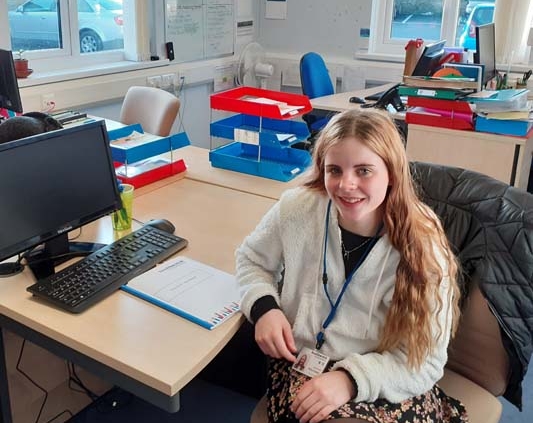
Communication Support Volunteer Molly who joined the team recently says “I decided to volunteer as it’s a great opportunity to meet new people and to gain that sense of accomplishment when you help others. I feel like now being a volunteer with Healthwatch Northumberland I can give something back to my community. I would recommend volunteering to other students as it has enabled me to step outside of my comfort zone and I’ve already gained more self-confidence.”

Leah joined us in 2019 and she told us “I have thoroughly enjoyed volunteering for Healthwatch Northumberland over the past couple of years. Most of my time here has been in lockdown, meaning I haven’t been able to be in the office or help with some of the things I would have normally. However, this has meant that I have had the opportunity to engage in activities and help out with things I wouldn’t have otherwise, such as carrying out welfare calls on behalf of Northumberland County Blind Association, or helping with social media and running quizzes on the Instagram page. I would definitely recommend volunteering to anyone considering it. It has been so rewarding for me over the last couple of years; I learnt about so many organisations that I had no idea about, and have met some amazing people.”

Volunteer Jess is going to work with as a Community Engagement Volunteer. She says “I recommend volunteering with Healthwatch Northumberland to experience a working environment that isn’t school related, to help you be that little better.”

We say a big thank you to all of our volunteers for their help and support over the last 12 months.

Find out more about how you could get involved at our Volunteering Page.

Tell us about using GP Services

Tell us about using GP Services

We are helping the NHS in our area to find out more about your experiences of using GP services in Northumberland. We’d like to know which healthcare professional at your GP practice you prefer to see, how quickly you would like to be seen and how far you would be willing to travel for an appointment.

We’d also like to know if weekend and evening appointments are useful to you and if you prefer a telephone or video consultation or a face to face appointment with your GP, nurse or other healthcare professional at your surgery.

Your views are really important as they will be used in decisions about any future changes to the way people access GP services in Northumberland.

You can , over the phone by calling 03332 408468 or texting 07413 385275 for a callback, or ask us for a postal copy with freepost return.

There is the chance to enter a prize draw to win a £100, £50 or £25 High Street voucher as a thank you for sharing your thoughts. Please leave your views or send any paper copies back to us by Friday 25 February 2022.

This piece of work has now finished.

To keep up to date with all of our work and how you can get involved, sign up to our monthly newsletter.

‘Because We All Care’ – tell us what you think about services

‘Because We All Care’ – tell us what you think about services

Healthwatch England has launched #BecauseWeAllCare with the Care Quality Commission to help improve care by encouraging everyone to share their experiences of health and social care services.

Public feedback helps spot what is working well and what could be better. With services working to respond to the COVID-19 pandemic and deal with a backlog of care, people’s views have never been more important.

New research from the Care Quality Commission highlights the impact lockdown measures have had on the wellbeing of people who use care services:

  • Nearly three-quarters of carers (73%) say that the COVID-19 lockdown restrictions have impacted on the mental health of the person they care for.
  • Over half (56%) of carers say that the COVID-19 lockdown restrictions have impacted on the dignity and independence of the person they care for.

The research also found that throughout the pandemic, care was most commonly impacted by:

  • Increased waiting times for appointments and procedures (49%)
  • A lack of resources and equipment (24%)

With just 17% of people in England expecting services to improve in the next 12 months, we are calling for you to feedback on the services you use as a crucial way to improve their quality.

Sir Robert Francis QC, Chair of Healthwatch England, said:

“Since the outbreak of the COVID-19 pandemic, public feedback has played an important part in helping the NHS and social care services spot and respond to issues caused by the virus.

“As we continue to live with the pandemic, the NHS continues to face huge pressures across the whole system. NHS staff are grappling with many difficulties, including increased COVID demands, while trying to tackle the backlog in elective care and diagnostics that the pandemic had made so much worse.

“It is important that this is managed as well as possible, to make sure that the risks and distress to patients are minimised. That’s why it is vital people have the opportunity to share their views and experiences of care whether they have needed treatment for COVID-19 or other illnesses. Their feedback will help services understand both key national and local issues and the steps they can take to serve patients better.”

So, if you’ve recently used a GP, dentist, hospital or other care service, let us know your experience and help improve care for everyone.

Share your story

Care home forum

Care home forum

We are holding another public online forum via Zoom for anyone who would like to share their recent experiences of visiting loved ones in care homes.

The forum will take place on Monday 7 February, from 10am to 11.30am.

At our previous forums we have heard how visiting restrictions in care homes have affected people living there and their relatives, people’s experiences of other ways of keeping in touch during Covid-19 and discussed things ‘we wish we had known’ when our loved ones moved into care homes to help us produce some future guidance to support others going through similar experiences.

Those who attended the previous forums said that it helped to give them a voice and it was helpful to meet with other people in a similar situation. It was agreed that the group would continue to meet once every three months to discuss any issues or concerns. The minutes from the last meeting can be found below.

Minutes from care home forum – 8 November 2021

We would like to hear from you about your recent experiences of visiting your loved ones in care homes in Northumberland, how you have kept in touch during any Covid-19 outbreaks and your experiences of visiting as an ‘essential care giver’.

We would also like to explore further ideas to shape our guidance to support others whose loved ones may be moving or have recently moved to a care home.

If you would like to register for our forum please contact Helen Brown by email: helenb@healthwatchnorthumberland.co.uk or call us on 03332 408468 (option 3). Once registered, we will send you the Zoom link before the event.

If you can’t make the forum but would like to tell us your story, or would rather speak to one of our team in confidence please get in touch.

Dentistry myth busting

Dentistry myth busting

Healthwatch teams across the North East have seen a significant increase in concerns around patients getting to see their local dentist. This is also a big problem across the rest of the country.

These concerns have been made worse by some common myths and misunderstandings around how dentist practices work. Here, we take a look at some of those myths.

1. ‘Registering’ at a practice

‘I saw my dentist a few years ago and now they say they can’t see me on the NHS. Aren’t I registered?’

Dental practices are set up within the NHS in a completely different way to GP practices so there is no formal patient registration within dentistry.

A patient is only ‘registered’ with a practice while undergoing treatment. So, you are free to approach any NHS dentist for treatment at any time.

2. They only want to work with private patients

‘My dentist said they could not see me on the NHS but offered me a private consultation.’

There is no formal patient registration within dentistry – NHS dental practices are commissioned to deliver a number of Units of Dental Activity (UDA) which they spread out over the year.

The number of UDAs used per day will depend on the treatment needs of the patients who contact the practice, for example, simple treatments like fillings and extractions equate to 3 UDAs, more complex treatment like crowns and bridges: 12 UDAs.

Whilst NHS provision must be available across the practice’s contracted opening hours, demand for NHS treatment may be so great that on any given day, depending on demand and the treatment needs of the patients who contact them, they could have used up all their NHS appointments when a patient rings.

They may, therefore, offer a private option to patients as an alternative, as they will have separate NHS and private appointment books, with separate clinical staff time allocated accordingly.

In line with national guidance all dental practices are required to prioritise patients based on clinical need and urgency into their available NHS appointments – this is called Triage. It is therefore important when you contact the practice that you fully explain the nature of your dental problem so that a clinical assessment can be undertaken to determine how quickly you need to be seen.

3. They are not doing routine work such as check-ups or scale and polish on the NHS

‘It’s impossible to get a routine check-up despite the fact I’ve not had one for over a year.’

All practices are currently working to national standard operating procedures which means that they have to prioritise patients based on clinical need and urgency. Therefore, their ability to take on patients for routine treatment such as check-ups is likely to be limited with the reduced capacity they are able to deliver, because of infection prevention control guidance.

However, if you have healthy teeth and gums, a routine check-up may not be needed for up to two years between appointments.

4. They are not doing emergency appointments.

‘I broke my tooth, but my dentist wouldn’t take me as an emergency appointment to fix it.’

Lost fillings, crowns or bridges, broken teeth or braces are not usually deemed to be clinically urgent, which means you may need to wait a little longer for an appointment.

Access to NHS urgent dental appointments is based on an individual clinical assessment of need. It is therefore important that you fully explain the nature of your dental problem to the practice or NHS 111 when you call, so they can correctly triage you.


Download the Dentistry Myth Busters PDF

If you have any further concerns about a dental service in your area, please visit the dental section of the NHS website where you can find further advice and an official complaints procedure.