Posts

Your feedback on new NHS services

Your feedback on new NHS services

Last year, working with other local Healthwatch across the region, we asked for your views on three NHS services designed to help people access care more quickly and conveniently. These were:

  • The NHS App
  • GP extended access (out of hours appointments)
  • The Pharmacy First Service

Key findings

People across our region are using a growing number of ways to get help from primary care services, including the NHS App, Pharmacy First, GP practices and evening and weekend extended access (out of hours) appointments. Many people told us they appreciate having more choice, and 59% said they found it easy to access their GP. However, experiences vary, and some people continue to face long waits, uncertainty and confusion. Awareness of newer services is still developing. For example, 80% of people who had recently contacted their GP said they were not offered an extended access appointment, and 41% told us they have never used this option. Awareness of the Pharmacy First Service also varies, with 32% saying they haven’t used it and 7% unsure what it offers.

Digital tools can help, and people who use the NHS App value quick access to prescriptions and results. But 21% told us they do not use the App, with some saying technology, confidence or device limitations make it difficult. This report brings together what people told Healthwatch teams across the North East and North Cumbria during community visits, conversations and through the online survey. It highlights what is working well, where people still struggle, and what could make accessing GP care clearer and less stressful for people.

What people told us

Awareness varies, and face‑to‑face explanations really help

Many people heard about Pharmacy First and Extended Access for the first time through Healthwatch. Some had used these services, but many were still unsure what they offered or whether they were eligible.
Talking through the leaflet with someone in person made a clear difference in helping people understand their options.

People value the NHS App, but not everyone can use it

  • Those who could access the NHS App often praised it for:
  • Ordering prescriptions
  • Checking test results
  • Receiving appointment reminders

But for others, using the App wasn’t straightforward. People told us about difficulties with:

  • ID verification
  • Old devices that don’t support the App
  • Not knowing how to get started
  • Practices switching on different features

For some, particularly older people and disabled people, digital routes simply aren’t an option. This reinforced the need for clear non‑digital choices.

Access to GP appointments is still the biggest challenge

This was the strongest theme across all areas. People shared concerns about:

  • Busy phone lines and long waits
  • The ‘8am race’ for appointments
  • Online forms being confusing or inaccessible
  • Not being offered extended access even when it was available
  • A lack of continuity, especially for those with complex or long‑term conditions

While many people did share positive experiences, these were often when services were working exactly as intended, and when they could speak to the right person at the right time.

Disabled people and those needing communication support face added barriers

Some people told us they could not access services in a way that worked for them.

This included:

  • Deaf people being told to ‘call back later’
  • No interpreters being available
  • People with learning disabilities struggling with online forms
  • People with sensory needs finding digital systems overwhelming
  • Those without internet access feeling left behind

This feedback has strengthened the recommendation for accessible information from day one.

Recommendations

1. Make it clearer which service people should use and when

People told us they often feel unsure whether to use the NHS App, Pharmacy First, their GP practice or extended access. We recommend clearer, more consistent information across all GP websites, phone messages, leaflets and community settings. Messages should be simple, co‑branded and available in Easy Read, BSL, translated and printed formats.

2. Improve how people are offered and informed about extended access

Extended access appointments are helpful but not routinely offered, and many people don’t know they exist. We recommend that practices explain extended access at every contact and publish offer rates across practices/Primary care Networks so people know it’s available. Staff should be supported to describe all appointment options clearly and confidently.

3. Support people who struggle with digital tools and keep non‑digital options easy to use

The NHS App works very well for some people, but others find it difficult or cannot use digital tools at all. We recommend offering simple in‑person guidance, drop‑in support and clear alternatives like telephone and face‑to‑face options. Practices should enable a consistent minimum set of NHS App features so people have the same experience wherever they live.

4.  Make information from different services more joined‑up and consistent

People sometimes receive different or confusing messages depending on where they ask for help. We recommend coordinated, simple communication across GP practices, pharmacies, NHS App information, reception teams and wider services so people know what to expect and where to go first.

5. Improve how people can contact their GP practice, especially at busy times

The biggest pressure point remains getting through on the phone. We recommend clearer information about the best times to call, how call‑backs work, online/phone alternatives when lines are busy, and exploring whole‑day triage or queue systems to reduce the ‘8am race’. Transparency around appointment release times will help people plan.

6. Remove barriers for people who face the biggest challenges accessing care

Disabled people, Deaf people, carers, older adults, and people with limited English or digital confidence face the most barriers. We recommend making the Accessible Information Standard a routine requirement: interpreters, translation, BSL support, accessible booking routes and non‑digital choices should be available from day one, with monitoring shared with the North East and north Cumbria Integrated Care Board.

7. Protect access to face‑to‑face appointments and continuity for those who need it most

Many people still prefer face‑to‑face appointments, especially for complex or sensitive issues. We recommend keeping in‑person options visible and easy to request, and making it easier for people with long‑term or complex conditionsto see the same clinician where possible.

8. Build on what already works well and keep investing in community engagement

People have better experiences when information is clear, staff take time to explain options, and services work smoothly together. We recommend continuing to invest in face‑to‑face outreach through
Healthwatch and voluntary and community partners, particularly for people who are least likely to use digital routes. Sharing good practice across the system will help ensure positive experiences become the norm.

8. Ensure that reception teams proactively explain all available options when people present in person

This includes Extended Access, Pharmacy First, urgent care pathways, and call‑back systems, so that attending the practice physically does not result in being turned away without clear next steps.

The Integrated Care Board  has now taken these recommendations forward. Our findings have been commended by the Quality and Safety Committee, will feature in GP bulletins, and are being used to inform planning through the March Primary Care Sub‑Committee.

Thank you to everyone who spoke to us. Your voice is already influencing change across services.

Read the Healthwatch Modern Access to General Practice report

Your experiences of Pharmacy First

Your experiences of Pharmacy First

Pharmacy First and people’s experience of the service in Northumberland

In autumn 2025, we asked for your views of the Pharmacy First service in Northumberland.

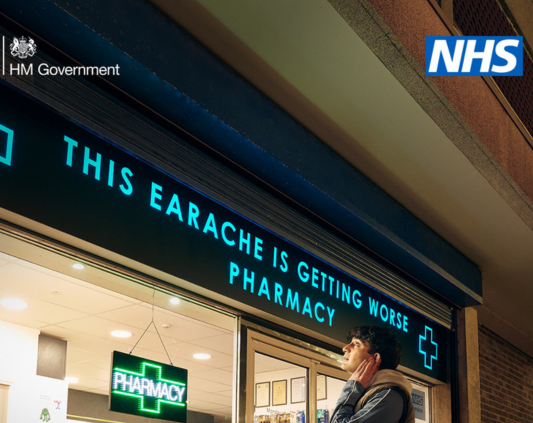
Pharmacy First, which was launched in January 2024, enables community pharmacies to provide treatment for seven common conditions without patients needing to see a GP. These are earache, impetigo, infected insect bites, shingles, sinusitis, sore throat and urinary tract infections (UTIs) for women aged 16-64. Pharmacists can also provide an urgent repeat medicine supply.

126 people from all parts of the county answered our questions about their knowledge and use of Pharmacy First.

Findings

Overall, about two thirds of people said they had heard of the Pharmacy First service and of those, about two thirds had used Pharmacy First.

The results of this project also showed that:

  • In North Northumberland the majority of respondents had not heard of the service
  • Across the whole of the county men weren’t as aware of the scheme as women, with a slight majority of men who hadn’t heard of the scheme
  • Awareness of the Pharmacy First scheme was good across all age bands, except in the 80+ year olds where just over half of the elderly respondents had not heard of the scheme

In terms of usage of the scheme, more people used the Pharmacy First service to get treatment for conditions other than one of the seven conditions that the service covers. Otherwise, sore throats and urinary tract infections were the most common reasons for seeking treatment.

The message to use your pharmacy first appears to be working as, overall, over two thirds of people said they did not try to make an appointment with their GP first. For those under 50 years old and all ages of men, this rose to four out of five saying that they did not try to make an appointment with their GP first. So, although less men are aware of the service, they are more likely to use the scheme than women.

Most felt happy about the level of support they got from the pharmacy, in terms of diagnosis and treatment and that their needs were met. Only a quarter of respondents said they were asked to see a GP or other NHS service, with the GP being the most common service that people told us they were asked to attend. As a consequence, over 85% were very likely or likely to recommend the Pharmacy First service to a friend.

In the future, most people would be happy to see a pharmacist for any of the seven Pharmacy First conditions. However, the two most common concerns about seeing a community pharmacist were the pharmacist missing something more serious or still needing to go to the GP, with about half choosing one or both of these worries.

Overall, Pharmacy First is seen as a great service, where you can be seen quickly, so relieving pressure on GPs. However, there are some concerns around confidentiality as about one in five people said they hadn’t been seen in a private area. While we recognise the physical constraints in some premises, lack of confidential space is an area to address if the take up of services is to be maximised.

Recommendations

To increase awareness of the Pharmacy First scheme:

  • Promote Pharmacy First in North Northumberland more as this area has a much lower awareness than the rest of the county
  • Promote Pharmacy First more in places men are more likely to go (e.g. football grounds, pubs and clubs, men’s toilets in trunk road services etc)

To increase uptake of the Pharmacy First scheme:

  • Promote the training and qualifications of pharmacists to women to reassure them that seeing a pharmacist won’t mean something is missed, or they will only have to go to their GP in the end anyway
  • Emphasise the importance for confidential space to maximise take up of the service

Read more online or download a pdf of our Pharmacy First findings report.

Tell us what you think!

Tell us what you think!

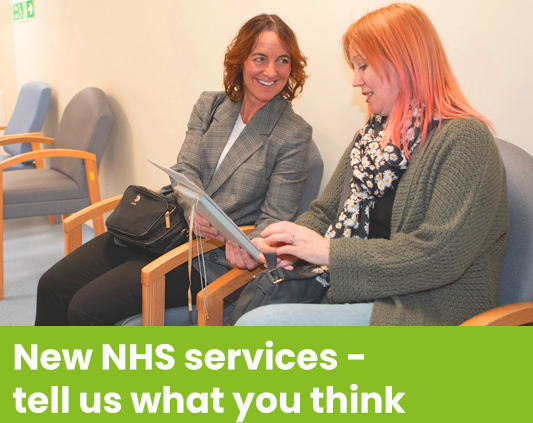
We’d like to hear your views on three NHS services designed to help people access care more quickly and conveniently.

These are:

  • The NHS App
  • GP extended access (out of hours appointments)
  • The Pharmacy First Service

The NHS App

The NHS App is a simple and secure way to manage your health. It puts key services at your fingertips – anytime, anywhere.

With the NHS App, you can:

  • Book GP appointments
  • Order repeat prescriptions
  • View your health records
  • Access trusted health advice
  • Receive messages from your GP and hospital services

GP extended access

Extended access offers appointments for GP services outside of usual hours. This can include:

  • Same-day and pre-bookable appointments
  • Face-to-face, phone, or online consultations
  • Evening and weekend availability

Opening hours: Monday to Friday: 8am – 8pm, Saturday: up to 5pm

Appointments may be at a different practice, so check with your GP surgery or visit their website to book.

Pharmacy First

Your local pharmacist can help with many common health concerns – no appointment needed. Visit your pharmacy first for:

  • Earache
  • Impetigo
  • Infected insect bites
  • Shingles
  • Sinusitis
  • Sore throat
  • Urinary tract infections (UTIs) for women aged 16-64

Pharmacists can also provide an urgent repeat medicine supply.

These services are designed to help people feel better faster, particularly as we approach winter.

What do you think of these services?

Please share with us your experiences of these services. Your feedback will help the NHS in our area understand what is working well for people, and what could be better. You can:

  • Leave feedback online
  • Download an easy read version of the questions and return to us by email or post
  • Call us on 03332 408468 and one of our friendly team will go through the questions with you.

This piece of work has now finished. Thank you for sharing your experiences; we will share the findings with you as soon as we have them.


Have your say on Pharmacy First

Have your say on Pharmacy First

We’d like to hear your views on the Pharmacy First service. By sharing your feedback, you’ll help us to understand people’s awareness of the scheme, and any concerns or suggestions you may have.

Pharmacy First, which was launched in January 2024, enables community pharmacies to provide treatment for seven common conditions without patients needing to see a GP. These are earache, impetigo, infected insect bites, shingles, sinusitis, sore throat and urinary tract infections (UTIs) for women aged 16-64. Pharmacists can also provide an urgent repeat medicine supply.

Please leave your feedback by Sunday 9 November.

Have your say online or call us on 03332 408468 to leave feedback over the phone or to ask for a paper copy in the post.

This survey has now closed.


Think pharmacy first

Think pharmacy first

Pharmacists can now provide treatment for seven common conditions without patients needing to see a GP, as part of a major transformation in the way the NHS delivers care.

Highly trained pharmacists at over 90% of pharmacies can now assess and treat patients for earache, impetigo, infected insect bites, shingles, sinusitis, sore throat and urinary tract infections (UTIs) for women aged 16-64 – without the need for a GP appointment.

No appointment is necessary and private consultations are available. Patients will be signposted to other local services where necessary.

By expanding the services community pharmacies offer, the NHS is aiming to help free up GP appointments and give people more choice in how and where they access care.

Don’t wait for minor health concerns to get worse – think pharmacy first and get seen by your local pharmacy team.

More information about Pharmacy First

If you would like to give feedback about a pharmacy you have used please get in touch.

Events

Nothing Found

Sorry, no posts matched your criteria

Portfolio Items