Posts

Flu jabs for health and care workers

Flu jabs for health and care workers

Health and care professionals are being encouraged to get their annual flu jab.

If you work in health or care this is the most effective way to protect yourself, your family and those you care for.

This is anything but a typical year and we all want to protect ourselves and those close to us. Due to the potential impact of influenza and Covid-19 it’s now more important than ever to protect ourselves from getting the flu.

The flu virus spreads from person-to-person, even amongst those not showing any symptoms. Frontline workers are at an increased risk of contracting flu and it’s very easy to pass the virus on without knowing. Even if you’re healthy, you can still get flu and spread it to the people you care for, your colleagues and to your family.

Getting your flu jab is simple, easy and free. All you need to do is ask your employer.

The injected flu vaccine given to adults contains inactivated flu viruses so it cannot give you flu. The most common side effect can be a slight temperature or your arm may feel a bit sore where you had the injection. Other reactions are rare.

If you are not a health or care worker but would like to find out more about getting a flu jab visit the NHS website to check if you are eligible.

National Eye Health Week 2020

National Eye Health Week 2020

This week is National Eye Health Week (NEHW). It runs from 21 to 27 September, promoting the importance of good eye health and the need for regular eye tests for all.

David Cartwright, chair of Eye Health UK, the charity responsible for organising the National Eye Health Week (NEHW) campaign explains: “NEHW provides a unique opportunity for everyone involved in optics to join forces and inspire people to take positive steps to keep their eyes and vision healthy as well as preventing avoidable sight loss.

“Delays in people seeking treatment during lockdown and reduced capacity in optical practice mean it’s important that those with greatest need are prioritised. This year’s National Eye Health Week will seek to mobilise those that are experiencing problems with their vision or eye health and encourage them to seek help from their local eye care practitioner.”

Throughout the week watch out for advice about looking after your eyes and the 10 Best Eye Health Habits. These include: eating a healthy, balanced diet, not smoking, watching your weight and wearing sunglasses to protect your eyes from UV damage.

Each day of the week will feature a different theme. Themes for 2020 include: Ageing eyes, screen use and kids’ eye health.

Visit the Vision Matters website for top tips and resources to look after your eyes including a podcast, new online eye health calculator and vision simulator.

If you notice a change to your vision or have any concerns about your eye health contact your local optician.

Why not tell us about your local optician to help improve services. How was the service your received? Did you struggle to get seen during lockdown? Tell us your story here.

COVID-19: What people are telling us

COVID-19: What people are telling us

Each month, thousands of people share their experiences about NHS and social care services with Healthwatches across the country. During the COVID-19 pandemic, this has ranged from the effect lockdown has had on carers, to the problems getting emergency dental treatment.

In Healthwatch England’s latest briefing they outline the issues over 19,700 people have raised, as well as taking an in-depth look at how technology has been used in response to the pandemic.

You can find a summary of the key points below or click the following link to read the full report:

Read the full report here

The impact of COVID-19

At the start of lockdown, people told us how the measures introduced to help control the spread of coronavirus were affecting their care.

Changes to routine and planned care – In many cases, people were unable to find the information they needed to understand what they should expect from services and were unclear about what the next steps for their treatment or care would be – leaving them feeling stressed and frustrated.

Shielding measures – Those who were shielding told us about problems in getting transport to their hospital care. For some people, the cost of attending one or more hospital appointments was too expensive to arrange private transport, especially if the hospital was far from home.

Access to prescription medicines – Initially people were struggling to get through to their GP or pharmacy by phone, and others experienced delays in getting their medication. This caused anxiety for people running out of supplies, particularly for those with long term conditions.

What can services learn?

  • People need clear, accurate and consistent information about their care and the services they use.
  • People’s experiences of hospital appointments do not start and end at the hospital doors – their journey begins at home, so transport arrangements must be considered.

Lockdown begins to ease

As lockdown restrictions began to reduce, we started to hear new concerns from people.

  • Worries about the future – People raised questions with us about how services can reopen safely, reported problems using services that are supposedly already open for business and expressed frustration at some NHS services being slow to reopen compared to other areas of the economy.
  • Testing for COVID-19 – While some people found visiting a testing centre easy, we also heard that the online booking process was difficult to use and there were concerns about the accessibility of testing centres.

What have people been telling us throughout?

  • Lack of accessible information – Throughout the pandemic, we have heard about the difficulties of finding up-to-date information in the languages or formats people need – especially when advice from the Government was frequently changing.
  • Emergency dental care – People did not know how to access emergency dental care – causing them extra stress while experiencing acute dental pain or other symptoms. Many others have felt they have no option but to go private if they want to receive treatment for what their dentist considered to be non-emergency treatment.
  • Access to B12 injections – Although some people received injections, either as normal or at a different GP practice, we also heard that in many areas there was an inconsistent approach to providing this treatment.
  • Care homes – People’s feedback highlighted that while family and friends were unable to visit their loved ones in care homes, timely and regular communication from care home staff really mattered.
  • The hidden effect on families and carers – The lack of respite has left many carers feeling stressed, isolated and forgotten about. We also heard about the difficulties some people faced helping the person that they care for to understand and remember the lockdown measures.
  • Praise for health and social care workers – Throughout the pandemic, we have heard about how much people appreciate the hard work of health and social care professionals during this time of unprecedented challenges.
  • The impact on people’s mental health – Since the start of lockdown, we have heard about the effects of the pandemic on people’s mental health and wellbeing. For some people, the changes to the services they would usually access have left them feeling abandoned – with infrequent telephone appointments not meeting their needs.

What can services learn?

  • Accessible information and meeting people’s communication needs must be considered from the start and should not be an afterthought. The information must also be shared through trusted sources, such as community centres and groups.
  • Families and carers have been providing even more care than usual during the pandemic – but this often goes unnoticed, and many need more support.
  • Good communications between care homes staff residents and their family and friends is key, especially while visiting restrictions are in place. Where appropriate, this should include involving residents’ families or next of kin in decision making about their care.
  • The mental health impacts of the pandemic are affecting both existing service users and non-service users. Mental health services will require investment to support people in both the short and long-term.

Digital healthcare

The pandemic has seen the digitisation of many health and social care services overnight. While digital appointments don’t work for everyone, and services should not be exclusively digital, it’s important healthcare services embrace technology for those who find it an efficient way to communicate. Our recent work in this area demonstrates how services are embracing this shift to digital healthcare:

The doctor will zoom you now

How the new NHS COVID-19 tracing app offers better data privacy

Read the full briefing to find out what we can learn from the rapid roll-out of virtual NHS consultations, and the importance of involving patients from the start when setting up new services.


If you would like to share your own experiences of health and social care services during the pandemic you can do so here:

Tell us your coronavirus story

Join us! Engagement Officer vacancy

Join us! Engagement Officer vacancy

We’re looking for an Engagement Officer to join the Healthwatch Northumberland team.

  • £23,685 (pro rata £19,204)
  • Part time – 30 hours a week
  • Permanent dependent on funding
  • Closing date midnight 29 September 2020
  • Based in Hexham with travel across Northumberland (note all staff currently working from home but under review in line with pandemic guidelines)

This is a vital time for health and social care services. By joining Healthwatch Northumberland now you will use your skills and experience to develop new ways to ensure that voice continues to be heard during and beyond the COVID19 pandemic.

The full job description, application form and other relevant information can be found below. If you would like an informal discussion about the role and Healthwatch Northumberland, contact Derry Nugent, Project Coordinator: derryn@healthwatchnorthumberland.co.uk

Interviews will be on Monday 12 October 2020 by Zoom.

Job Description and Person Specification

Healthwatch Northumberland Strategic Plan

Healthwatch Northumberland Staffing Structure

Application Form

This vacancy is now closed.

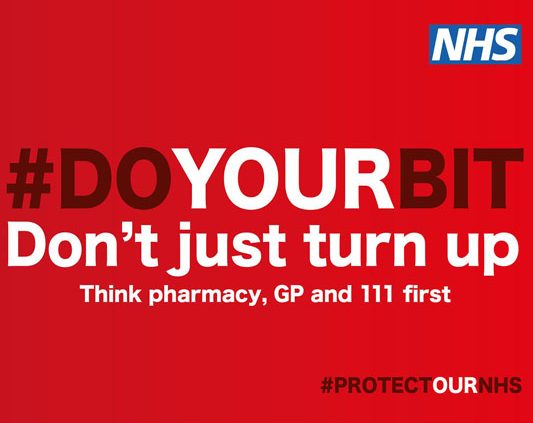
NHS asks ‘do your bit’

NHS asks ‘do your bit’

Don’t just turn up to A&E – think pharmacy, 111 and GP first

Public asked to #doyourbit to protect the NHS by keeping A&E free for serious emergencies.

Health leaders across Northumberland, North Tyneside, Newcastle and Gateshead are asking people to do their bit by thinking pharmacy, GP and 111 first, and not just to turn up to A&E.

The plea is the first part of a new ‘do your bit’ campaign aimed at raising awareness of the first routes people should take for urgent medical advice and treatment, following the disruption caused by Covid19.

Health chiefs say that due to social distancing and infection precautions, the space available in A&E to care for people and allow NHS staff to work safely has been reduced by 30-50 per cent. Action is needed now to protect patients and staff alike from now and into the future.

Bas Sen, a Consultant in Emergency Medicine, Royal Victoria Infirmary in Newcastle and Regional Clinical Advisor for the North East and Yorkshire said: “We want to make it easier and safer for patients to get the right advice or treatment when they urgently need it. We are now putting in place measures to support and guide the public to make the right healthcare choices. This will help ensure their safety, as well as making sure they get the right treatment in the most appropriate place.

“Specifically, if their need is not life threatening, we would advise patients to contact their local pharmacy, their GP or 111 online in the first instance.

“Advice will be provided based on individual issues and solutions will range from self-care through to an appointment with a GP, or being directed to go to a pharmacist or Urgent Treatment Centre.

“Those that do turn up to either an A&E department or an Urgent Treatment Centre, will be assessed clinically by a member of our team and if suitable, will be re-directed to a more appropriate service for their needs.”

The campaign is supporting a pilot scheme which commenced on 3 August by the NHS in the North Integrated Partnership (ICP) area (which covers Gateshead, Newcastle, North Tyneside and Northumberland) before being rolled out across the region in September 2020.

Bas continued: “Too many people who come to A&E can be dealt with quicker by an alternative service such as their pharmacist, GP or 111. In light of COVID-19, and with winter ahead, it is more important than ever that we don’t have large volumes of people in our surgeries, clinics and hospitals when they could have been cared for elsewhere.”

“Because of the need to socially distance our hospitals have reduced space in waiting rooms and with around 50-70 per cent of attendances at A&E made up of patients who walk-in we must keep people safe – especially our most vulnerable and shielded patients.

“By thinking of alternative services such as pharmacist, GP and 111 first people can do their bit to help stop the spread of Coronavirus, keep people safe and keep A&E for real emergencies. At the same time this also means they will get the right treatment in a timely manner, in the most appropriate place for them too.

“So please don’t turn up or walk in to A&E or urgent care services without seeking advice from either a 111, GP or pharmacist, first – unless your condition is life threatening.

“Please remember that NHS 111 can make direct appointments at surgeries, pharmacies and urgent treatment centres. They can also send an ambulance should your condition be serious or life-threatening.”

In addition, we are asking people to act responsibly and consider carefully the impact drug use and alcohol has on people behaviours which can increase demands within A&E departments.

Clinical lead for the North East and North Cumbria Integrated Care System, Professor Chris Gray, said: “The support for the NHS has been amazing over recent months and as winter approaches we will be asking people to keep this up and do their bit to protect the NHS and each other. I would also like to take this opportunity to thank all our health and care staff across the North East and North Cumbria. The last few months have been difficult and their commitment to delivering excellent quality care has never waived.”

Virtual NHS consultations

Virtual NHS consultations

recent survey for the British Medical Association showed that 95% of GPs are now offering remote consultations and 88% want to see greater use of them continue in the future.

Whilst people previously told us that they welcome the idea of the NHS making better use of new technology to help make care more convenient, people’s experiences of telephone, video, and email consultations to date have been more mixed.

For some, they are working well, and many previously sceptical individuals have been converted following a positive experience. For others, these types of appointments have introduced new barriers to care.

So how can we make sure that this revolution in the way care is delivered works for everyone?

What makes a virtual appointment good?

Last week Healthwatch England published the findings of some rapid research conducted in partnership with Traverse and National Voices. Involving people who have had a virtual consultation during the pandemic, this report provides useful insights for NHS services and individual clinicians.

Key findings and recommendations

Arranging a virtual consultation:

  • Feeling safe and comfortable – It’s important for people to feel safe, comfortable and that they have a confidential space in which to talk about their medical concerns. Most of those we spoke to hadn’t received any information in advance about how the appointment would work or what they could do to help. It would be useful for patients to be alerted to this fact beforehand so that they can prepare for their appointment.
  • Making the benefits known – Secondly, to realise the benefits of people not having to travel to appointments, patients need a reasonable time window for their appointment. Where people are not given this, it leads to increased frustration, with missed calls or unexpected delays creating anxiety.
  • Getting the format right
    Most of those we spoke to had telephone consultations, but a significant number felt that video would have been better.

We heard examples where people’s level of digital literacy had not been assessed before the appointment. There were also examples discussed where people felt remote consultations would never be appropriate, such as delivering bad news following a diagnosis.

During the appointment itself

Giving people the time they need

Whichever form of remote consultation is used, people were clear that it must not mean a compromise on the quality of the interaction. Appointments must not feel rushed, patients need to feel listened to and clinicians must have all the information they need to hand.

“I didn’t know what to expect. The physio created space to ask about how I was doing. I felt heard and was able to ask questions. It was refreshing. A normal physio session would be in a crowded room, five minutes instructions, you practice the movement, they pop back after seeing other people and ask you how you are getting on, it’s rushed. I see about 15-20 health professionals a year and this is the most person-centred session I have had.”

– Maria, physiotherapy patient.

Test, learn and improve

Seek feedback

As with any significant change it is important to seek feedback and to learn from what works and what needs improvement. Yet most participants in our research reported that they weren’t asked for feedback about their remote consultation experience.When we asked them for suggestions, they identified many ways in which remote consultations could be made better. For example, enabling sessions to be recorded and played back later so people can confirm they have understood, or introducing closed captioning to help those with hearing loss.

Overall, one of the biggest learning points was around quality. While some people in the health and care system may see remote consultations as a way of delivering care more efficiently, it is clear that any impact on quality will likely see a significant drop-off in people willing to access care in this way.

Getting the most out of the virtual health and care experience

Our Strategic Plan for 2020-2022

Our Strategic Plan for 2020-2022

The plan below sets out our plans for the next three years, as identified by the Healthwatch Northumberland Board.

We have three strategic aims which are the themes for our work over the lifetime of the strategy. Our work each year will be identified as meeting one or more of the aims.

Health: with the help of Healthwatch Northumberland, the views, knowledge and experiences of health service users and carers are listened to and influence changes and developments in health service in Northumberland.

Social Care: With the help of Healthwatch Northumberland, the views, knowledge and experiences of service users and carers are listened to and influence changes and developments in social care services in Northumberland.

Communication and Engagement: the people, service providers, commissioners and key stakeholders in Northumberland know, trust and are involved with Healthwatch Northumberland.


Read our Strategic Plan for 2020-2022

Annual Report 2019/20

Annual Report 2019/20

Our Annual Report for the financial year 2019-20 is out now. Have a look to see what we’ve been up to, what people told us about their experiences of NHS, health and social care and how we made a difference to people in Northumberland.

View the Healthwatch Northumberland Annual Report 2019-20


.

Quarterly Report October – December 2019

Quarterly Report October – December 2019

Introduction

As a listening organisation working across Northumberland, Healthwatch Northumberland wants to hear what people like about health and social care services and what can be improved. We act on what people are saying, sharing their views with those who have the power to make change happen. We also help people find the information they need about services in their area and record this as ‘signposting’.

We receive feedback from people living in Northumberland about their experiences throughout the year. This report shares a summary of the feedback collected from October to December 2019.  The next report will cover January – March 2020.


This quarter we received feedback and enquiries from:

  • Telephone calls, emails and social media (31%)
  • Postal surveys and feedback forms (12%)
  • Talking to people at local engagement events (27%)
  • Through a meeting (27%)
  • Through a third party (4%)

Areas of Focus

We are open to all feedback about health and social care services. Responses to our Annual Survey helped us to identify three specific Areas of Focus which we are prioritising in 2019/20:

  1. General Practitioner Services (GP Services)
  2. Mental Health Services, including dementia care
  3. Access to Services

Aims

The report aims to increase understanding of:

  • Who Healthwatch Northumberland is hearing from
  • What people are saying
    • The general sentiment of comments
  • What people are experiencing
    • What is working well?
    • Where there are areas for improvement?

Feedback

Between October and December 2019, we received 26 pieces of feedback through talking to people at local engagement events, telephone calls, emails, our website, surveys and feedback forms and other sources. Alongside this, we signposted 17 people to services. Altogether we had 39 different recordable interactions this quarter.

This report explores who Healthwatch Northumberland is hearing from across the county, presenting a summary demographic information of those who got in touch. Demographic information includes location, gender, age, and whether the respondent is sharing their own health and social care experience or speaking on behalf of a friend or relative.

We also look at whether the feedback is negative or positive, with specific reference to the service type (e.g. primary care, secondary care, mental health, social care), as well as whether the feedback relates specifically to quality of care or access to services.

Read the Quarterly Report for October to December 2019

Quarterly Report – July to September 2019

Quarterly Report – July to September 2019

As independent champion for people who use health and social care services, we receive feedback about what is working well for people and what could be improved, and share these views with those who have the power to make change happen. We also help people find the information they need about services in their area and record this as ‘signposting’.

The report below shares a summary of the feedback collected from July to September 2019.
This quarter we received feedback and enquiries from:
• Telephone calls, emails and social media (52%)
• Postal surveys and feedback forms (5%)
• Talking to people at local engagement events (43%)


Summary for feedback received between July and September 2019.

  • The average person feeding back to Healthwatch Northumberland is a woman aged between 65-79 from the Tynedale area. They are most likely to be feeding back about their own experiences.
  • They are most likely to get in touch with us by the telephone, email, or social media, or through engagement events we run in their local area.
  • Most people fed back to us with concerns or complaints about health services.
  • Most of our feedback is about primary care services. This quarter pharmacies and GP surgeries dominated the negative feedback we got about primary care.
  • Secondary care services also make up a large proportion of our feedback. This quarter feedback about a physiotherapy service dominated the negative feedback about secondary care.
  • We also continued to hear back about the loss of the Hear to Help Service, which was provided by Action on Hearing Loss.
  • Consistent with last quarter, most feedback was about people finding it hard to access services, rather than quality of care.
  • Healthwatch Northumberland had a total of 80 recordable interactions with people. 58 of these gave us feedback, 38 were signposted and 3 exchanged information with us.
  • We signposted to Independent Complaints Advocacy Northumberland, Carers Northumberland, North of Tyne Patient Advice and Liaison Service, and Northumberland County Council more than once this quarter, and at least once last quarter.
  • Almost half of the organisations we signposted to this quarter were voluntary sector organisations.

Read the full report for July to September 2019

Events

Listening Event: Annual Survey Hexham Hospital

Listening Event: Annual Survey Hexham Hospital

We are running our annual survey 2020 during February and March this year, asking you about the health and social care you received in the last 12 months – it might be a new year but your experiences from 2019 still matter. Health services include hospital services, GPs, dentists, pharmacists, mental health and ambulance services. Social care is care in the home or in a residential or nursing care home.

By telling us about the care you received and what’s important to you, you can help us set our work for the coming year so that we can be more effective on your behalf.

Let us know what went well and what could be improved and together we can help make care better for everyone in Northumberland.

If you can’t come and see us at one of our events you can share your views via the online survey or get in touch to ask for a postal copy with freepost return.

Listening Event: Annual Survey Morpeth Riverside

Listening Event: Annual Survey Morpeth Riverside

We are running our annual survey 2020 during February and March this year, asking you about the NHS, health and social care you received in the last 12 months – it might be a new year but your experiences from 2019 still matter. Health services include hospital services, GPs, dentists, pharmacists, mental health and ambulance services. Social care is care in the home or in a residential or nursing care home.

By telling us about the care you received and what’s important to you, you can help us set our work for the coming year so that we can be more effective on your behalf.

Let us know what went well and what could be improved and together we can help make care better for everyone in Northumberland.

If you can’t come and see us at one of our events you can share your views via the online survey or get in touch to ask for a postal copy with freepost return.

Listening Event: Annual Survey Wooler

Listening Event: Annual Survey Wooler

We are running our annual survey 2020 during February and March this year, asking you about the NHS, health and social care you received in the last 12 months – it might be a new year but your experiences from 2019 still matter. Health services include hospital services, GPs, dentists, pharmacists, mental health and ambulance services. Social care is care in the home or in a residential or nursing care home.

By telling us about the care you received and what’s important to you, you can help us set our work for the coming year so that we can be more effective on your behalf.

Let us know what went well and what could be improved and together we can help make care better for everyone in Northumberland.

This event is being held in conjunction with Wooler patient participation group.

If you can’t come and see us at one of our events you can share your views via the online survey or get in touch to ask for a postal copy with freepost return.

Listening Event: Annual Survey Morpeth Library

Listening Event: Annual Survey Morpeth Library

We are running our annual survey 2020 during February and March this year, asking you about the NHS, health and social care you received in the last 12 months – it might be a new year but your experiences from 2019 still matter. Health services include hospital services, GPs, dentists, pharmacists, mental health and ambulance services. Social care is care in the home or in a residential or nursing care home.

By telling us about the care you received and what’s important to you, you can help us set our work for the coming year so that we can be more effective on your behalf.

Let us know what went well and what could be improved, and together we can help make care better for everyone in Northumberland.

If you can’t come and see us at one of our events you can share your views via the online survey or get in touch to ask for a postal copy with freepost return.

Listening Event – Annual Survey Haltwhistle Leisure Centre

Listening Event – Annual Survey Haltwhistle Leisure Centre

We are running our annual survey 2020 during February and March this year, asking you about the NHS, health and social care you received in the last 12 months – it might be a new year but your experiences from 2019 still matter. Health services include hospital services, GPs, dentists, pharmacists, mental health and ambulance services. Social care is care in the home or in a residential or nursing care home.

This event is the Bridge Project Employability Hub so if you’re there it would be great if you have a couple of minutes to talk to us.

By telling us about the care you received and what’s important to you, you can help us set our work for the coming year so that we can be more effective on your behalf.

Let us know what went well and what could be improved and together we can help make care better for everyone in Northumberland.

If you can’t come and see us at one of our events you can share your views via the online survey or get in touch to ask for a postal copy with freepost return.

Listening Event: Annual Survey Village Surgery

Listening Event: Annual Survey Village Surgery

We are running our annual survey 2020 during February and March this year, asking you about the NHS, health and social care you received in the last 12 months – it might be a new year but your experiences from 2019 still matter. Health services include hospital services, GPs, dentists, pharmacists, mental health and ambulance services. Social care is care in the home or in a residential or nursing care home.

By telling us about the care you received and what’s important to you, you can help us set our work for the coming year so that we can be more effective on your behalf.

Let us know what went well and what could be improved and together we can help make care better for everyone in Northumberland.

If you can’t come and see us at one of our events you can share your views via the online survey or get in touch to ask for a postal copy with freepost return.

Listening Event: Annual Survey Forum Practice

Listening Event: Annual Survey Forum Practice

We are running our annual survey 2020 during February and March this year, asking you about the NHS, health and social care you received in the last 12 months – it might be a new year but your experiences from 2019 still matter. Health services include hospital services, GPs, dentists, pharmacists, mental health and ambulance services. Social care is care in the home or in a residential or nursing care home.

By telling us about the care you received and what’s important to you, you can help us set our work for the coming year so that we can be more effective on your behalf.

Let us know what went well and what could be improved and together we can help make care better for everyone in Northumberland.

If you can’t come and see us at one of our events you can share your views via the online survey or get in touch to ask for a postal copy with freepost return.

Listening Event – Annual Survey 2020 NSECH

Listening Event – Annual Survey 2020 NSECH

We are running our annual survey 2020 during February and March this year, asking you about the NHS, health and social care you received in the last 12 months – it might be a new year but your experiences from 2019 still matter. Health services include hospital services, GPs, dentists, pharmacists, mental health and ambulance services. Social care is care in the home or in a residential or nursing care home.

By telling us about the care you received and what’s important to you, you can help us set our work for the coming year so that we can be more effective on your behalf.

Let us know what went well and what could be improved and together we can help make care better for everyone in Northumberland.

If you can’t come and see us at one of our events you can share your views via the online survey or get in touch to ask for a postal copy with freepost return.

Listening Event – Annual Survey 2020 Rothbury

Listening Event – Annual Survey 2020 Rothbury

We are running our annual survey 2020 during February and March this year, asking you about the NHS, health and social care you received in the last 12 months – it might be a new year but your experiences from 2019 still matter. Health services include hospital services, GPs, dentists, pharmacists, mental health and ambulance services. Social care is care in the home or in a residential or nursing care home.

By telling us about the care you received and what’s important to you, you can help us set our work for the coming year so that we can be more effective on your behalf.

Let us know what went well and what could be improved and together we can help make care better for everyone in Northumberland.

If you can’t come and see us at one of our events you can share your views via the online survey or get in touch to ask for a postal copy with freepost return.

Listening Event – Annual Survey 2020 Hexham

Listening Event – Annual Survey 2020 Hexham

We are running our annual survey 2020 during February and March this year, asking you about the NHS, health and social care you received in the last 12 months – it might be a new year but your experiences from 2019 still matter. Health services include hospital services, GPs, dentists, pharmacists, mental health and ambulance services. Social care is care in the home or in a residential or nursing care home.

This event is the Bridge Project Employability Hub so if you’re there it would be great if you have a couple of minutes to talk to us.

By telling us about the care you received and what’s important to you, you can help us set our work for the coming year so that we can be more effective on your behalf.

Let us know what went well and what could be improved and together we can help make care better for everyone in Northumberland.

If you can’t come and see us at one of our events you can share your views via the online survey or get in touch to ask for a postal copy with freepost return.