Online event – mental wellbeing support for young people

Online event – mental wellbeing support for young people

Are you a parent, carer or someone who is looking for initial support for a child or young person’s mental wellbeing? Perhaps you work with young people and want ideas about what mental health support is available in Northumberland? Come along to our online event on Wednesday 10 March from 10.30am to 11.30am and find out more about Kooth, an online counselling and support service available to all young people aged 11-25 across Northumberland.

Kooth is a safe, confidential and anonymous way for young people to access wellbeing and mental health support through self-help resources and articles, peer support and discussion, and access to fully trained and qualified counsellors until 10pm each night, 365 days per year.

This event is an opportunity to hear more about Kooth from Northumberland’s Kooth Engagement Lead Malcolm Connelly who will give a short presentation and introduction to the service, what it involves, how to access it and what you can expect. There will be a Q&A session following the presentation.

Find out more about Kooth here.

Children’s Mental Health Week took place this year from 1 to 7 February, an opportunity to shine a spotlight on children and young people’s mental health. We supported this campaign and are currently running a survey to get feedback from young people about their experiences of mental health services. However, we understand that the work does not stop with the end of this campaign and many young people will continue to need mental health support during these difficult times and beyond.

Preliminary results from our survey show that many young people do not seek formal support for their mental wellbeing and will instead rely on family and friends, but it is important that people are aware that there are local services available that can provide support and that they know how to access them.

If you would like to come along to the event please contact Helen Brown at: helenb@healthwatchnorthumberland.co.uk, or call 03332 408468 to register.

We would also like to hear from young people who are using or have used children’s mental health services in Northumberland so we can understand what is working well and what could be improved. You can share your views here.

Parents, carers and relatives of young people who have used services can also share feedback on our website.


Do you use Day Services?

Do you use Day Services?

Do you or someone you care for use Day Services in Northumberland?

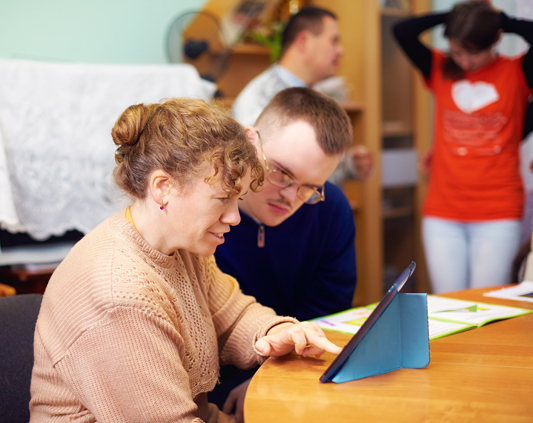
Day Services in Northumberland are being reviewed to see what they need to provide to meet the needs, expectations, and aspirations of current and future service users. There has been a reducing number of older people attending Day Services in Northumberland over the past few years resulting in services closing due to lack of demand. This has been exacerbated by the Covid-19 pandemic with most of the Day Services being closed for the past 11 months.  Additionally, current Day Services for younger adults with learning disabilities and/or mental health conditions are being reviewed to see if they provide what is needed to enhance people’s lives and support independence.

If you, or someone you care for use Day Services, what has the impact been for you of these services not running for almost a year now? Have you been able to use the service in a different way, for example, online? If and when day services can be provided again, would you like them to run the same as before the pandemic or with some online provision? What do you think the issues and barriers would be to running services differently?

Please let us know your views and whether you would be willing to take part in conversations around day services in the future.

Get in touch

This piece of work is now closed.

NHS Clinical Research project

NHS Clinical Research project

Can you help the NHS to improve services and treatments for patients?

We are working with NHS England to undertake some research on what patients, current users, non-users and those with specific health issues including cancer, diabetes, heart disease, mental health and genetic factors, think about getting involved with clinical research.

This research will be really valuable in helping the NHS develop new medicines and learn more about better health and care for the future.

We want to know how patients and the public feel about clinical research, how they can get involved in research, what digital access they might need and if there are any barriers in place for involvement.

The survey will run up until Friday 12 February 2021.

Take the survey

This survey is now closed.

Mental health and young people

Mental health and young people

Time to Talk day takes place in February each year, a day which encourages the nation to get talking about mental health. One in four adults and one in eight young people will experience a mental health problem in any given year, which is why talking about mental health is so important. This year’s event might look a little different, but at times like this open conversations about mental health are more important than ever. A small conversation about mental health has the power to make a big difference.

In addition, Children’s Mental Health Week takes place 1 to 7 February and is an opportunity to shine a spotlight on children and young people’s mental health. We are supporting both campaigns and would love to hear from you about your experiences of health and social care in relation to mental health services. Whether you currently use or have used these services directly, or are a carer for someone who currently uses or has used these services, we would love to hear your feedback.

We would like to hear from young people aged 13 – 25 years, so that we can understand what is working well and what could be improved in mental health services. What you tell us could help make these services better for everyone in Northumberland.

Share your experiences of using mental health services

Mental Health Support 

Care homes – keeping in touch with loved ones

Care homes – keeping in touch with loved ones

Care home lockdown: how are you keeping in touch with your loved one?

As we enter a further period where visiting relatives in care homes is restricted, we want to hear how this is affecting you and your loved ones. What information have you had about keeping in touch and maintaining communications about care and wellbeing?

We are particularly keen to hear if you managed to be tested and have an ‘in person’ visit during December.

We would like to know your experience of:

  • Using video calls (FaceTime, Zoom etc.) or telephone calls – does the home support these? How many times a week and how long? Does a member of staff help your loved one with the call?
  • Socially distanced visits – does the home support ‘window’ visits.  How many times a week and how for long?
  • How does the home keep you informed about how your loved one is getting on (apart from necessary issues about their care or health), for example, manager updates, photographs, videos
  • Does the home have a programme of group and one-to-one activities? Has your loved one taken part?
  • Has the home asked you what, within the current restrictions, would make this time easier?
  • What, within the current restrictions, would make it better for you and your love one?
  • When restrictions are eventually eased (not totally lifted) what would help you and your loved one?

You can tell us your experiences at one of the ways here on our contact page, text us on 07413 385275 to make an appointment to speak to one of our team, or come along to our public online forum around these issues on Wednesday 27 January, 1.00pm – 2.00pm.

If you would like to take part in the forum please contact Laura Haugh: laurah@healthwatchnorthumberland.co.uk, or call 03332 408468.

Covid-19 and NHS dental care

Covid-19 and NHS dental care

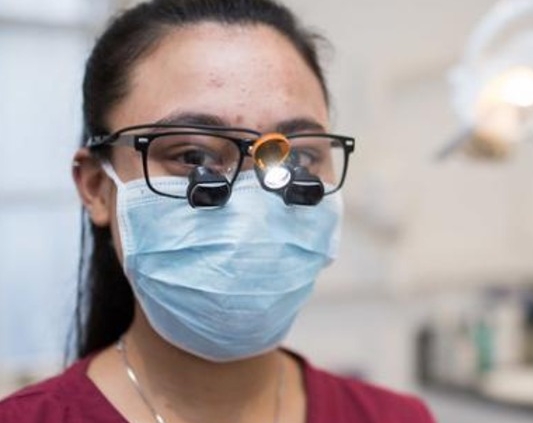
Healthwatch England is calling for action to address widespread issues with access to NHS dental care following an unprecedented surge in concerns. Healthwatch experienced a 452% increase in feedback on the issue in the second quarter of the year, with continuing accounts of people being left in pain, resorting to ‘DIY’ repair methods and in some cases even extracting their own teeth.

The review of 1,300 people’s experiences of accessing dental care found that:

  • More than 7 in 10 people (73%) found it difficult to access help and support when they needed it.
  • Access issues were caused by dentists not taking on NHS patients, as well as conflicting advice from different parts of the NHS about what help is available.
  • Many people were offered treatment if they went private, despite research indicating that 40% of people would struggle to afford private dental care.
  • The impact of not being able to access care led many people to experience pain, discomfort and further complications.

The increase in feedback comes after the British Dental Association reported that treatments delivered by NHS dental services in England are at a quarter of pre-COVID levels, with over 14.5 million fewer procedures taking place.

Laura Floyd, from West Berkshire, was part-way through significant dental treatment when it was cancelled due to the lockdown in March. The new mother explained: “As we went from April to May, I had an abscess develop on the tooth which was still awaiting treatment. I did receive care over the phone and a course of antibiotics which helped ease some of the pain and swelling but this never fully went away, I just lived with it as cautiously as I could. Sadly my eight-month-old wasn’t as cautious when reaching out and grabbing my face!”

Laura, who was entitled to free NHS dental care for 12 months after the birth of her child, did then receive some emergency treatment for a further painful cavity but is still waiting for her main treatment to be completed a year on from her initial diagnosis.

Sir Robert Francis QC, Chair of Healthwatch England, said: “The COVID-19 crisis has impacted on many areas of NHS support but, problems in dental care appear to be particularly acute.

“Even before the pandemic, people were telling us about problems in accessing NHS dental appointments but since the start of the summer these reports have hugely increased.

“If we don’t improve access to NHS dental care, not only do people risk facing far greater dental problems in the future but it also puts pressure on overstretched hospitals and GPs. Untreated dental problems can lead to pain, infection and the risk of long-term harm, which is comparable with other medical conditions.

“Health and care services are working hard to deal with the pandemic, but we believe the Government and the NHS should give more attention to resolving both long-standing and COVID-related issues in dentistry.”

While the report accepts that the overall treatment backlog caused by the pandemic will take time to clear due to limited industry capacity and COVID-related restrictions, it makes several recommendations including:

  • providing more accurate and up-to-date information for patients
  • providing clarity over NHS dentists’ obligations relating to patient registration
  • making more resources available to improve patient access to
    dental care and;
  • reviewing the overall cost to patients of NHS dental care, particularly with a 5% price increase set to take effect before Christmas.

Healthwatch is also calling for people on low incomes who are forced to travel long distances to access dental care to be reimbursed.

Read more on the Healthwatch England website

If you would like to tell us about your experience of accessing dental care during the pandemic you can tell us your story here.

AGM draft minutes and Q&As

AGM draft minutes and Q&As

The draft minutes from our AGM in October, plus answers to many of the questions raised before and during the event can be found below.

Questions for Healthwatch Northumberland

Q:  My husband has multiple health conditions. Since March, paramedics have been called four times (via NHS 111/999 or GP). We have been told consistently that they would not take him to hospital, e.g. for a high temperature. Are paramedics instructed to routinely give this message, consequently deterring people from seeking help? We know from past experience when his breathing is normal for him, but cause for concern, and when he is deteriorating and likely to require intervention.

This whole experience leaves us feeling it is wrong to call for help. This is exacerbated by other consultations (GP and hospital) which feel ineffectual for a person with multiple comorbidities.

A: North East Ambulance Service said:

The staff who answer 111/999 calls are not routinely instructed to inform patients that they would not take him to hospital. Each individual is assessed in their own right and the context of their presenting symptoms. If an individual is identified as needing hospital access then we would recommended that. Where an individual can safely be transferred to hospital without ambulance intervention that will be recommended. This saves ambulances for those people where there is an absolute need to transport the patient with supported care on route.

During the period since March 2020 we have had different thresholds for answering calls depending on how severe COVID-19 has been. Things may change in times of high demand and depending on the changing government guidance as we learn more about the virus.

On some occasions we have advised people not to access hospital care, the outbreak of COVID19 meant hospitals may not be the same safe environment for people with weak immune systems as they were previously. In these cases, where care could safely and effectively be given at home that would be recommended.

Q: Why have mammograms for women over 71 been stopped with no indication of when they will start again. Newcastle Hospitals advised there is only a four month backlog.  I have booked a private appointment. Also have GP surgeries been told to stop advertising the service.

A: This question has been submitted to Newcastle Hospital Trust and we will publish the answer as soon as we have it.

Q: I have seen that Being Woman charity gives out devices to people to access digital services. Is this service only for black, Asian and minority ethnic people or can anyone in Northumberland also access their service to get digital devices. One of my acquaintances in Amble has one and she was guided to connect up to GP services.

A: Thank you for your feedback and query around Being Woman. If you are looking for support around digital skills or would like to have a device to access digital resources we recommend you get in touch with them directly, either through their website: www.being-woman.org.uk contact them on 01670 857167.

Live questions:

Q: Where would I find more details about the Healthwatch Northumberland vacancy? Will there be a link available?

A: Derry answered. Yes we will make the link to our website available after the event or you can email info@healthwatchnorthumberland.co.uk to find out more.

Q: Do you have a view about the recent Look North feature about designated care home dementia spaces?

A: Derry answered. This is a policy decision and we don’t have a view in advance of the patient/carer experience but we are keen to find out more and hear from people about this if it is implemented.

Q: Are there any Clinical Commissioning Group (CCG) plans to communicate the Primary Care Network plan to the wider community?

A: Derry answered. HWN is always keen on how issues, changes and developments are communicated to the wider service user group so we will put this to the CCG and publish the answer.


Questions for our guest speakers from Northumbria Healthcare NHS Foundation Trust, Dr Alistair Blair and Judith Stonebridge, Public Health Consultant

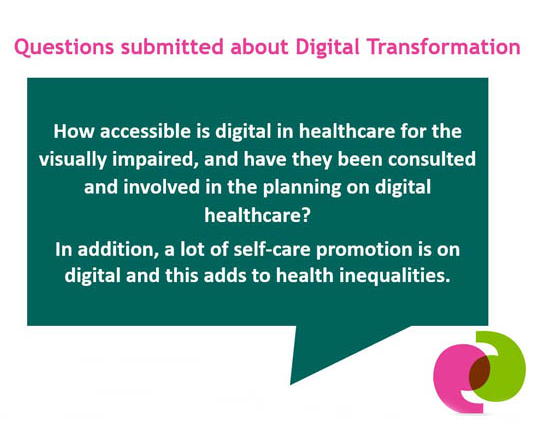
Q: How accessible is digital in healthcare for the visually impaired, and have they been consulted and involved in the planning on digital healthcare? In addition, a lot of self-care promotion is on digital and this adds to health inequalities.

A: Judith answered. This is a really important question and definitely needs to be considered. The pandemic meant a rapid change overnight and there wasn’t much time for engagement, but we are doing that now and are keen to work with Northumberland County Blind Association. A significant amount of appointments are by telephone rather than computer so this may help and face-to-face appointments are still available if appropriate. We are keen to be as inclusive as possible, not just with appointments but with materials too.

Alistair added in regard to the self-care resources that digital resources are in addition to existing materials. Nothing has been taken away, talking books and Braille resources are still available.

Q: Are there any hospital sites or GP practices providing virtual group clinics in Northumberland? There are many patients who attended face to face group clinics who are now isolated and unsupported because of Covid.

A: Alistair answered. We need to separate group support, group education and group consultation. At present none are happening because it hasn’t been possible to get multiple people on to a secure platform. Zoom doesn’t meet the secure standards of the NHS. We’re looking into how group support and education could be delivered but it is harder to provide group consultations as there are issues with confidentiality. There is no way of knowing whether someone is recording the session. However, there are definitely opportunities here.

Q: What about increasing digital engagement and capacity building to facilitate digital engagement, especially those most at risk of poor health outcomes?

A: Judith answered. She said this is an issue which was discussed pre-Covid and inspired her to think about how people experiencing financial difficulties might not differentiate between letters in plain white envelopes from the NHS and elsewhere. There are plans to try to understand why people are not coming to appointments and what is preventing access. The pilots for the community hubs should help people develop digital skills. The Trust is also trying to make the language clearer on any letters sent out and will keep looking at data to help make improvements.

Q: Younger people might find digital engagement difficult if home is not a safe place or in cases of domestic abuse. How sensitive are services to these issues and how will it be addressed?

A: Alistair answered. There is a higher rate of mobile phone ownership and usage among young people. This is quite empowering as it is easier to make a quick call away from home rather than attend a face-to-face appointment which may be difficult if living with a controlling person. There are ways which people can signal over video if they are being threatened. The greater worry is that there are people who aren’t accessing health services at all.

Q: I recognise the value of digital consultation but it is still necessary to have face-to-face appointments. Can you reassure people digital appointments are not going to be the poor relation?

A: Alistair answered. If you need to examine someone you can only really do that by physical contact. People shouldn’t think of remote consultation as second class. It’s often just as good for information and sharing as face-to-face and the same amount of time for the clinician. It’s about choosing the right tool for the job.

Q: What about those practices who don’t have video links? Is connectivity in GP practices an issue?

A: Alistair answered. 90% of remote consultations are over the phone and all practices have phones. Every practice is also wired up for video consultations. Connectivity is more of a problem at the patients’ end. Sometimes image quality can be quite poor on video so texting a photo can be clearer.

Q: Is Northumbria Healthcare willing to look at the confidentiality agreements regarding virtual group clinics? There are many examples of virtual group clinics with confidentiality agreements templates in place.

A: The Trust is in discussions with Attend Anywhere (the system we use for virtual consultations) and they have confirmed they are planning to introduce a module for group consultations.  They are hoping to have something in development this year with a plan to introduce next year.  We are also looking into Microsoft Teams to see if this could be an option.  We would be interested to see an example of one of these confidentiality agreements and what platform is being used.


Healthwatch Northumberland AGM 21 October 2020 draft minutes

Care home visits in Northumberland

Care home visits in Northumberland

Our public forum on care home visits in November produced some really interesting and insightful discussion. We talked about how people are keeping in touch with loved ones in care homes during the pandemic, the effect on those in the homes, particularly those with dementia, and the effect on relatives, plus what would help, going forward and throughout the winter to make the situation easier.

Further to the issues raised at the forum, where people told us they were unclear on what care homes can or can’t do in terms of visits, we asked Liz Morgan, Director of Public Health in Northumberland for information. She shared the guidance on visiting that has been sent to every care home in the county, which can be found below.

We are hoping to hold another Zoom forum around these visits in the coming months, and in the meantime please keep sharing your experiences of care home visits.

Tell us your experiences of:

  • Using video calls (FaceTime, Zoom etc.) or telephone calls – does the home support these? How many times a week and how long? Does a member of staff help your loved one with the call?
  • Socially distanced visits – does the home support ‘window’ visits.  How many times a week and how for long?
  • How does the home keep you informed about how your loved one is getting on (apart from necessary issues about their care or health), for example, manager updates, photographs, videos
  • Does the home have a programme of group and one-to-one activities? Has your loved one taken part?
  • Has the home asked you what, within the current restrictions, would make this time easier?
  • What, within the current restrictions, would make it better for you and your love one?
  • When restrictions are eventually eased (not totally lifted) what would help you and your loved one?

Get in touch

Care Home Guidance on visits November 2020

Letter to Care Homes November 2020

Let’s Talk: Audiology Services Report

Let’s Talk: Audiology Services Report

After receiving significant feedback from people in Northumberland about the end of the Hear to Help service provided by charity Action on Hearing Loss, we decided to investigate the potential impact on service users.

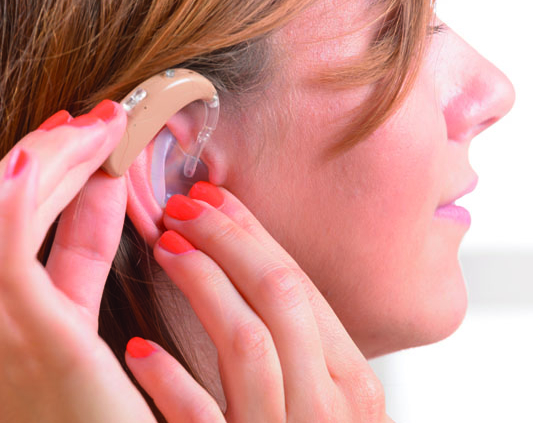
Hear to Help was a drop-in service delivered in community locations including libraries and GP surgeries. The drop-in service provided advice and information for people experiencing hearing loss, as well as performing general hearing aid/s maintenance, such as replacing tubes and batteries.The Hear to Help service stopped on 30 April 2019.

Feedback we received suggested that some people appreciated the service and did not want it to be withdrawn. We took a deeper look at the impact, if any, of the withdrawal of this service and to build a greater awareness and understanding of what people in Northumberland want and need in services to support with hearing loss.

It should be noted this work was done before the Covid-19 pandemic and the resultant change to services. However, the issues raised by respondents, particularly about communication, remain relevant now and in the future.


Aims

We wanted to find out:

  1. What do people in Northumberland think of audiology services?
  2. What audiology services are available for the people of Northumberland?
  3. What is good about audiology services in the county?
  4. What could be better about audiology services in the county?


Summary

Location of hearing loss services was a key area of discussion

  • More than 50% of people we asked said it was easy for them to travel to an audiology clinic
  • Some people were happy they did not need to travel to Newcastle
  • Some people said the clinic was in a bad location with accessibility issues, seasonal transport issues, and public transport combined with limited clinic opening hours
  • People who found it easy to access clinics used a range of different transport modes
  • We are unlikely to have heard from the most isolated, vulnerable people in the county People who live rurally, with mobility issues, or limited social networks, and lower incomes, are likely to find it hardest to access hearing care clinics
  • Some patients were supported by a carer or friend to attend a clinic or understand their care – a gap for patients in accessing or receiving hearing care independently
  • Few people told us they used patient/community transport services to access a clinic

Information about and awareness of services was another key area of discussion

  • We signposted people to: transport services, audiology clinics, and voluntary groups (like Carers Northumberland), showing a lack of awareness/information availability
  • Some people were aware of hearing aid/s battery locations, whilst others were not
  • One patient spoke about an information form given with their hearing aid/s used to support them to live with hearing aid/s. Contrastingly, 48% of people said they had not been offered training, advice, or support for living with hearing loss
  • Some people believed the onus was on the person experiencing hearing loss to ask rather than professionals to let them know what support was available
  • 10 of 11 people in our focus group did not know of the hearing aid/s postal service
  • Some people were not physically able to clean or retube their own hearing aid/s due to dexterity problems, vision impairment, or not feeling confident enough
  • 23% of people we asked agreed they had felt isolated as a result of their hearing loss

Drop in vs appointments

  • Most people preferred drop-ins to appointments, finding them easier or more convenient
  • In our focus group most patients preferred appointments to drop-ins
  • Many patients were satisfied with the current audiology appointment system
  • Interestingly patients gave similar reasons for their preference of either appointments or drop-ins – ease of managing transport arrangements as a priority
  • 42% of patients would like to be told it was their turn to be seen by someone calling out their name. Some patients liked the idea of having a board with their name on
  • 62% of patients we spoke to agreed the waiting time for their appointment was reasonable 71% of people agreed their appointment gave them ‘time to talk’
  • 52% of people said they had their hearing aid/s serviced at the right time for them

Regular hearing aid/s maintenance and NHS audiology services

  • People were positive about the quality of care provided in audiology clinics. People praised the staff and were satisfied they got what they needed from the service
  • It is advised that hearing aid/s tubing is replaced every three to six months. 42% of patients had their hearing aid/s maintained in the last six months, and 46% had not
  • Many people we spoke to were able to clean and change batteries in their hearing aid/s but could not change their tubes
  • Some patients said they had waited a while to receive their new hearing aids
  • People told us that not all hearing aid/s batteries/tubes were available everywhere
  • Some patients said they found face to face communication easiest. Many services now offer a phone appointment system, a barrier to people with hearing loss

Hear to Help service

  • Hear to Help was an important service for people experiencing hearing loss
  • People at the Bell View focus group said the service had helped to show them how to maintain their hearing aid/s, and given them tube cleaners

Read the Full Report

We’re recruiting for an Engagement and Insight Officer

We’re recruiting for an Engagement and Insight Officer

We’re looking for an Engagement and Insight Officer to join the Healthwatch Northumberland team.

  • £23,685 
  • Full time
  • Permanent dependent on funding
  • Closing date 5.00pm 27 November 2020
  • Based in Hexham with travel across Northumberland (note all staff currently working from home but under review in line with pandemic guidelines)

Healthwatch Northumberland is the independent champion for health and social care across the county.  As our Engagement and Insight Officer you will listen to people and turn what you hear into compelling information that will help those with the power to make change happen.

It’s the job for you if you like people, numbers and making a difference for our communities.

If you would like an informal discussion about the role and Healthwatch Northumberland, contact Derry Nugent, Project Coordinator- derryn@healthwatchnorthumberland.co.uk

Interviews will be on Wednesday 16 December 2020 by Zoom


Job Description and Person Specification

Healthwatch Northumberland Strategic Plan

Healthwatch Northumberland Staffing Structure

Healthwatch Northumberland Annual Report 2019/20

Application Form

This vacancy is now closed.